















 8 Min
8 Min
 Zuletzt aktualisiert am 23.09.2026

Intuitive eating is not a new concept that you first have to learn - it is a return to yourself. Because the answer does not lie in even more rules or meal plans. It lies within you, buried deep beneath diets, prohibitions, and outside voices.
Your Knowledge To Go: Intuitive Eating
-
Eating intuitively means listening to the signals and needs of your body without letting external influences such as diets, nutrition trends, or social media affect you.
-
Intuitive eating goes far beyond simply consuming food. It also means learning healthy eating habits and developing a positive relationship with food and your body.
-
There are no prohibitions in intuitive eating. It is about seeing food again for what it is allowed to be: enjoyment and nourishment for your body, but also for your soul.
-
Intuitive eating is the opposite of control and strict rules - it requires patience, compassion, and practice to let go of old eating habits and develop new ones.
Niki as an Expert in Intuitive Eating
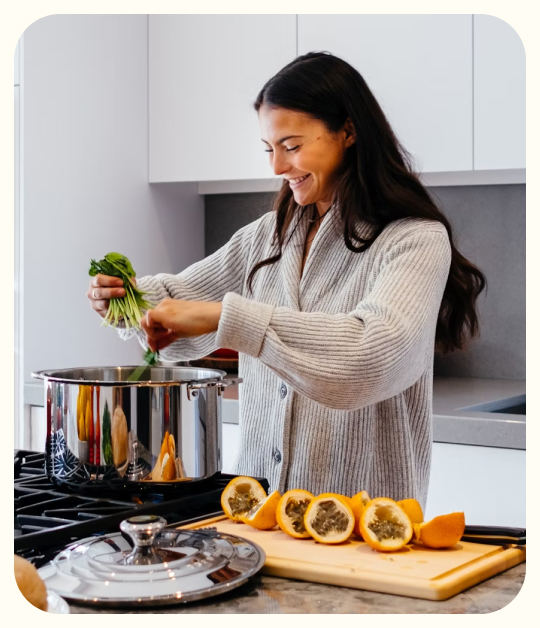
Niki is a certified nutritionist and content creator and has been passionately involved with the topic of healthy nutrition for more than four years. Today, nutrition primarily means self-care to her. But it was not always that way. In this article, she takes you along on her personal journey to intuitive eating – and perhaps you will recognize yourself in one point or another. And if so: You have come to exactly the right place. On Instagram she shares colorful recipes, nutritional knowledge, and tips on gut health and intuitive eating – why not stop by!
But let me honestly tell you what my own journey looked like. Just a few years ago, I was afraid of so many foods. Every meal was associated with stress, anxiety, or feelings of guilt. I tried every nutrition trend and followed eating approaches that were not good for me. I ignored the fact that my body had been sending me signals the whole time – cravings, weakness, and fatigue. I pushed my body to its limits without really realizing it. Until one day I was physically so weak that I could no longer get up. That was the moment I said to myself: Never again. From then on, I began to study nutrition deeply and holistically. I let go of old beliefs, developed a new mindset, and completed my training as a nutritionist. Step by step, I stopped listening to people on the outside and found my way back to intuitive eating. Today, healthy nutrition means one thing above all to me: self-care. Listening intuitively to my body again, trusting it, and understanding what it really needs. Instead of working against it, finally working with it again.
What Is Intuitive Eating?
The concept of intuitive eating was developed in the 1990s by nutritionists Evelyn Tribole and Elyse Resch and describes an approach that moves away from external rules and toward your own body signals. At its core, intuitive eating means listening to and trusting the body's natural signals. It is about truly noticing hunger and fullness again, understanding your own preferences, and sensing what is personally good for you and what is not. Your body is a highly complex system that sends hunger and fullness hormones such as leptin and ghrelin throughout the day. The problem is that these signals are constantly drowned out in everyday life – by stress, false beliefs, and outside noise. Intuitive eating goes far beyond simply consuming food. It also means learning healthy eating habits, becoming more conscious – of what you eat, why you eat, and how you eat – and developing a positive relationship with food and your own body. Not through force or discipline, but through mindfulness, connection, and self-love.
Editor's note: This topic is very close to our hearts at Vetain, and we are grateful that Niki is lending us her voice in this article to raise awareness of it!
%-product_content-%
Common Mistakes in Intuitive Eating and What Your Body Is Really Trying to Tell You
The most common mistake is confusing intuitive eating with “I simply eat whatever I feel like.” Intuitive eating does not mean giving in to whatever you happen to crave. It means taking nutritional knowledge with you as an inner compass while also truly sensing what your own body needs. Together, these create a balance that feels individually right. The second mistake is expecting too much too quickly. Learning to eat intuitively again takes time. Changing eating habits that have been shaped over many years does not happen overnight. It requires patience, mindfulness, and above all, treating yourself with kindness. The key here is not perfection, but compassion. The third mistake is ignoring physical and emotional needs. Many people believe intuitive eating means eating only when they are hungry. But food also means enjoyment, tradition, culture, and time with people who are important to us. Learning healthy eating habits also means allowing all of this – without a guilty conscience.
Emotional Eating, Comfort Eating & Cravings – What Your Body Is Really Trying to Tell You
Eating out of boredom, comfort eating after a long day, eating without hunger, or emotional eating – many people are familiar with this. And the first thing most people feel is shame. But it is not a sign of weakness, nor is it a matter of discipline. It is an indication that another need has gone unmet – rest, connection, relaxation, or simply energy. Food becomes a coping strategy. Anyone who wants to eat intuitively therefore learns not only to sense hunger, but also to ask: What do I really need right now?
Learning to Eat Intuitively – Practical Steps for Your Everyday Life
These are small but effective steps you can take to begin eating intuitively:
-
It starts with letting go of fixed mealtimes and rigid rules and taking your hunger seriously: Many people ask what to do about hunger – but hunger is not a problem that needs to be fought; it is a signal that wants to be heard. Distinguish between true hunger, which develops gradually and is satisfied by eating, and emotional hunger, which comes on suddenly and often remains unsatisfied even after eating. Before you eat, pause briefly and ask yourself: How hungry am I really right now? Am I eating out of habit, or am I truly hungry? Recognizing and separating emotional hunger from physical hunger is essential for intuitive eating.
-
Eating mindfully without distractions strengthens your connection to your physical sensations. We often eat out of habit, stress, or distraction and no longer notice when we are full or what truly makes us feel good. Food should be eaten slowly and with enjoyment so that you can better notice your fullness. When you eat mindfully and focus completely on your meal, you gradually learn to perceive your hunger and fullness more clearly and to listen to yourself and your body more intuitively.
-
The 80/20 principle as an anchor: 80% of your meals are nutrient-rich and balanced. 20% are purely for enjoyment, or as I like to call it: nutrients for the soul. This principle takes the pressure off because nothing is forbidden and enjoyment is part of the process. Cravings for certain foods often arise because of restrictions. When you allow yourself to eat everything, it loses its appeal. Become aware of which foods you genuinely like – and enjoy them without guilt.
Conclusion
What you have unlearned, you can learn again. Not through force, discipline, or additional rules, but through mindfulness, connection, and self-love. And this is exactly where intuitive eating comes in: not as a new rule, but as an invitation to listen again. It is not a new diet or another set of nutrition rules. It is a return to yourself. To trusting that your body knows what it needs – when you listen to it and stop fighting against it. This creates a freedom around food that leads to greater satisfaction and genuine enjoyment.
Do you have any questions? Then feel free to send us an email – we look forward to hearing from you! :)
Literature & Sources
Prof. Dr. Gregor Hasler (2024). What Truly Nourishes Us: Achieving Health, Well-Being, and Inner Connectedness Through Mindful Eating. Arkana Verlag.