














 7 Min
7 Min
 Zuletzt aktualisiert am 23.09.2026
The myth of the strong meat eater has persisted for hundreds of years. But by now, more and more athletes and health-conscious people are turning to plant-based protein sources .
Numerous sports legends like bodybuilders Arnold Schwarzenegger or football star Serge Gnarby, have already switched to a vegan diet have switched and meet their protein requirements through plant-based protein sources.
In the following 2-3 minutes , you will first get an overview of the best plant-based protein sources and then learn which vegan proteins are particularly well suited for athletes and health-conscious people .
What are the best plant-based protein sources?
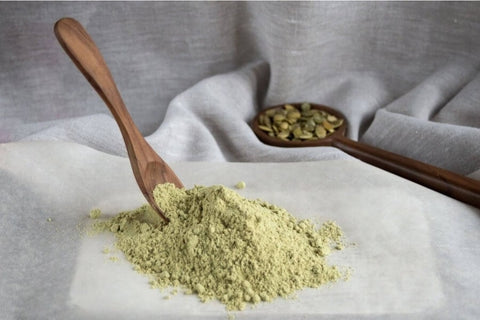
The number of plant-based protein sources is practically infinite! In general, legumes, seeds, and nuts contain particularly large amounts of protein. “For example, 100 grams of pumpkin seeds contain more protein than the same amount of lean red meat or chicken."
Protein-rich legumes
- Soybeans (36g)
- Lupins (36.2g)
- Peanuts (30g)
- Red lentils (23.9g)
- White beans (23.4g)
- Green peas (23.1g)
- Kidney beans (22.5g)
- Chickpeas (20.5g)
Protein-rich nuts
These are the protein sources we use in our protein powder
%-product_content-%
Our TOP 4 plant-based protein sources
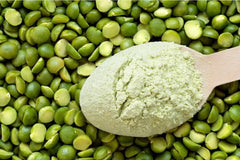
Pea protein
Pea protein is obtained by drying and pulverizing green or yellow peas. Pea protein is rich in Branched-Chain Amino Acids (BCAAs). These branched-chain amino acids include valine, leucine, and isoleucine.
At a glance:
- 80% protein content
- High-quality isolate
- Vegan, lactose-free, and gluten-free
- Contains B vitamins, potassium, folic acid, and fiber
- Rich in amino acids (especially arginine, lysine, and glutamine, as well as leucine, isoleucine, and valine (BCAA))
- Naturally contains almost no sugar (0.4g per 100g)
Fava bean protein
Fava bean protein is obtained from fava beans (also known as broad beans). The beans are generally dried, and the protein is concentrated through grinding or isolation to produce a protein-rich powder.
Fava bean protein contains all nine essential amino acids and is therefore considered a high-quality plant-based protein source. It also provides branched-chain amino acids (BCAAs) such as valine, leucine, and isoleucine, which are involved, among other things, in muscle metabolism and the maintenance of muscle mass.
At a glance:
- Plant-based protein source from fava beans (broad beans)
- Contains all essential amino acids
- Provides BCAAs (valine, leucine, isoleucine)
- Vegan and naturally free from lactose and cholesterol
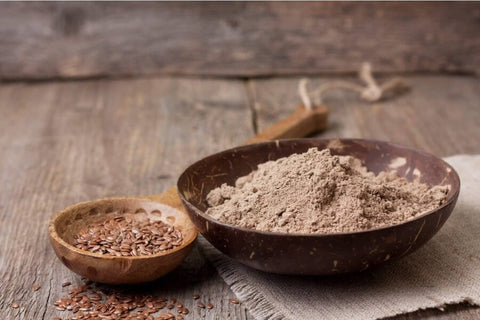
Flaxseed protein
At a glance:
- 30-40% protein content
- Vegan, lactose-free, and gluten-free
- Locally grown
- Contains essential omega-3 and omega-6 fatty acids
- Source of calcium, magnesium, and iron
- Rich in vitamins B1, B2, B6, and E, as well as folic acid
- Contains lignans
- Contains fiber