
















 9 Min
9 Min
 Zuletzt aktualisiert am 23.09.2026

You think about your diet, maybe read labels and pay attention to proteins, fats, and vitamins – but when it comes to zinc, you probably think: "Yeah, I probably have some of it somehow… right?" This trace element often plays a minor role, even though it is involved in many processes in the body.
The question "Which foods contain zinc?" sounds simple at first but is not so easy to answer. Zinc is found in very different amounts in our foods – and especially if you eat vegan or plant-based, a closer look is worthwhile. Because: there is a small catch that decides how much actually ends up with you in the end.
Your knowledge to go: Which foods contain zinc?
-
The most important zinc-containing foods are oysters (22 mg/100 g), wheat germ (17 mg/100 g), pumpkin seeds (7 mg/100 g), calf liver (8.4 mg/100 g), beef (4.2 mg/100 g), as well as cheeses like Edam and Gouda.
-
Good plant zinc sources are wheat germ (17 mg/100 g), pumpkin seeds (7 mg/100 g), oats (4.1 mg/100 g), lentils (3.7 mg/100 g), and peas (3.5 mg/100 g).
-
Phytic acid in plant foods can inhibit zinc absorption but can be reduced by soaking, sprouting, or fermenting.
-
Zinc supplements can be a sensible option if you cannot meet your zinc needs through diet.
Which foods contain a lot of zinc? Top 10 zinc sources at a glance
Before we dive into the details, here is the big overview first. It quickly becomes clear: both animal and plant products can be good zinc sources.
Our table is probably the fastest answer to the question "Which foods contain zinc?"
Zinc in foods table: Which foods contain zinc?
| Food | Zinc content per 100 g of food* |
|---|---|
| Oysters | 22 mg |
| Wheat germ | 17.0 mg |
| Calf liver | 8.4 mg |
| Pumpkin seeds | 7.0 mg |
| Edam, 45% fat in dry matter | 4.6 mg |
| Beef (muscle meat) | 4.2 mg |
| Oat flakes | 4.1 mg |
| Gouda, 45% fat in dry matter | 3.9 mg |
| Lentils | 3.7 mg |
| Peas (dried) | 3.5 mg |
*Important to know: This zinc food table only shows a selection of foods – there are many other zinc-containing foods. By the way, the exact zinc content can vary! We base this on data from the FZE (Specialist Center for Nutrition).
Also, you should always keep realistic portion sizes in mind when looking at the numbers. You probably don't eat 100 g of oysters every day, but 100 g of oats as a porridge base is absolutely realistic.
By the way: If you're wondering how much zinc you actually need per day, feel free to come back next week – our comprehensive guide on this will be online then. Because that's not so simple either! ;) And if you just came here from another post in our "Which foods contain zinc?" article – welcome!
Animal zinc sources
Where is a lot of zinc found when we talk about animal products? Here are the most important zinc sources from the animal sector:
Table: Which foods contain zinc? Animal zinc sources
| Food | Zinc content per 100 g of food* |
|---|---|
| Oysters | 22 mg |
| Calf liver | 8.4 mg |
| Edam, 45% fat in dry matter | 4.6 mg |
| Beef (muscle meat) | 4.2 mg |
| Gouda, 45% fat in dry matter | 3.9 mg |
| Pork (muscle meat) | 2.4 mg |
| Turkey (thigh) | 2.4 mg |
| Chicken | 1.0 mg |
| 1 egg (58 g each) | 0.9 mg |
So if you like to eat meat, fish & cheese, you are in the right place! Which foods contain a lot of zinc?
-
Oysters and other seafood are the absolute champions.
-
Meat and offal like beef, pork, or liver are traditional zinc suppliers and many know them as typical "zinc foods."
-
Dairy products and cheese are moderate sources. Milk itself also contains zinc, though in smaller amounts.
-
Eggs are a versatile zinc source and can be easily integrated into everyday life.
If you're wondering why zinc is so important, you'll surely find our article "What is zinc good for?" interesting!
But: Not everyone eats animal foods. Plant-based sources are therefore becoming increasingly important – and that's a good thing because there are some really strong candidates here.
Plant-based zinc sources: Top 12 sources
Which foods contain zinc if you eat plant-based? Here is your overview:
Table: Which foods contain zinc? Plant-based zinc sources
| Food | Zinc content per 100 g of food* |
|---|---|
| Wheat germ | 17.0 mg |
| Pumpkin seeds | 7.0 mg |
| Oat flakes | 4.1 mg |
| Lentils | 3.7 mg |
| Peas (dried) | 3.5 mg |
| Buckwheat | 2.7 mg |
| Walnuts | 2.7 mg |
| Beans (dried) | 2.6 mg |
| Brown rice | 1.5 mg |
| Whole wheat/rye bread | 1.5 mg |
| Polished rice | 1.0 mg |
| White bread | 0.7 mg |
Well, does that surprise you? Would you have thought of wheat germ or nuts when asked "Where is zinc found?"
-
Wheat germ is the plant-based leader – it even beats many animal sources.
-
Pumpkin seeds, sunflower seeds, and other seeds are practical zinc suppliers for in between.
-
Nuts like walnuts are also zinc-rich foods and can be wonderfully integrated into everyday life.
-
Oat flakes and whole grains are basics that should not be missing in any kitchen.
-
Legumes like lentils, peas, and beans complete the picture.
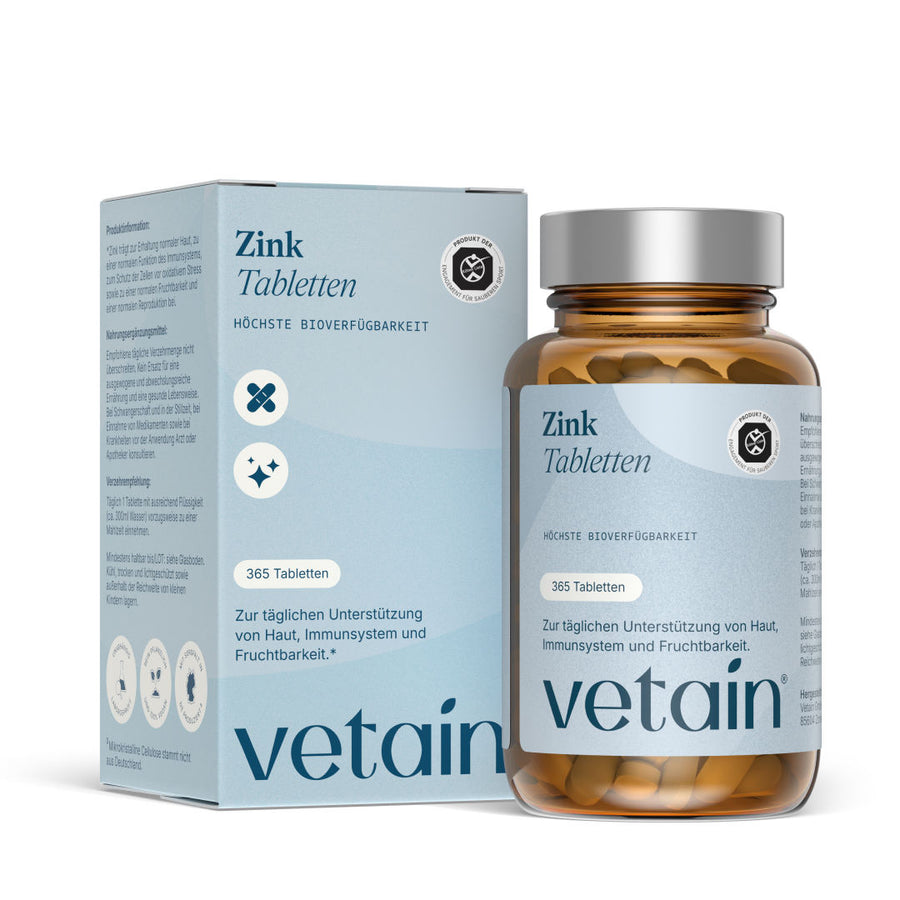
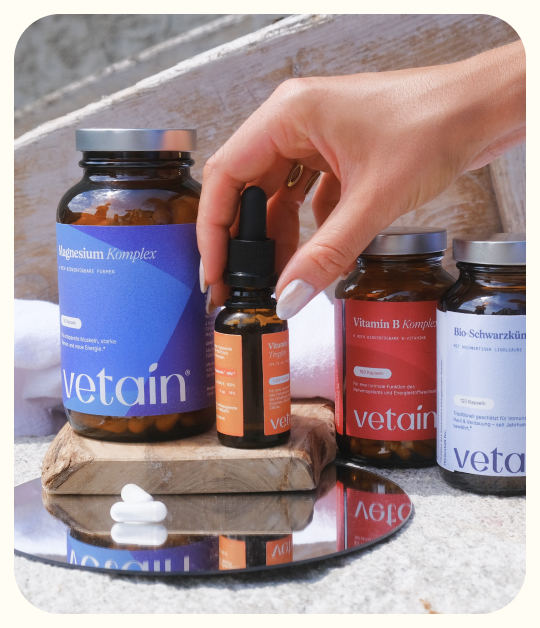
A little teaser: We haven't included our zinc tablets in the table yet because they would steal the show from all the foods – more on that later.
%-product_content-%
But now comes the catch: There is a problem with plant-based zinc sources. This shows that not only the question of which foods contain zinc is important. What exactly I mean by this, I will explain to you in the next section.
The problem with plant-based zinc: phytic acid and co.
Maybe you've heard that zinc from plant foods is not absorbed as well by the body. That's exactly the problem I'm talking about... or rather writing about. But who or what is behind it? Phytic acid!
What is phytic acid and how does it inhibit zinc absorption?
Phytic acid is a substance naturally found in grains, legumes, nuts, and seeds. This phytic acid binds zinc in the gastrointestinal tract and thus prevents your body from absorbing it optimally.
The German Nutrition Society therefore adjusted its zinc intake recommendations in 2019 and now distinguishes between low, medium, and high phytic acid intake. With high phytic acid intake, the recommended zinc requirement increases significantly – for women from 7 mg to about 10 mg per day. More on that next week.
Other inhibitors that can reduce zinc absorption
Phytic acid is not alone! Besides phytic acid, tannins (for example in black tea or coffee) as well as high amounts of calcium and copper can impair zinc absorption. So if you drink your coffee right with your zinc-rich breakfast, it could affect how your body utilizes it.
Do you now understand why not only the question "Which foods contain zinc?" is relevant?
Why a vegan diet can still provide good zinc supply
All this sounds frustrating at first, right? And maybe you're wondering if vegans can even get enough zinc. We say: yes – with the right knowledge, you can ensure your zinc supply even from plant sources. Studies show that vegans tend to have lower serum zinc levels but do not necessarily develop a deficiency if their diet is well planned.
Practical everyday tips for optimal zinc absorption
Now it gets practical! Here are my best tips as a nutrition scientist on how to optimize zinc absorption from plant-based zinc in foods – regardless of which foods contain zinc:
-
Soaking: Soaking legumes, nuts, and grains can significantly reduce the phytic acid content. Important: discard the soaking water afterwards – because the dissolved substances are in it.
-
Germination is even more effective: sprouted lentils or buckwheat have a significantly lower phytic acid content than their unsprouted versions.
-
Fermentation is the pro move: sourdough bread contains less phytic acid than regular whole grain bread because the lactic acid bacteria break down phytic acid during fermentation. And fresh sourdough bread tastes simply heavenly – win win, if you ask me.
-
Cooking only helps to a limited extent – it reduces phytic acid somewhat, but not as effectively as soaking or fermenting.
-
Smart food combinations: Vitamin C and zinc are a real dream team – vitamin C can increase zinc absorption. A glass of orange juice with oatmeal or fresh berries in your muesli – boom, you’ve already increased bioavailability. Acids like citric acid (lemon juice over food) or lactic acid (fermented foods) can also improve absorption.
-
Meal timing for optimal absorption: As explained above – it’s best not to drink your coffee or tea directly with zinc-rich meals, but with some time in between. This way, you avoid tannins inhibiting zinc absorption.
Fun Fact: Interestingly, a study showed that soaking almonds can even increase their phytate content.
Are zinc supplements useful?
Sometimes zinc intake from food alone is not enough. In such situations, many want to supplement zinc.
Here we come back to our point from above: Our zinc tablets contain 25 mg of zinc per tablet, playing in the league of oysters and are well bioavailable despite the vegan formulation!
%-split_content-%
But when exactly does it make sense to supplement zinc?
If you eat vegetarian or vegan and/or consume many phytate-rich foods, supplementation can be useful. If you also don’t want to constantly worry about your zinc intake, supplements can be an option. The best tip: just have your blood values checked – then you’ll know exactly how your zinc status is.
Conclusion: Which foods contain zinc?
We started this article with the question "Which foods contain zinc?" Now you know: from oysters to beef to pumpkin seeds and oats – the selection is large. Especially with plant-based diets, it’s worth paying attention to bioavailability and improving zinc absorption with smart tricks like soaking or combining with vitamin C-rich foods.
With the right knowledge, you can easily manage your zinc supply – whether you eat vegan, vegetarian, or flexitarian. And if it doesn’t always go well: a good zinc supplement can be a useful addition.
Do you have questions? Then feel free to write me an email – I look forward to hearing from you! :)
Literature & sources
- Federal Office of Consumer Protection and Food Safety (BVL) & Federal Institute for Drugs and Medical Devices (BfArM) (2023). Joint Expert Commission on the Classification of Substances Statement on the Classification of Zinc-Containing Products (No. 01/2023).
- German Nutrition Society (DGE): D-A-CH Reference Values for Nutrient Intake, Zinc (2019).
- Nutrition Center Rhineland-Palatinate (2019). Zinc – Manager of Metabolism.
- Elmadfa, I. (2019). Nutrition Science.