



















 9 Min
9 Min
 Zuletzt aktualisiert am 23.09.2026

Are you wondering where vitamin C is found - and where there is really a lot of it? Then you have come to the right place. In this article, I will show you the best sources of vitamin C - from exotic surprise winners to local fruit and vegetables that you probably already have in your refrigerator.
Plus: Practical tips on how to get the most out of your vitamin C sources.
Your knowledge to go: Where is vitamin C found?
-
Sea buckthorn, rose hips, and acerola cherries are absolute vitamin C powerhouses, containing 450 to over 1500 mg of vitamin C / 100 g*.
-
A lemon, by comparison, contains only 51 mg of vitamin C per 100 g.
-
Local vegetables such as red bell peppers, broccoli, and kale significantly outperform many citrus fruits in vitamin C content.
-
One red bell pepper already covers the full daily requirement of 95-110 mg of vitamin C for adults.
-
Vitamin C is sensitive to heat and light - raw fruit and vegetables therefore provide the most ascorbic acid. So the question is not only "Where is vitamin C found?" but also: How can you preserve it best?
The top 10 sources of vitamin C: Where is there a lot of vitamin C?
If you want to know which foods contain the most vitamin C, hold on tight - the leaders are genuine surprises. Here is an overview of our ten best vitamin C foods*:
-
Acerola cherry: 1690 mg vitamin C per 100 g
-
Rose hip: 1045 mg per 100 g
-
Sea buckthorn berries: 450 mg per 100 g
-
Blackcurrants: 177 mg per 100 g
-
Red bell pepper: approx. 160 mg per 100 g
-
Kale: approx. 156 mg per 100 g
-
Brussels sprouts: approx. 129 mg per 100 g
-
Broccoli: approx. 81 mg per 100 g
-
Kiwi: approx. 71 mg per 100 g
-
Orange: approx. 62 mg per 100 g
What stands out: Exotic fruits like acerola are absolute leaders, but difficult to find fresh in everyday life. Rose hips and sea buckthorn may grow right on our doorstep, but they rarely end up on our plates. And of course, there are other tropical fruits with an extremely high vitamin C content that did not make it onto this list. Then there are foods like red bell peppers and broccoli - practical for everyday use, delicious, and available everywhere. Personally, I think this list instead highlights the interesting compromise between availability and vitamin C content.
Let's continue with today's question: Where is vitamin C found?
For everyday use: Vitamin C food table
Time for the big vitamin C table with foods as they actually appear on our meal plans. In this table, you'll find the most important vitamin C-rich foods at a glance - sorted by category.
A little reminder: Adults need between 95 and 110 mg of vitamin C per day. Find out more: "Daily vitamin C requirement"
Table: Where is vitamin C found?
| Food | Vitamin C per 100 g of food (rounded, in mg) |
|---|---|
| Top sources (over 200 mg/100 g) | |
| Acerola | 1690 |
| Rose hip | 1045 |
| Sea buckthorn | 450 |
| Very good sources (100–200 mg/100 g) | |
| Blackcurrants | 177 |
| Red bell pepper | 160 |
| Parsley | 159 |
| Kale | 156 |
| Brussels sprouts | 129 |
| Bell peppers (other colors) | over 100 |
| Good sources (30–100 mg/100 g) | |
| Broccoli | 81 |
| Kiwi | 71 |
| Oranges | 62 |
| Strawberries | 57 |
| Spinach | 57 |
| Lemon | 51 |
| Mango | 37 |
| Tomatoes | 25 |
| Potatoes | 19 |
| Extras | |
| Fortified products | Processed foods with added vitamin C are often found in the fruit juice aisle or among the cereals. |
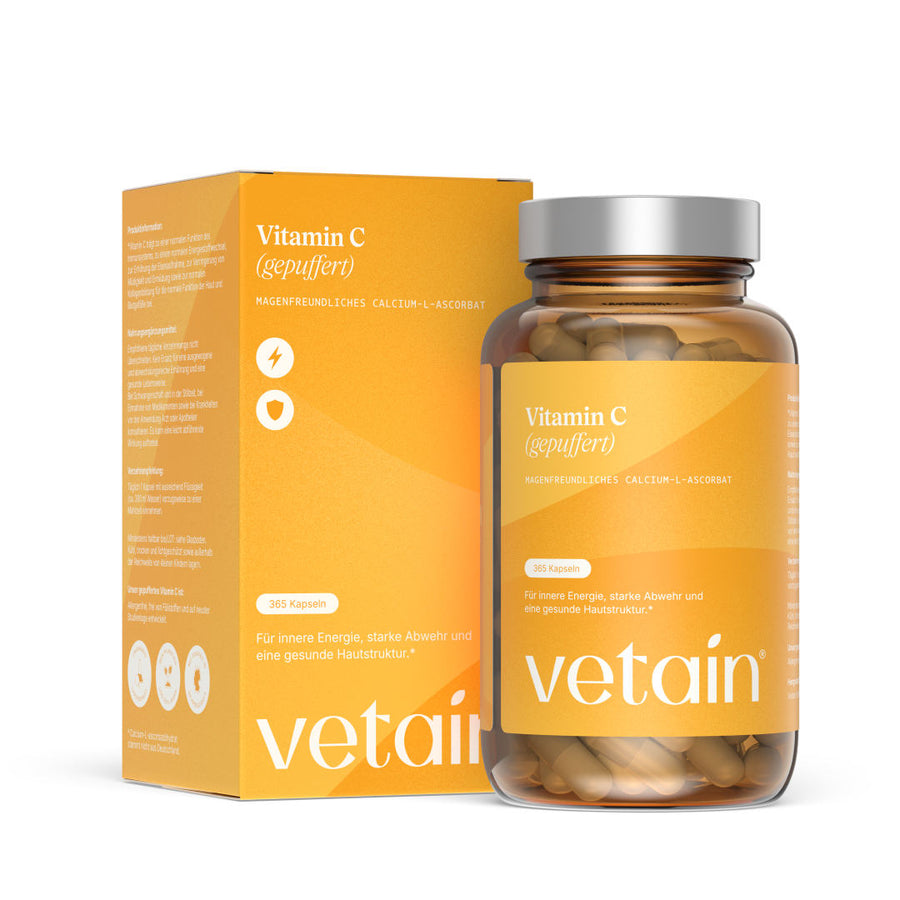
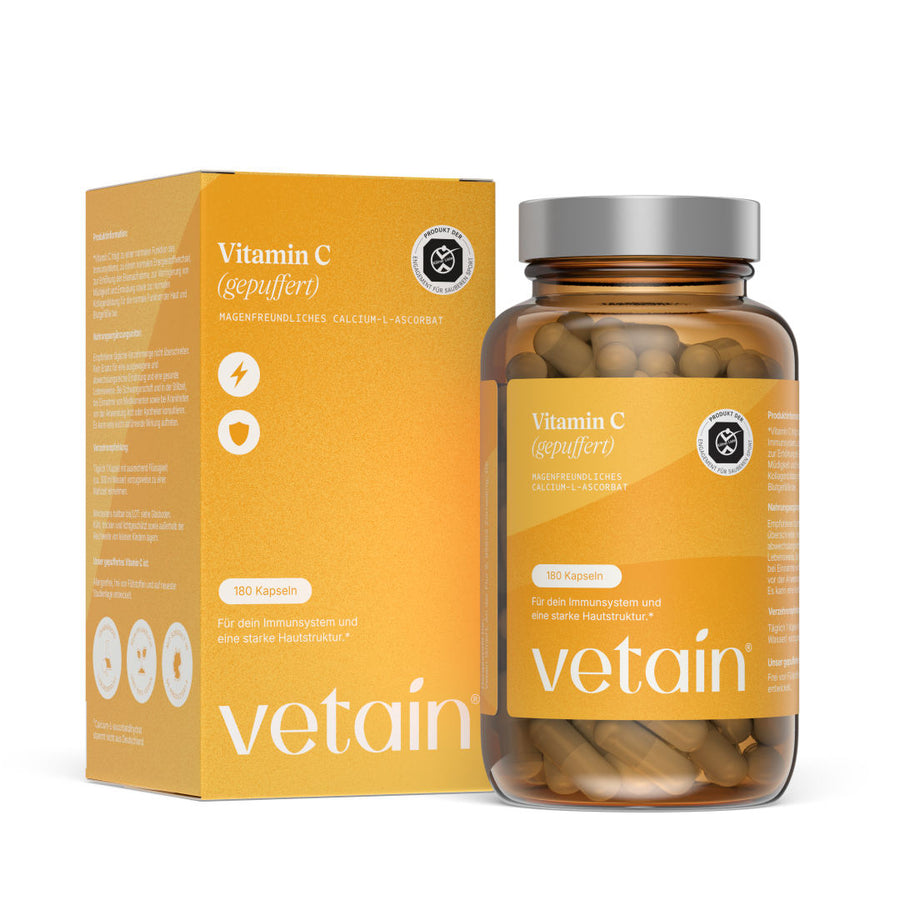
| Supplements | Supplements such as Vetain's vitamin C capsules often provide around 1000 mg of vitamin C per daily serving. In some cases, even in the form of buffered vitamin C (What is buffered vitamin C?) |
Table: Where is vitamin C found?
%-product_content-%
Fruit Edition: Where is vitamin C found?
For most people, fruit is the first place they look when it comes to vitamin C. And yes, many fruits are actually excellent sources of vitamin C. But - and this is the interesting part - not necessarily the ones you might expect. Because which fruit do we all associate with vitamin C? That's right, the lemon! In fact, though, it isn't really one of the best sources of vitamin C ... but it is delicious, of course.
Let's take a look at the world of fruit together:
Which fruit has the most vitamin C? The surprise winners
The question “Which fruit has the most vitamin C?” can be answered clearly: acerola and camu camu top the list. But let's be honest - have you ever seen a fresh acerola cherry in a supermarket? Me neither. And probably very few people have even heard of camu camu.
More realistic fruit varieties are therefore these:
-
Rose hips
With 1045 mg per 100 g, the native rose hip is a true vitamin C powerhouse. You can find it on hedges and at the edges of woods in autumn, and process it into purée, jam, or tea. An underrated treasure right on your doorstep. -
Blackcurrants
At about 177 mg of vitamin C per 100 g, they are also excellent sources. Other berries, such as strawberries (57 mg) and raspberries (24 mg), are somewhat lower, but are still valuable sources of vitamin C because of their popularity. -
Exotic fruits such as guavas
Guava provides about 273 mg. Have you ever tried it? -
Citrus fruits
Here are the supposedly vitamin C-rich stars at last: lemons contain only 51 mg of vitamin C, while oranges contain even slightly more, at 62 mg!
Popular fruits in the vitamin C check
Now things get interesting, because here we are debunking a few myths.
Does apple contain vitamin C?
The good old apple contains only about 10 mg per 100 g, depending on the variety. Surprisingly little, right? Apples are still great - because of their fiber, polyphenols, and simply because they taste delicious. But as a primary source of vitamin C? Not really.
Does banana contain vitamin C?
Only about 11 mg per 100 g. Bananas score points for potassium and quick energy, but other fruits contain significantly more vitamin C.
Does lemon contain vitamin C?
Many people think the lemon is the vitamin C champion. But how much vitamin C does a lemon really contain? About 51 mg per 100 g. That puts it only in the middle range - but it is still very popular, mainly because of its flavor.
How much vitamin C does an orange contain?
About 62 mg per 100 g. That's solid, but far from the front-runners. Oranges are reliable basics - but that's about it.
So, what surprised you? And which foods are you still wondering about: "Where is vitamin C found?".
Is vitamin C from fruit good?
Vitamin C from fruit is generally a good choice because you usually eat fruit raw. This is important because vitamin C is very sensitive to heat, water, and light - so it is seemingly sensitive to everything. Fresh fruit therefore contains the most vitamin C, while the content steadily decreases when it is stored or processed. So the shorter the journey from the tree to your mouth, the better.
Seasonal and regional availability also play a major role. Berries are at their peak in summer, rose hips and sea buckthorn in autumn, and citrus fruits in winter. If you plan cleverly, you can have access to fruit rich in vitamin C all year round.
If you're thinking, great, I already drink a juice every day anyway, things may unfortunately look different again - more on that below. The answer to the question of where to find vitamin C isn't quite that simple, unfortunately.
Vitamin C vegetables - often underestimated
I know most people would rather eat a fresh apple than boring old broccoli. But spoiler - many types of vegetables easily beat most fruits. And vegetables can be really good when turned into a delicious salad or served with a fresh dip. By the way, frozen vegetables are also a great choice!
The catch is that vitamin C is sensitive to heat and soluble in water, so vegetables should ideally be eaten raw or only cooked briefly to preserve the vitamins. Time for a raw vegetable platter! But where exactly can I find vitamin C in it?
Vegetables high in vitamin C: Where can I find vitamin C?
Which vegetable has the most vitamin C?
-
Red bell peppers are the absolute frontrunners, with up to 160 mg / 100 g. You'll learn more about this in the next section!
-
Cabbage varieties are true vitamin C providers. Raw broccoli contains around 81 mg, kale 156 mg, and Brussels sprouts around 129 mg as well.
-
Leafy greens and herbs are also surprising. Parsley contains an impressive 159 mg per 100 g - obviously, you won't eat 100 grams of it, but it pays off as a topping on salads or in smoothies. At around 57 mg, spinach is solidly in the middle.
-
Practical everyday vegetables: Potatoes (approx. 19 mg) and tomatoes (approx. 25 mg) may not be frontrunners, but because we eat them in larger quantities, they can certainly contribute to our intake. But should we answer the question "Where can I find vitamin C?" with "French fries"? Probably not, sorry.
Seasonally speaking, cabbage varieties such as kale and Brussels sprouts are perfect winter companions, while bell peppers are available all year round. Of course, locally grown produce tastes best.
Bell peppers as a source of vitamin C
When someone asks me, "Where can I find vitamin C in really large amounts while still being practical for everyday use?", I always say: bell peppers. Bell peppers contain up to 160 milligrams of vitamin C per 100 grams, making them one of the best vegetable sources of this vitamin. Just one pepper can cover the average daily requirement.
But wait - there are differences between the colors:
-
Red bell peppers: approx. 160 mg/100 g
-
Yellow bell peppers: approx. 160 mg/100 g
-
Green bell peppers: approx. 117 mg/100 g
Poor green bell peppers, which are often shunned anyway, get another blow.
A little tip: Bell peppers are incredibly versatile in the kitchen - in salads, as a snack with hummus, grilled, or in soups.
Vitamin C supplements as a source of vitamin C
If your diet isn’t ideal right now or you sometimes don’t manage to eat enough fresh fruit and vegetables, vitamin C supplements can be a sensible addition. They help you reliably meet your needs - with just 1-2 capsules a day.
Of course, a balanced diet with 5 portions of fruit and vegetables a day is naturally the best way to get vitamin C. But sometimes that simply doesn’t fit into everyday life - and that’s completely okay. In moments like these, supplements are a practical alternative. Vitamin C supplements are also very popular in winter.
At Vetain, you’ll find high-quality vegan vitamin C capsules without unnecessary additives. Let me briefly introduce them:
✓ 500 mg of vitamin C per capsule (625% NRV)
✓ Buffered with calcium - gentle on the stomach & digestive system
✓ Supports the immune system, collagen production & cell protection
✓ 100% vegan, gluten-free & no added sugar
%-split_content-%
So the answer to the question of where to find vitamin C can also simply be: in Vetain vitamin C capsules.
Optimizing vitamin C absorption: My practical tips
You now know which foods contain vitamin C. But how can you get the most out of them?
-
Gentle preparation: Vitamin C is water-soluble and sensitive to heat and light. So eating it raw is best - but not all vitamin C-rich foods can or should be eaten raw. In that case: It is better to prepare them gently than to skip them altogether or overcook them. More vitamin C is lost when boiling than when gently cooking or steaming.
My tip: short cooking times, little water, keep the lid on. Or simply enjoy it raw. -
Combination tips: One of vitamin C’s key functions is supporting iron absorption from plant-based foods, which is especially important for people following a vegetarian or vegan diet. So combine iron-rich foods such as spinach or legumes with sources of vitamin C - for example, bell peppers with lentil salad.
-
Storage and shelf life: Vitamin C sources should be stored in a dark, cool place and not for too long. The fresher they are, the more vitamin C your foods contain. The vitamin C content of supermarket juices can suffer significantly compared with fresh juices.
-
Eat directly: Cut bell peppers and broccoli shortly before eating, not days in advance. Drink smoothies immediately rather than leaving them standing for hours. And frozen vegetables are often better than their reputation - they are frozen directly after harvesting and thus retain many nutrients.
Vitamin C capsules are also very easy to take – read more about this in our article "When to take vitamin C?"
Conclusion
Where is vitamin C found? Almost everywhere that is colorful and fresh. Red bell peppers, broccoli, rose hips, blackcurrants, and citrus fruits are your best friends. With a varied plant-based diet, you can often meet your vitamin C needs well – without any exotic superfoods.
My everyday tip: Have bell peppers or a type of cabbage every day, along with seasonal fruit and, from time to time, a berry smoothie. It can be that simple. And if that doesn't work so well: Supplements offer a practical solution!
%-product_content-%
Do you have any questions? Feel free to send me an email – I look forward to hearing from you! :)
*Vitamin C content per 100 g edible portion of the food. The data comes from the BLS, is rounded, and refers to raw food. Values may naturally fluctuate (ripeness, harvest, storage, varieties).
Literature & sources
-
German Nutrition Society (DGE). Reference values for nutrient intake: vitamin C.
-
German Food Code (BLS) of the Max Rubner Institute
-
European Food Safety Authority (EFSA) (2013). Scientific Opinion on Dietary Reference Values for vitamin C.
-
German Federal Institute for Risk Assessment (BfR). Proposed maximum levels for vitamin C in foods, including food supplements.
The German Food Code is always helpful when you wonder where vitamin C is found.