

















 8 Min
8 Min
 Zuletzt aktualisiert am 23.09.2026

You’ve often read that vitamin C is important for your immune system – but every time you take a high-dose supplement, your stomach rebels? We know that feeling! Heartburn, stomach pain, or an unpleasant burning sensation are unfortunately common with many supplements. This is exactly where many turn to buffered vitamin C: a form of vitamin C that is pH-neutral and therefore feels gentler for many. In this article, I’ll explain what buffered vitamin C is, how it differs from regular vitamin C, and whether this alternative might be right for you.
Let’s start straight away: What is buffered vitamin C?
Your knowledge to go: What is buffered vitamin C?
-
Buffered vitamin C is a pH-neutral form of vitamin C that is softened or neutralized by minerals like calcium.
-
For many, it feels gentler than conventional vitamin C.
-
The bioavailability remains the same – your body can utilize it just as well as pure vitamin C.
-
Buffered vitamin C is especially suitable for people who prefer gentler products or for higher dosages.
-
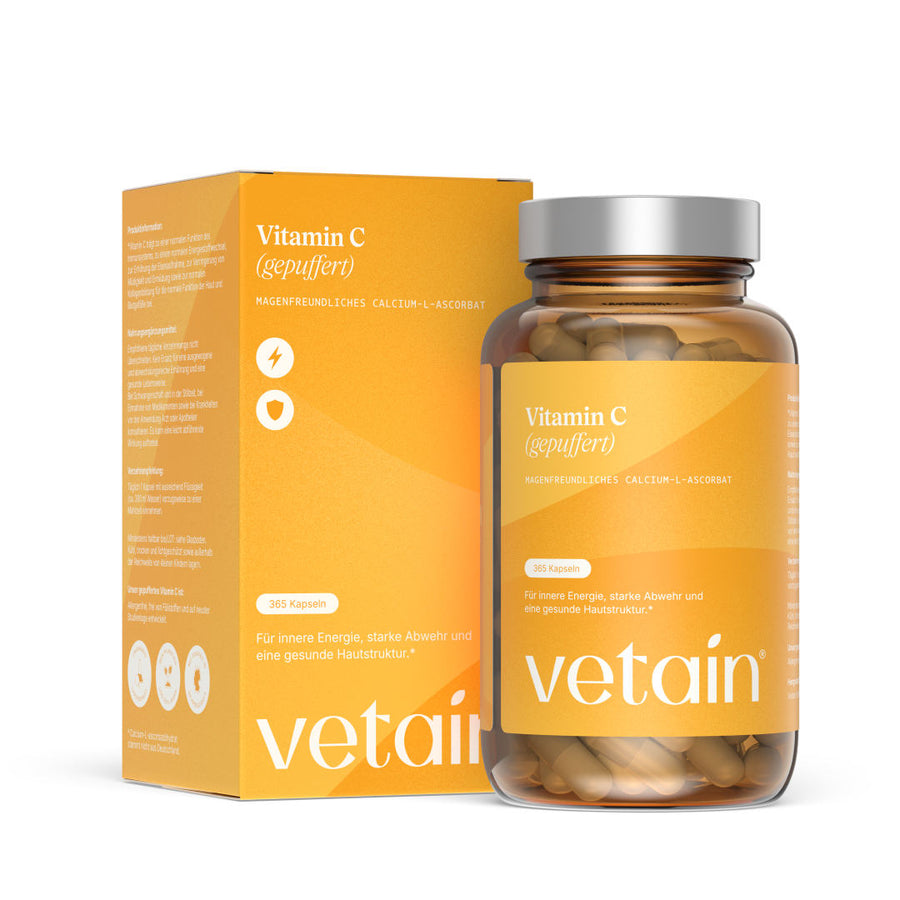
Buffered vitamin C is available as capsules, tablets, or powder – we at Vetain also offer high-quality vegan vitamin C capsules.
What exactly is buffered vitamin C?
If you're wondering what buffered vitamin C means, here’s a brief explanation: In vitamin C, the ascorbic acid (that is, vitamin C) is bound to a mineral like calcium, sodium, or magnesium. The result is called calcium ascorbate, sodium ascorbate, or magnesium ascorbate. I’ll spare you the exact chemistry – otherwise, it gets very technical.
These so-called mineral ascorbates have a key advantage: they are not as acidic as pure vitamin C. Vitamin C, as its "official" name ascorbic acid suggests, is an acid.
Buffering raises the pH level, so the vitamin C becomes less acidic. Buffered vitamin C has a pH of about 6.8 to 7.4 – so it is almost neutral. For comparison: pure ascorbic acid has a pH of about 2.5, roughly the same as lemon juice. And as we know, that is quite acidic.
Extra knowledge: The term “buffered” comes from chemistry. A buffer stabilizes the pH value and prevents strong acid fluctuations. That makes it even clearer what buffered vitamin C is, right?
Buffered vitamin C vs. regular ascorbic acid – what is the difference?
The development of buffered vitamin C forms arose from a practical need: many people do not tolerate high doses of pure ascorbic acid well. They experience stomach pain, heartburn, and similar issues. In such moments, many people turn to buffered products, which are often described as gentler. The mechanism behind the gentleness is relatively simple: less acid means less irritation. And as already explained, buffered vitamin C is less acidic. Studies show that forms like calcium ascorbate lower stomach pH less than free ascorbic acid. As a result, buffered ascorbic acid is more comfortable for many people.
Buffered vitamin C difference compared to regular ascorbic acid:
So the difference mainly lies in the pH value and the resulting mildness. Here is a direct comparison:
-
pH value: Normal ascorbic acid is strongly acidic (pH ~2.5), while calcium L-ascorbate has an almost neutral pH of about 6.8–7.4.
-
Effects on your stomach: The acidic form can irritate the stomach lining, especially at higher doses or when taken on an empty stomach. Buffered vitamin C, on the other hand, is gentler (keyword: vitamin C heartburn or vitamin C stomach pain).
-
Bioavailability: Here’s the good news – the bioavailability of buffered vitamin C is comparable to that of pure ascorbic acid. Your body can absorb both forms similarly quickly and well. Some studies even showed that calcium ascorbate has slightly higher absorption, but the differences are usually not clinically significant.
-
Price: Buffered vitamin C tends to be a bit more expensive than pure ascorbic acid because its production is more complex. But in return, you also get additional minerals!
We now know what buffered vitamin C is and how it differs from "regular" vitamin C. Time for a little digression:
Why buffered vitamin C can be an option if you don’t tolerate other vitamin C forms
If regular ascorbic acid is not for you (burning, heartburn, or stomach cramps), you can talk to your doctor about whether buffered vitamin C might be an alternative for you. Especially at doses of 500 mg or more, many notice the acidity of unbuffered products quite clearly.
By the way: You can of course also get vitamin C through your diet, from typical vitamin C foods.
Buffered vitamin C | Advantages at a glance
What are the advantages of buffered vitamin C? Here are the most important at a glance:
-
Gentleness as the main advantage: The pH-neutral character can feel gentler for many.
-
Same effect: Vitamin C contributes to the normal function of the immune system and helps protect cells from oxidative stress – whether buffered or not. The "buffered vitamin C effect" is the same.
-
Possibility of higher dosages: Buffered vitamin C can be taken in high doses.
-
Additional minerals as a bonus: Buffered vitamin C also provides essential minerals such as calcium, magnesium, or potassium – depending on the compound. It’s basically a two-in-one effect.
If you are looking for high-quality vegan vitamin C capsules that rely on buffered vitamin C, feel free to check out our range at Vetain.
%-split_content-%
By the way: If you ever forget what buffered vitamin C is, you can always check our product packaging. There you will find the exact composition in the ingredients. You will also find the intake recommendations there. Also interesting: Our blog article "When should you take vitamin C?"
When can buffered vitamin C be particularly useful?
Why buffered vitamin C can be the better choice in certain situations? Here are some everyday examples:
-
If you prefer gentler products: If you simply cannot tolerate classic ascorbic acid well, buffered vitamin C can be a suitable alternative.
-
For high-dose vitamin C treatments: In the cold season, during stressful times, or if you want to specifically support your immune system, many rely on higher doses. Daily vitamin C intake can help support the immune system and reduce fatigue.
-
For regular, long-term use: Those who supplement continuously often choose the gentler form. Adequate vitamin C intake is important for normal collagen formation, which is crucial for skin, teeth, cartilage, and bones.
-
Combinations with other supplements: Those who take multiple supplements can supplement more gently with buffered vitamin C.
What I find particularly interesting: Many people don’t even know buffered vitamin C or have only heard the name and wonder, “Buffered vitamin C – what is that?” It can be a great option for many people!
What forms of buffered vitamin C are there?
What buffered vitamin C is is now clear – but what forms are actually available?
-
Buffered vitamin C capsules: Capsules are convenient, cleanly dosed, and often free from unnecessary additives. They are easy to take and very popular.
-
Buffered vitamin C tablets: Tablets are often cheaper but more likely to contain fillers and binders. It’s worth taking a close look at the ingredients here.
-
Buffered vitamin C powder: Powder offers great flexibility in dosing. You can dissolve it in liquid and adjust as needed.
At Vetain, we have developed our vitamin C capsules to be high-quality, vegan, and free from unnecessary additives. Our formula relies on high-quality calcium L-ascorbate.
%-split_content-%
What should you look for when buying?
-
Quality features and certifications: Pay attention to purity information, lab tests, and transparent manufacturer details.
-
Buffered does not just mean throwing anything in: A true buffered product contains defined mineral ascorbates like calcium ascorbate or magnesium ascorbate. Take a close look at what is actually inside.
-
Avoid unnecessary additives and allergens: The cleaner the formula, the better – that’s what we think anyway. Avoid unnecessary fillers, colorants, or additives.
-
Choose dosage and form: Many supplements contain about 500 mg of vitamin C per daily dose. Too high doses are often unnecessary, too low show no effect.
-
Sustainability and vegan options: If this is important to you, be sure to look for vegan ingredients and sustainable packaging.
If your friends are also looking for a good vitamin C supplement, feel free to recommend our products – and preferably also our article "What is buffered vitamin C?"
Want more?
How about these exciting product combinations:
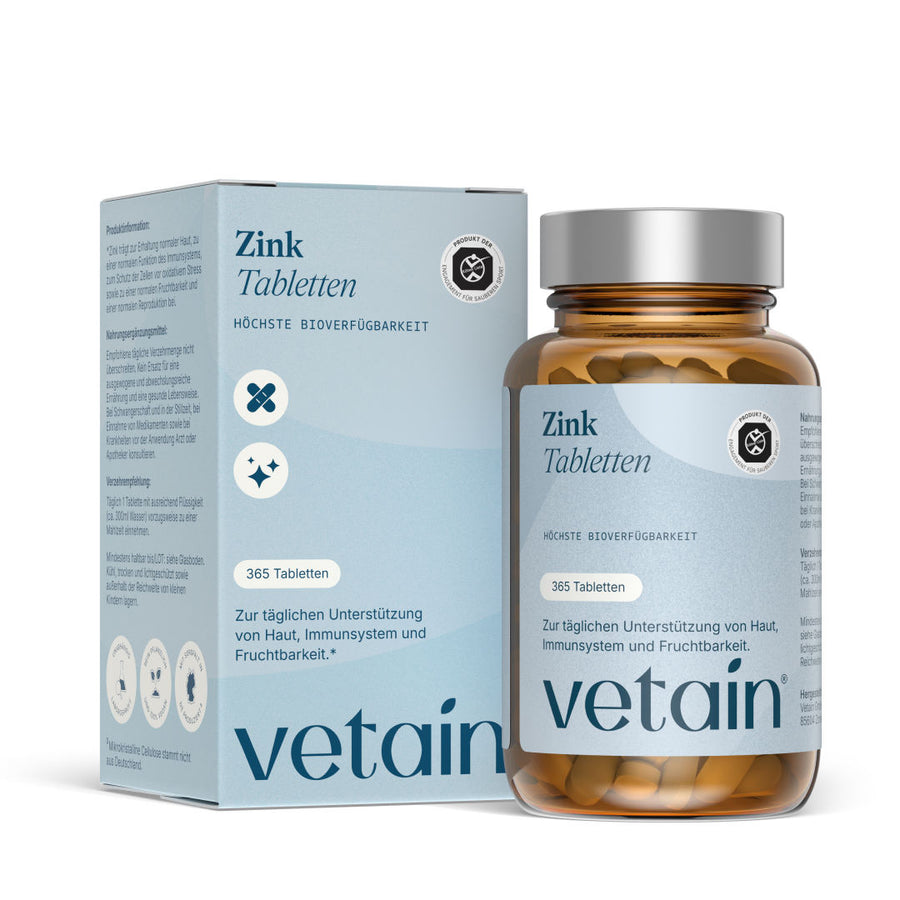
Buffered vitamin C and zinc
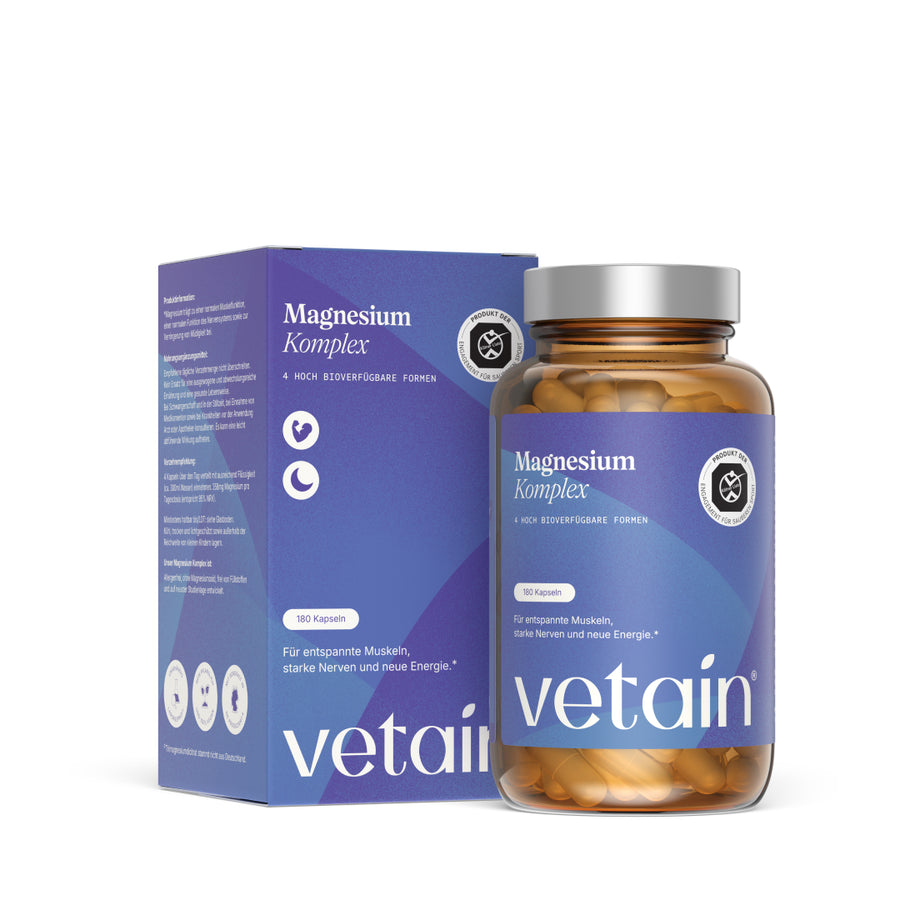
Buffered vitamin C & magnesium
%-product_content-%
Conclusion: What is buffered vitamin C?
Let’s go through the most important questions again:
What is buffered vitamin C in summary? It is a pH-neutral, gentler form of vitamin C that is buffered with minerals like calcium, making it feel more comfortable for many than pure ascorbic acid. The bioavailability is comparable, so you don’t miss out on anything!
Is buffered vitamin C good for you? If you prefer milder products, need higher doses, or want to supplement long-term, buffered vitamin C can be a practical choice. Whether a buffered vitamin C supplement is right for you depends on your individual needs. If in doubt, consult your doctor or pharmacist.
Do you have questions (even if it’s just the question "What is buffered vitamin C?" again)? Then feel free to send me an email – I look forward to hearing from you! :)
Literature & Sources
-
Biesalski, H.K. et al. (2002). Vitamins, trace elements, and minerals.
-
Krukowski, S. (2024). Vitamin C: Overview of drugs and dietary supplements and analytical methods for determining its content. Acta Poloniae Pharmaceutica – Drug Research, Vol. 81 No. 2
-
Linus Pauling Institute, Oregon State University: Supplemental Forms of Vitamin C.
Manufacturers of buffered vitamin C are also happy to provide information on the question "What is buffered vitamin C?"