




















 8 Min
8 Min
 Zuletzt aktualisiert am 23.09.2026

You take vitamin C regularly - but wonder whether you are actually doing it correctly? After all, there is a lot to consider: Perhaps you have already heard that some vitamins should be taken in the morning and others in the evening. Some with food and others preferably on an empty stomach. And perhaps you also know that certain combinations enhance the effect - or can block each other. Sounds complicated, right? Don't worry: In this article, I will show you exactly when you should take vitamin C to get the most out of your supplement.
Your Knowledge To Go: When should you take vitamin C?
-
Vitamin C can be taken flexibly in the morning, at noon, or in the evening with a glass of water.
-
Taking it on an empty stomach enables faster absorption, but may cause discomfort in people with sensitive stomachs. Taking it with a meal is also possible.
-
The body can only store vitamin C to a very limited extent - that is why a regular, daily intake is important.
-
For higher doses of vitamin C, it may make sense to split the dose into two servings throughout the day
-
Vitamin C as an absorption booster: Taking vitamin C capsules together with iron supplements improves the absorption of plant-based iron.
Why proper timing is so important for vitamin C
Why is the question "When should you take vitamin C?" actually so important? Doesn't it matter when you take supplements? Following the motto: As long as you take them?
As a general rule, every vitamin and mineral has its own unique properties. For this reason, some are best taken in the morning, some in the evening, some with a meal, and others simply with a glass of water.
Vitamin C - also chemically known as ascorbic acid - is fortunately a very flexible supplement, with no strict rules for taking it. Nevertheless, there are two points to keep in mind when taking it.
-
Vitamin C is one of the water-soluble vitamins. This means your body cannot store it for later. Excess vitamin C is simply excreted in the urine. That is why a consistent, daily intake of vitamin C is more effective than taking high amounts sporadically.
-
In theory, you can take vitamin C with a glass of water regardless of the time of day or your meals. But, of course, not everyone reacts the same way. For example, some people have a sensitive stomach and do not tolerate the vitamin as well on an empty stomach. Others do not notice a difference. That’s why it’s worth finding your optimal timing - and that’s exactly what I’m going to help you with now.
Let’s take a closer look together at the question, "When should you take vitamin C?"
Vitamin C in the morning or evening: Which is better?
The honest answer: Scientifically speaking, there is no significant difference between taking vitamin C in the morning or in the evening. Studies have not yet shown that the time of day has a measurable effect on its benefits in healthy people.
In practice, things look a little different:
-
Taking it in the morning: Many people incorporate their vitamin C capsules into their morning routine. Vitamin C contributes to normal energy metabolism - so starting the day with sufficient vitamin C feels intuitively right to many people.
-
Taking it in the evening: Taking vitamin C in the evening is theoretically just as unproblematic. However, there are indications that vitamin C could have a stimulating effect. Taking it shortly before bedtime is therefore often not recommended - but it is not prohibited either. So if you want to take vitamin C in the evening, it is better to leave some time between taking it and going to bed. The same applies here: Simply try out what feels good for you. Some people do not notice any possible stimulating effect even when taking vitamin C before bed.
So: When should you take vitamin C? In the morning or evening? In theory, both are possible, but many people prefer taking it in the morning. Ultimately, the best time is the one you can actually stick to.
Take vitamin C on an empty stomach or with a meal?
Here’s where it gets interesting: The question isn’t just "When should you take vitamin C?", but also how or with what.
Vitamin C on an empty stomach - yes or no?
Vitamin C is often recommended in the morning on an empty stomach, as this enables maximum vitamin C absorption by the body.
But - and this is important - not everyone tolerates vitamin C well on an empty stomach. Ascorbic acid is, after all, an acid. In sensitive people, this can lead to gastrointestinal discomfort: heartburn, nausea, or an unsettled feeling.
What you can do:
-
With a sensitive stomach: Take vitamin C with a meal - this buffers the acid.
-
With a robust stomach: Take it 15–30 minutes before breakfast for optimal absorption.
-
Alternative, if neither option feels right for you: A light meal, such as a few nuts, may be enough for many people.
-
There are also supplements that contain buffered vitamin C - these are considered gentler. Also interesting: Our article "What is buffered vitamin C?"
%-split_content-%
At Vetain, we say: Tolerability beats optimal absorption. Tolerability is always more important to us than optimal absorption. Please don't get me wrong, of course your supplement should also be absorbed well, which is why we work with active, highly bioavailable ingredients. But even vitamins that are absorbed exceptionally well won't make you happy in the long term if you get stomachaches every time you take them.
Our recommendation is therefore: Take our vitamin C capsules with a glass of water with a meal.
Quite independently of the question of when you should take vitamin C, here's another quick note: To further improve the tolerability of our capsules, we have buffered our ascorbic acid - this makes a big difference for many people.
Vitamin C combined with other nutrients: When should you take vitamin C?
If you take not only vitamin C but also other supplements, this section is especially important for you. Vitamins & minerals can influence one another, so a combination can also affect when you should take vitamin C!
Most vitamins & minerals can easily be combined with vitamin C - there are no real no-gos with the usual supplements.
When should you take vitamin C if you combine it with other supplements?
It always depends on the other preparation. If the other supplement should be taken with a meal, vitamin C should be taken then as well. If taking it at lunchtime is recommended, that works too. That's what's great about vitamin C - it's incredibly flexible.
Let's take another look at 3 special combinations together:
-
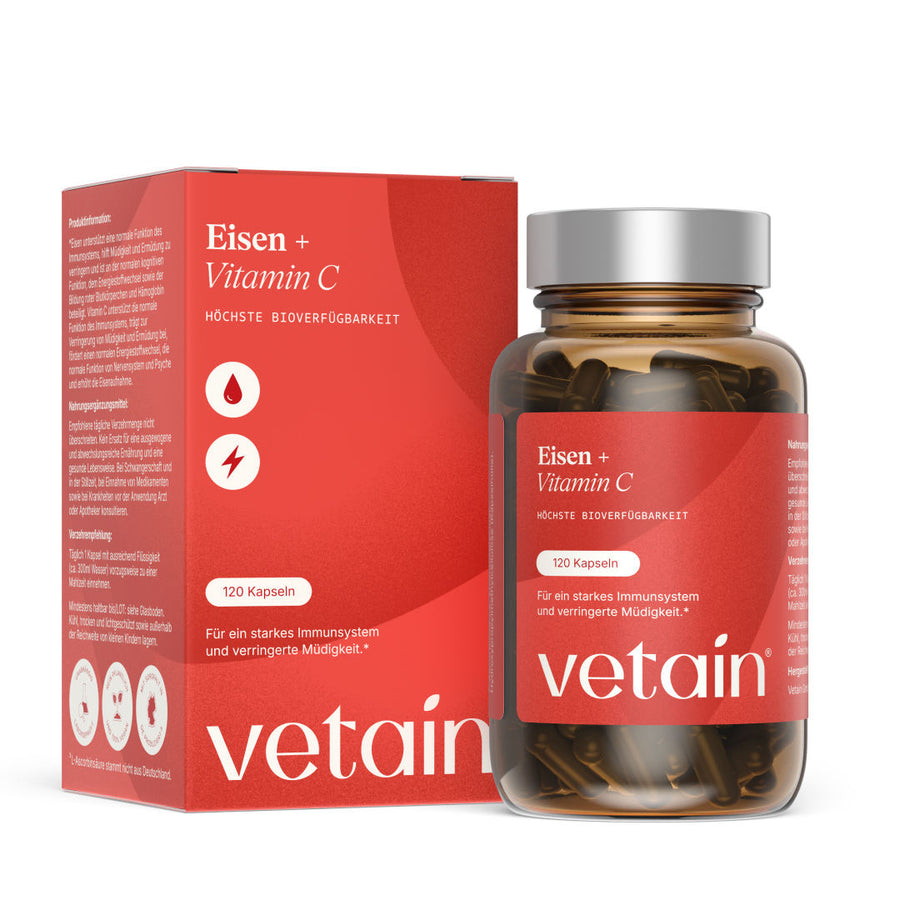
Vitamin C and iron: Vitamin C improves the absorption of plant-based iron. This is particularly relevant for vegan diets, where iron mainly comes from plant-based sources such as legumes, tofu, spinach, or vegan supplements. My tip: Take your vitamin C supplement directly with iron-rich meals or together with your iron supplement.
Insider tip: There are also combination supplements that contain both nutrients. -
Vitamin C and B12: It's best to leave a few hours between taking the two supplements.
-
Vitamin C and medications: You should always speak with your doctor about combining vitamin C with medications!
-
You can find more combinations in our article "Which supplements should not be taken together?".
%-product_content-%
Avoid common mistakes when timing vitamin C intake
In my experience, I keep seeing the same pitfalls when it comes to the question, "When should you take vitamin C?"
-
Mistake: Taking excessively high single doses
Taking 1000 mg at once sounds like "more is better." In reality, absorption drops drastically and your body simply excretes most of it. Side effects such as diarrhea or stomach cramps become more likely. It's also more vitamin C than you actually need. -
Mistake: Irregular intake
The body can store only very limited amounts of vitamin C. Regular supplementation is therefore usually better than taking record doses twice a year. -
Mistake: Overlooking interactions with medications
High doses of vitamin C can interact with certain medications. Therefore, if you take medication regularly: Please speak with your doctor. -
Mistake: Ignoring your individual tolerance
If you have stomach problems after taking every vitamin C tablet, the solution isn't to "tough it out." Change the form (buffered vitamin C is often gentler), take it consistently with food, or try taking it at a different time of day.
Still wondering, "When should you take vitamin C?" We'll now show you how to take our capsules.
Vetain's vitamin C capsules are easy to take
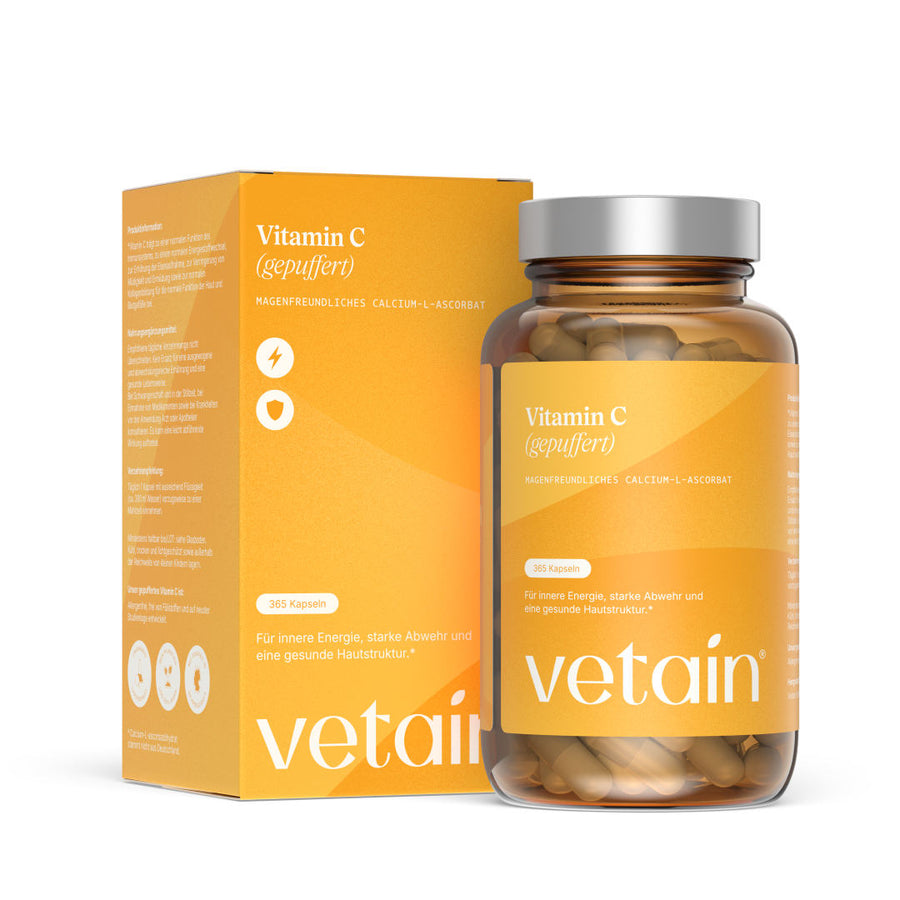
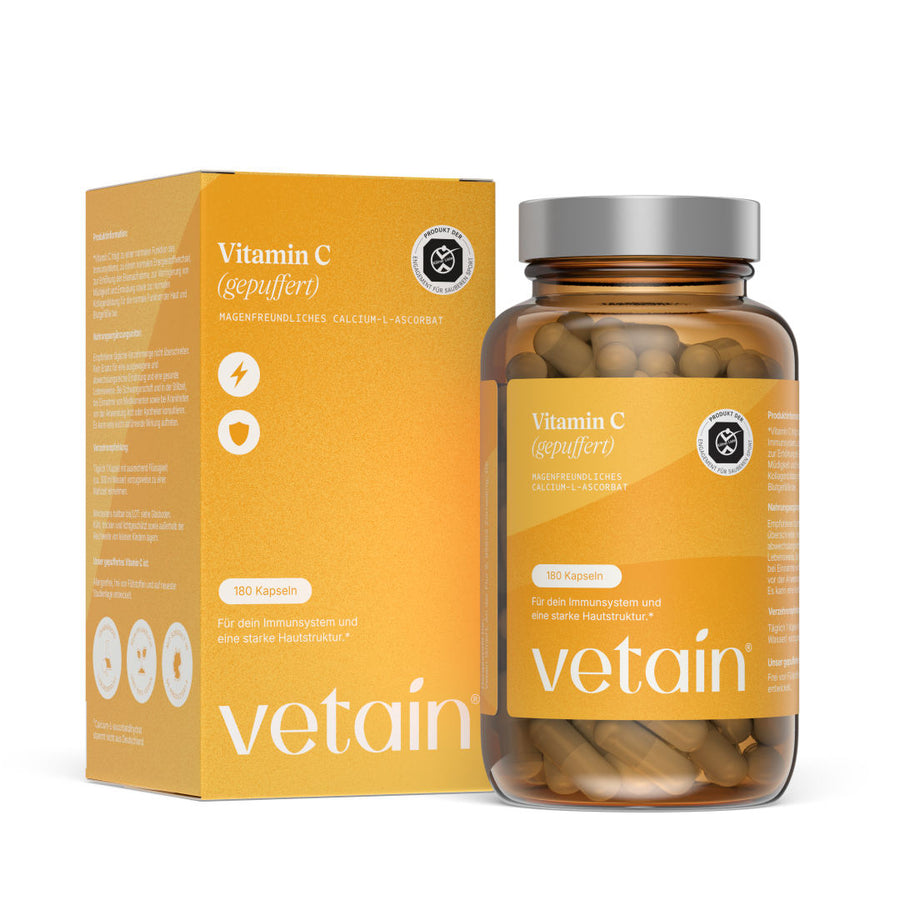
Our vitamin C capsules are designed to be easy to take, well tolerated, and effective!
What sets Vetain's vitamin C capsules apart:
-
High dose: 500 mg per capsule
-
Buffered with calcium - gentle on the stomach
-
Vegan, gluten-free, with no added sugar or unnecessary fillers
-
Regularly laboratory tested
How do you take Vetain vitamin C? You should take 1 Vetain vitamin C capsule daily with sufficient liquid (approx. 300 ml of water), preferably with a meal.
%-split_content-%
By the way: If you ever forget when you should ideally take vitamin C, you can simply check our product page or look directly at your supplement. You'll always find recommended usage instructions there!
The same naturally applies to supplements from other brands! So if you don't know when you should take vitamin C when using brand xyz, always check the respective website. Just as every person is individual, every product is also a little different.
Conclusion: When should you take vitamin C?
The right timing for taking vitamin C is less complicated than you might think: You can take vitamin C at any time of day. An ideal time is in the morning with a meal - it's practical and well tolerated. For higher doses: Split them up. If you have a sensitive stomach: Take it with food. Otherwise: Simply pay attention to how you feel!
"Taking vitamin C correctly" isn't necessarily about following fixed rules, but about you, your preferences, and your needs.
Also interesting: How much vitamin C do you really need?
And, of course, this should never be missing: "What foods contain vitamin C?"
Do you have any questions? Feel free to send me an email - I'd love to hear from you! :)
Literature & sources
-
German Nutrition Society (DGE). Reference values for nutrient intake - vitamin C
-
German Nutrition Society (DGE). Selected questions about vitamin C
-
EFSA NDA Panel (EFSA Panel on Dietetic Products, Nutrition and Allergies) (2013). Scientific Opinion on Dietary Reference Values for vitamin C. EFSA Journal, 11(11).
-
German Federal Institute for Risk Assessment (BfR). Recommended maximum amounts of vitamin C in foods, including food supplements.
On the internet, you'll find lots of information on the topic "When should you take vitamin C?". For up-to-date and reliable information, it's always best to check the manufacturer's website.