

















 Zuletzt aktualisiert am 25.09.2026

I have to admit: Before I looked into the topic more closely, I only had a vague idea that magnesium had “something to do with cramps” and was probably found in bananas. Now I know: Both are only partly true. Maybe you know the feeling - a calf cramp in the middle of the night, and suddenly you seriously wonder: Which foods actually contain magnesium, and am I getting enough of it at all?
In this article, I will show you which foods contain magnesium, which myths about magnesium exist, and what you can do when diet alone is not enough.
Your take-away knowledge: Which foods contain magnesium?
-
Top sources: Cocoa powder (approx. 545 mg/100 g), Brazil nuts (379 mg/100 g), and sesame (347 mg/100 g) provide the most magnesium.
-
But: Serving size matters! We usually do not consume cocoa powder or sesame regularly and in large quantities!
-
Instead, everyday sources are important: Oats, green leafy vegetables, whole-grain bread, dark chocolate, and nuts & seeds contain a good amount of magnesium and can easily be incorporated into your diet.
-
Plant-based over animal-based: Plant-based foods in particular are considered sources of magnesium.
-
Daily requirement: According to the DGE, women need around 300 mg of magnesium per day, while men need around 350 mg.
- More and more people are turning to magnesium supplements
How much magnesium do you need each day?
The German Nutrition Society provides an estimated value for an appropriate magnesium intake: For adults, this is 300 mg for women and 350 mg for men per day. According to the DGE, the same values currently apply to pregnant women as to non-pregnant women. The need may increase with intensive exercise, chronic stress, or certain illnesses.
So, remembered everything? These values are the basis for showing you exactly where and how much magnesium is found - in specific foods.
Magnesium table: Which foods are high in magnesium?
Which foods contain magnesium, and how much is really in them? Here is our magnesium food table with the top sources:
| Food | Condition | Magnesium per 100 g |
|---|---|---|
| High content (150 mg or more per 100 g) | ||
| Cocoa powder, lightly defatted | dry | approx. 545 mg |
| Brazil nuts | raw | 379 mg |
| Sesame seeds | raw | 347 mg |
| Poppy seeds | raw | 340 mg |
| Sunflower seeds | raw | 336 mg |
| Pumpkin seeds | raw | 285 mg |
| Almonds | raw | 218 mg |
| Dark chocolate (high cocoa content) | – | approx. 199 mg |
| Peanuts | roasted | 165 mg |
| Medium content (50–149 mg per 100 g) | ||
| Wild rice | raw, uncooked | 148 mg |
| Walnuts | raw | 140 mg |
| White beans (common beans) | dried | 140 mg |
| Brown/green lentils | dried | 129 mg |
| Rolled oats | dry | 121 mg |
| Whole-grain wheat flour | dry | 95 mg |
| Spinach | steamed | 82 mg |
| Swiss chard | steamed | 70 mg |
| Spinach | raw | 68 mg |
| Swiss chard | raw | 66 mg |
| Red lentils | dried | 59 mg |
| Whole-grain bread | – | 57 mg |
| Low content (under 50 mg per 100 g) | ||
| White beans (common beans) | cooked | 45 mg |
| Wheat mixed bread | – | 32 mg |
| Zucchini | raw | 29 mg |
| Banana | raw | 28 mg |
| Broccoli | raw | 27 mg |
| Brown/green lentils | cooked | 22 mg |
| Red lentils | cooked | 16 mg |
| White flour, type 405 | dry | 15 mg |
| Chicken egg | cooked | 14 mg |
| Chicken egg | raw | 13 mg |
| Whole milk, 3.5% fat | pasteurized | 11 mg |
| Coffee (beverage), filtered | – | approx. 8 mg |
The table shows it in black and white: Nuts, seeds, and cocoa products lead the way, followed by whole-grain products and legumes. And whole-grain products easily outperform white flour products when it comes to magnesium.
A small note on this: Many foods here are listed in their dry, uncooked state. When cooked, they absorb water, which dilutes the magnesium content per 100 g: 129 mg of magnesium in 100 g of dry lentils becomes only around 22 mg per 100 g of cooked lentils after cooking.
So, now we know the answer to the question of what is high in magnesium. But honestly: Do you eat 30 Brazil nuts or an entire poppy seed cake every day? Probably not. So the top sources on paper are not necessarily practical everyday sources. Legumes, wild rice, nuts, or green leafy vegetables are more realistic - they probably end up on your plate more often. So you don't meet your needs through a single top source, but through a combination of such everyday sources.
Foods with magnesium by food group
Do you think more in terms of food groups rather than top sources?
Here we answer the question of where magnesium is found, sorted by food groups:
| Food | Condition | Magnesium per 100 g* |
|---|---|---|
| Meat and fish | ||
| Tuna | raw | 50 mg |
| Chicken breast fillet | raw | approx. 32 mg |
| Pork tenderloin | raw | approx. 26 mg |
| Herring | raw | 26 mg |
| Salmon | raw | approx. 23 mg |
| Shrimp | raw | approx. 23 mg |
| Beef tenderloin | raw | 22 mg |
| Animal-based foods (eggs, milk) | ||
| Chicken egg | cooked | 14 mg |
| Chicken egg | raw | 13 mg |
| Whole milk, 3.5% fat | pasteurized | 11 mg |
| Nuts and seeds | ||
| Brazil nuts | raw | 379 mg |
| Sesame seeds | raw | 347 mg |
| Poppy seeds | raw | 340 mg |
| Sunflower seeds | raw | 336 mg |
| Pumpkin seeds | raw | 285 mg |
| Almonds | raw | 218 mg |
| Peanuts | roasted | 165 mg |
| Walnuts | raw | 140 mg |
| Legumes | ||
| White beans | dried | 140 mg |
| Brown/green lentils | dried | 129 mg |
| Red lentils | dried | 59 mg |
| White beans | cooked | 45 mg |
| Brown/green lentils | cooked | 22 mg |
| Red lentils | cooked | 16 mg |
| Grains | ||
| Wild rice | raw, uncooked | 148 mg |
| Rolled oats | dry | 121 mg |
| Whole-grain wheat flour | dry | 95 mg |
| Whole-grain bread | – | 57 mg |
| Wheat mixed bread | – | 32 mg |
| White flour, type 405 | dry | 15 mg |
| Vegetables | ||
| Spinach | steamed | 82 mg |
| Swiss chard | steamed | 70 mg |
| Spinach | raw | 68 mg |
| Swiss chard | raw | 66 mg |
| Zucchini | raw | 29 mg |
| Broccoli | raw | 27 mg |
| Fruit | ||
| Banana | raw | 28 mg |
| Other | ||
| Cocoa powder, lightly defatted | dry | approx. 545 mg |
| Dark chocolate (high cocoa content) | – | approx. 199 mg |
| Coffee (beverage), filtered | – | approx. 8 mg |
A small fairness note: Meat and fish rank noticeably lower here - plant-based sources such as nuts, seeds, and whole grains simply provide more magnesium per 100 g. But plant-based foods also have a catch: phytic acid. Phytic acid can inhibit magnesium absorption in the intestines. This means that not all the magnesium in plant-based foods ultimately makes it into your body. However, there are some tips for minimizing the effect of phytic acid:
Reducing phytic acid - here's how
What can you do if you want to get as much as possible from your whole-grain bread or lentils?
According to a recent study by Nsabimana et al., the common advice to simply cook the foods surprisingly does little: Phytic acid is heat-stable.
More effective are:
-
Soaking (around 13% less phytic acid after 24 hours in the study),
-
Sprouting, or sprouts (almost 32% less after several days), and above all
-
Fermentation (up to just under 70% less, depending on the culture)
The combination of all three methods is the most effective: Soaking, sprouting, and fermenting together reduced the phytic acid content in the study by more than 85%. And although the study did not specifically focus on magnesium and centered on corn as a food, we can apply the findings to ourselves - the mechanisms are the same. In everyday life, this means soaking legumes overnight, choosing sourdough more often when buying bread, and trying sprouted oats in your muesli.
Facts & myths about foods containing magnesium
Which nuts and seeds contain the most magnesium? Pumpkin seeds provide around 285 mg of magnesium per 100 g, along with zinc and iron. Almonds contain 218 mg of magnesium, while walnuts contain around 140 mg.
When it comes to grains: Whole-wheat flour contains around 95 mg of magnesium per 100 g, while white flour (type 405) contains only about 15 mg - more than six times less because the bran and germ are lost during milling. Wild rice (raw, uncooked) contains 148 mg of magnesium per 100 g and is a magnesium-rich alternative to white rice.
How much magnesium does a banana contain? A medium-sized banana (approx. 120 g) provides around 34 mg of magnesium. Does that make bananas a magnesium superfood? Not really. And the question of which fruit contains a lot of magnesium is quickly answered too: In fact, none.
Is your diet enough? Here's how to play it safe
With a balanced diet rich in whole grains, nuts, legumes, and vegetables, you can usually reach the recommended magnesium intake pretty easily.
However, there are situations in which intake can fall short:
-
A lot of exercise can increase the need for magnesium. Read more about the right timing around your workout in our article "Magnesium Before or After Exercise".
-
Plant-based diets that do not take phytic acid into account.
-
Unbalanced diets or strict calorie restriction (e.g. when losing weight) limit the amount of nutrients consumed.
-
Illnesses and medications: Certain illnesses or long-term medication can impair magnesium absorption - in such cases, it's best to talk to your doctor.
-
High alcohol consumption over an extended period.
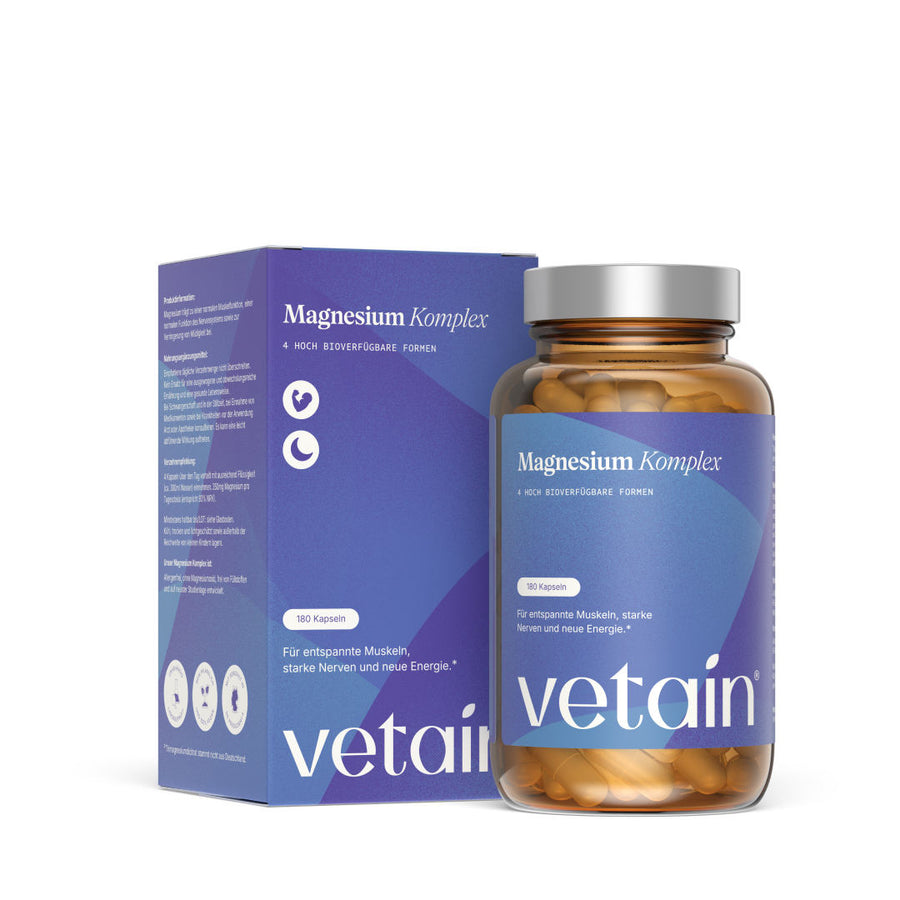
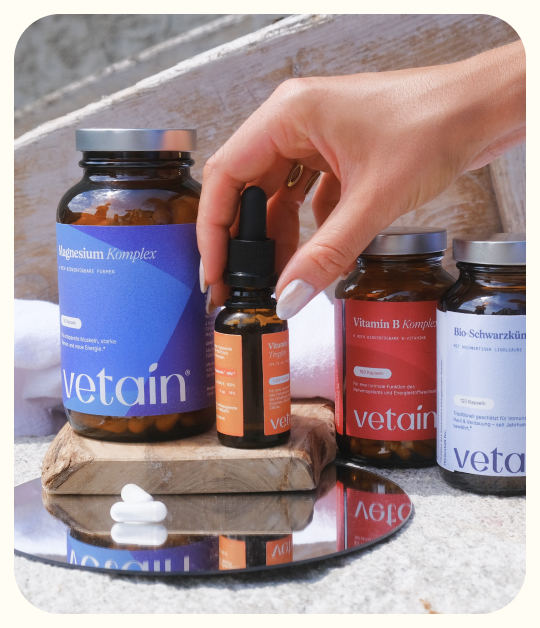
So what happens when everyday life gets in the way - during stressful periods or while traveling, for example, when your diet isn't as balanced as usual? In that case, a good magnesium supplement can be a useful addition. Vetains Magnesium Complex is suitable for anyone who simply wants to play it safe. It combines four highly bioavailable magnesium compounds (citrate, malate, bisglycinate, taurate), is vegan, and has been laboratory-tested.
%-split_content-%
Magnesium combined with other minerals
Our tip: Looking for foods that contain several nutrients in combination makes your diet easier because you don't have to “chase” every nutrient individually.
-
Magnesium and potassium: Potatoes and legumes combine both minerals. Per 100 g, a banana provides around 334 mg of potassium along with some magnesium.
-
Magnesium and calcium: Leafy green vegetables such as spinach and Swiss chard provide calcium as well as magnesium. Per 100 g, almonds contain around 218 mg of magnesium and around 85 mg of calcium - not a top amount, but a nice bonus.
-
Magnesium and zinc: Pumpkin seeds are the star here. Per 100 g, they provide around 285 mg of magnesium, along with approximately 6 mg of zinc and around 5 mg of iron. Whole-grain products also combine these minerals.
-
Magnesium and iron: Legumes are often rich in both – white beans provide around 140 mg of magnesium per 100 g (dried), and with over 6 mg of iron, they are also a good source of iron. Lentils provide around 129 mg of magnesium and approximately 8 mg of iron per 100 g (dried), making for a similarly good combination.
%-product_content-%
Conclusion: Which food contains the most magnesium?
What foods are high in magnesium? The undisputed leader is cocoa powder, closely followed by nuts and seeds: Brazil nuts, sesame seeds, poppy seeds, and sunflower seeds provide almost as much as or even more than the entire daily requirement per 100 g. Whole-grain products and legumes provide a reliable basis for daily magnesium intake. Vegetables such as spinach and Swiss chard, the familiar banana, and dark chocolate round out the range. Variety in the diet is key.
Also interesting: When is the right time to take magnesium? In the morning or evening?
Do you have questions? Feel free to send me an email – I look forward to hearing from you! :)
*All values are taken from the German Food Key (BLS), Version 4.0 (2025) – the official German nutrient database of the Max Rubner Institute – and refer to the edible portion per 100 g.
Literature & sources
-
German Nutrition Society (DGE): Reference values for nutrient intake – magnesium
-
German Nutrition Society (DGE): FAQ on magnesium
-
German Federal Institute for Risk Assessment (BfR)
-
Max Rubner Institute (MRI): German Food Key (BLS), Version 4.0 (2025) – Nutrient database for magnesium content in foods
-
Nsabimana, C., Ismail, B.P., Lazarte, C.E. (2024): Effects of processing methods on phytic acid content and mineral bioavailability. Frontiers in Nutrition.
-
Schuchardt JP, Hahn A. (2017): Intestinal Absorption and Factors Influencing Bioavailability of Magnesium – An Update. Current Nutrition & Food Science, 13(4).