
















 9 Min
9 Min
 Zuletzt aktualisiert am 23.09.2026

Your nose is running, your throat is scratchy – and suddenly you're hearing from all sides: "Take zinc!" Perhaps you've even reached for zinc tablets yourself without really knowing if and how this trace element is supposed to work for colds. The uncertainty is understandable: there's sometimes a pretty big gap between advertising claims and actual scientific findings. In this article, I'll guide you through the facts – what we know about zinc. Zinc for colds Really understand how the immune system and zinc are related and what you should pay attention to when taking zinc.
Your knowledge to go: Zinc for colds
-
Zinc contributes to the normal function of the immune system That's why many people take zinc for colds.
-
One regular and sufficient zinc intake is an important foundation.
-
Studies suggest that additional zinc intake could help alleviate symptoms during a cold. A cold 2-3 days shorter This is a problem. Up to 75 mg of zinc is being discussed for colds – we at Vetain cannot make a recommendation in this case.
-
One good basic care However, important as short-term high doses, when your nose is already running.
-
The Combination of zinc with vitamin C This can be beneficial, as both nutrients support the immune system.
Why zinc for colds?
Zinc has become a dietary supplement that is immediately recommended as soon as the first wave of colds rolls in in recent years.
But why is that?
The European Food Safety Authority (EFSA) has officially confirmed that there is a link between the Zinc absorption and the normal function of the immune system This applies to all age groups – from infants to adults.
Important to understand: This doesn't automatically mean that zinc cures or prevents colds. But it explains why so many people reach for zinc supplements at the first sign of a cold. The idea behind it: If zinc supports the immune system, it could also make a difference when it comes to colds. Studies suggest that taking zinc may help with a cold. & Experience reports indicate that the wait time can be shortened by up to 2-3 days.
How exactly does zinc support your immune system? There's no magic involved, just real scientific connections. Explaining that in detail would be too much, so here's a brief summary: This trace element is found in over 300 enzymatic processes involved in the body – including many that are directly related to the immune system. The immune system is therefore precisely where colds originate. & Zinc converges. By the way: You can read about everything else zinc can do in our article on... Zinc effect.
Does zinc really help with colds? The research
Now it gets interesting – and, to be honest, a little complicated. The question "Does zinc help with a cold?" cannot be answered with a simple yes or no.
Several studies have repeatedly addressed this topic. The results show that there is evidence that zinc can have an effect against colds, especially if it is taken very early.
But – and this is a big but:
The studies vary considerably in their wording, dosages, timing, and participants. Some show clear effects, others hardly any. This makes general conclusions difficult.But that doesn't mean zinc is useless – we all know situations like this from everyday life. One person reports that a deodorant works perfectly for them, while the next person can't understand it at all and sees no effect whatsoever.
What could have an influence?
-
Studies suggest that the time The crucial point is: the earlier zinc is taken at the onset of a cold – ideally within the first few days. first 24 hours The sooner symptoms are started, the sooner an effect might occur. Those who start after 48 hours usually see no relevant difference compared to a placebo in the studies.
-
Furthermore, very high doses Studies suggest that a dose of approximately 75 mg/day is most effective.
-
These should be studied, especially in the form of Lozenges be taken.
I think it's important to be transparent about this: We can't make any definitive promises here. Zinc isn't a miracle cure for colds – but there is scientific evidence that explains why the topic is receiving so much attention.
For me, that means: always having a jar of zinc tablets in stock.
%-split_content-%
Zinc as a preventative measure?
Many people wonder whether they should take zinc preventively to avoid a cold, so the question "Zinc for a cold?" doesn't even arise. In fact, research shows that... regular and sufficient zinc intake This is important to support the immune system in the long term. balanced diet that includes zinc-rich foods, That's the best way. However, especially during the winter months, when the immune system is under considerable strain, supplemental zinc intake can be beneficial. Of course, that doesn't mean we can promise you'll never get sick again—that would be too good to be true! ;)
It's important to understand that zinc supplementation doesn't mean you should take excessively high doses on a long-term basis. A sustained overdose can cause side effects and impair the absorption of other important minerals like copper. Therefore, zinc intake should be within the recommended daily allowance. If you're unsure whether zinc supplementation is right for you, consult your doctor to ensure optimal dosage.
In general, we believe that prevention is better than cure. (A joke I read 18 years ago and only now truly understand.)
How much zinc do you really need when you have a cold?
I often hear the question, "How much zinc do I need when I have a cold?" For normal zinc intake, there are clear recommendations, which I explain in detail in our article. how much zinc per day I have described.
These official standard values theoretically also apply around the time of the cold and flu season.
However, there are studies that show that dosages of up to 75 mg per day Sometimes even more is taken. This is significantly above the normal requirement of 7-16 mg daily. Since we are now moving from the realm of dietary supplements into the realm of therapy or treatment, we at Vetain cannot offer a specific recommendation here. I strongly advise everyone to discuss this with a doctor. If in doubt, it is more sensible to simply take the normal dose and ensure a consistent supply than to accidentally overdose.
Should I take high doses of zinc? Is it beneficial or risky?
What exactly is behind the buzzword "high-dose zinc – colds"? Generally, this refers to daily doses of around 75 mg of zinc or more. However, this is associated not only with the often-promised benefits, but also with certain risks. I want to be completely transparent with you about what can happen when you take very high doses of zinc.
The risks associated with high doses:
-
Nausea and stomach upset are common side effects.
-
Bad taste in the mouth – especially with lozenges
-
With long-term use: risk of copper deficiency, as zinc can inhibit copper absorption.
-
Possible effects on the liver and other metabolic processes
Taking high-dose zinc supplements for a short period (less than two weeks) to treat a cold is described as relatively safe in studies – provided there are no pre-existing conditions. Nevertheless, I advise consulting a pharmacist or medical professional before taking high-dose zinc supplements. We explicitly recommend only standard supplementation according to our dosage instructions.
Zinc and vitamin C for colds – the perfect combination?
Not only zinc is frequently mentioned in connection with colds, but also vitamin C. The combination of vitamin C and zinc for colds is therefore a true classic. But what does science say about it?
So, Both nutrients support the immune system. And we all know how important the immune system is in preventing and fighting off diseases. You can take both nutrients together as supplements or pay attention to foods rich in zinc and vitamin C.
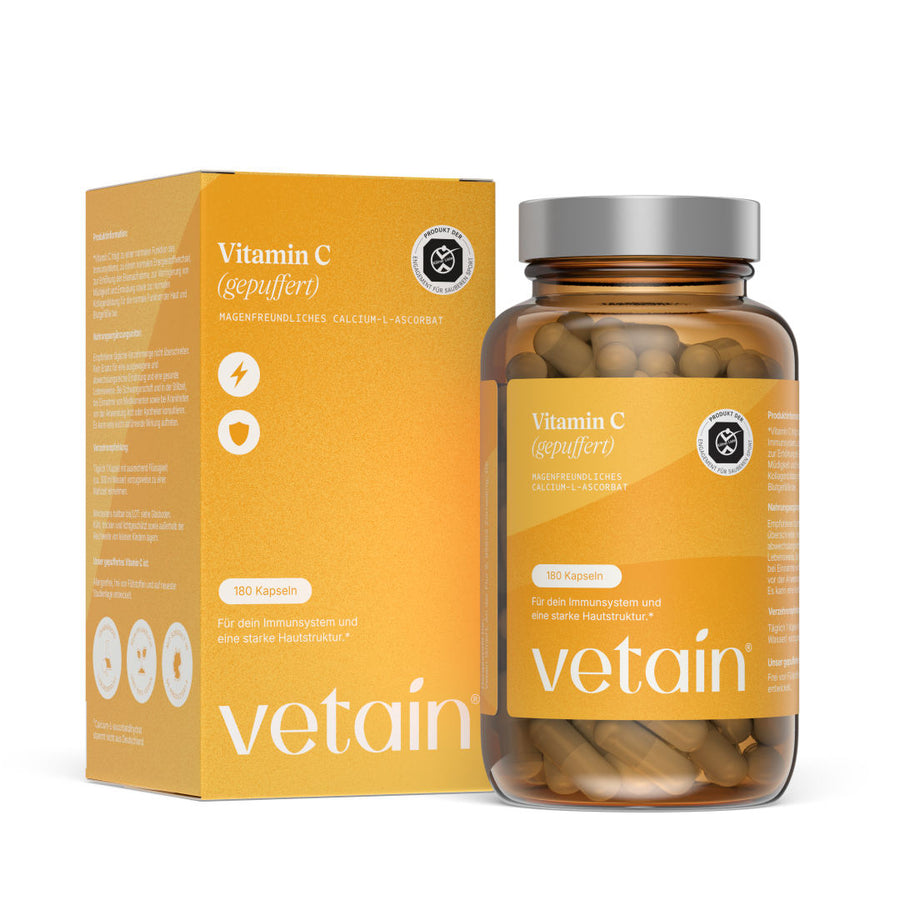
Zinc and vitamin C for colds – whether this combination works better than zinc alone is not scientifically proven. What we do know is that both nutrients are important for a functioning immune system. I personally like to combine them:
%-product_content-%
Find the best zinc source for you
You can get zinc from food and supplements. See our article on... zinc-containing foods You will find a detailed overview of sources.
Zinc supplements come in various forms: tablets, lozenges, and more. Just try them out and see what works best for you! Very important: Pay attention to... high-quality supplement – that's the be-all and end-all.
What should you look for in good zinc tablets?
Important quality features include: A bioavailable zinc form, No unnecessary additives and, for vegan diets, naturally plant-based recipes..
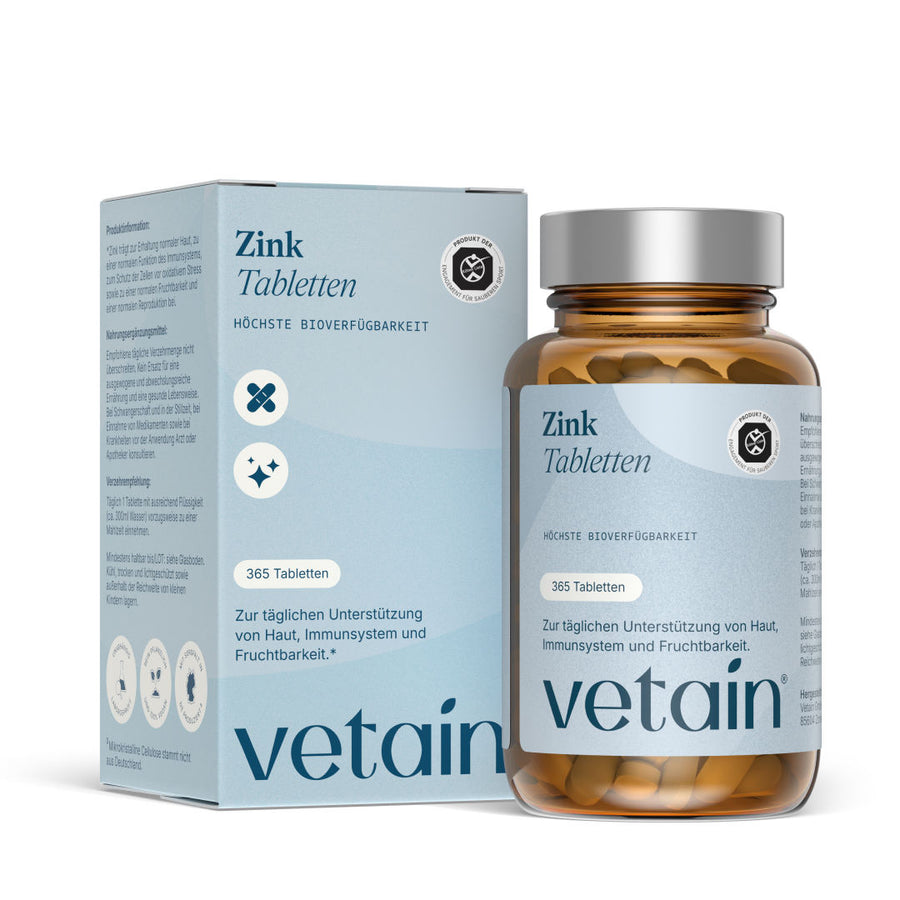
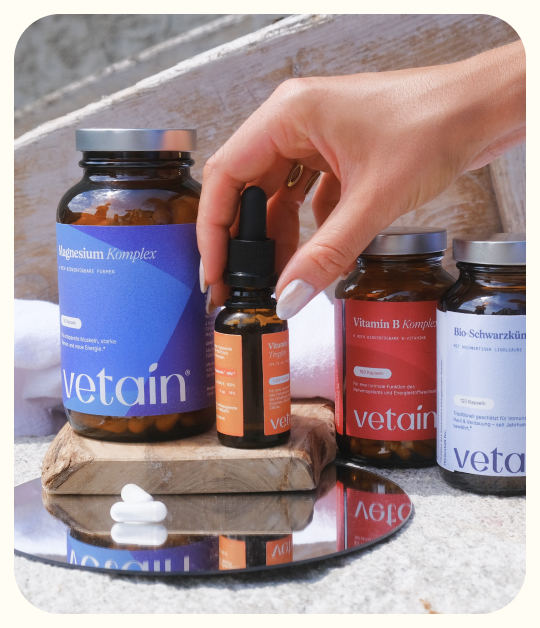
Our Zinc tablets at Vetain We rely on zinc bisglycinate – a form that is well absorbed and gentle. No gelatin, no unnecessary additives. Our storage jar lasts for one year, so you always have a supply of zinc on hand.
General tips for dealing with colds
Finally, here are a few lifestyle tips that are at least as important as any remedy: What to do when you have a cold?
-
Relax: Your body needs energy for its immune system. Take breaks.
-
Drink plenty of fluids: Supports the mucous membranes in the nose and airways.
-
Warmth: Keep your neck and feet warm, avoid drafts.
-
Generally during cold and flu season: Regular zinc intake, sufficient sleep, exercise in the fresh air.
-
Handwashing: It sounds trivial, but it's one of the most effective ways to fight infections.
And what if the symptoms are severe, persist for a longer period, or you develop a fever? Then go see your trusted doctor.
Conclusion
Zinc has been proven to support the normal function of the immune system – which is why so many people take zinc when they have a cold. Whether and to what extent zinc can actually shorten the duration of a cold is not yet scientifically conclusive. What we do know is that a good, regular zinc supply is the best foundation for your immune system – especially during cold and flu season.
Do you have any questions? Then feel free to write me a message. Mail - I look forward to hearing from you! :)
literature & Sources
-
EFSA Panel on Dietetic Products, Nutrition and Allergies (2014): Scientific Opinion on the substantiation of a health claim related to zinc and normal function of the immune system
-
Hemilä & Chalker (2017): Zinc acetate lozenges for the common cold: a meta-analysis comparing zinc acetate and zinc gluconate, and the role of zinc dosage
-
National Institutes of Health (NIH): Zinc Fact Sheet for Health Professionals
-
Federal Institute for Risk Assessment: Maximum levels of zinc recommended in food supplements