


















 7 Min
7 Min
 Zuletzt aktualisiert am 23.01.2026

The days are getting shorter, and the sun – which many people complain about in summer – suddenly becomes a welcome but rarely seen guest. This also affects our vitamin supply: especially vitamin D levels reach their lowest point for many people during winter. But that doesn’t have to be the case. What happens with vitamin D in winter and what role supplements can play is explained in part 1 of our “Getting Through Winter with Vetain” series.
This series accompanies you throughout the winter and shows how the right vitamins and minerals can help you get through the cold season in the best way possible. If you want to read more, you’ll find additional articles on the topic in our Vetain Winter Weeks on the blog.
Your Knowledge To Go: Vitamin D in Winter
The body can produce vitamin D itself when exposed to sunlight – through diet, only a very small amount can be absorbed compared to other vitamins.
The problem: Vitamin D production is much lower in winter because sunlight decreases and is less intense.
Stored vitamin D from summer often isn’t enough to last through the cold months. As a result, vitamin levels drop significantly for many during winter.
Supplements such as drops or capsules can be an additional source of the sunshine vitamin.
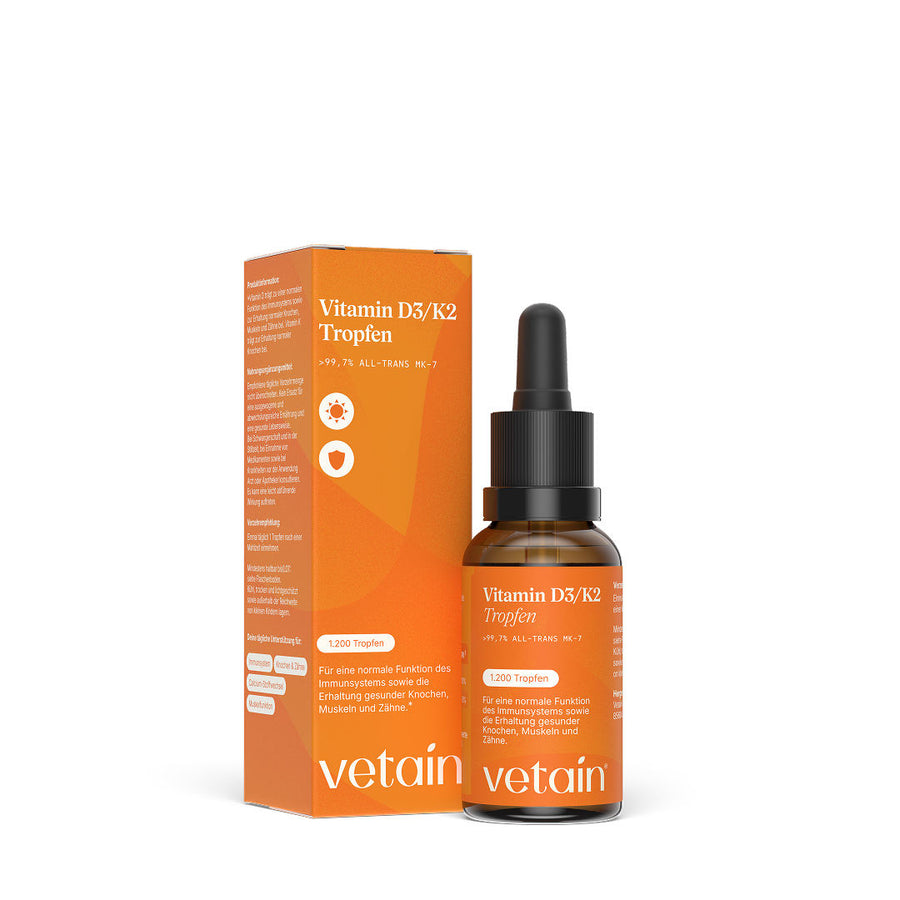
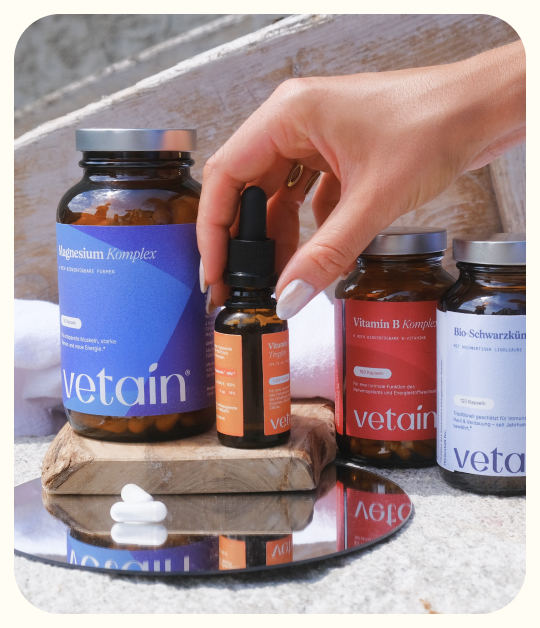
Vetain’s Vitamin D3 & K2 drops offer an easy, vegan-friendly way to supplement your vitamin D intake.
%-split_content-%
What’s Behind the “Sunshine Vitamin”?
Vitamin D not only has a lovely name (who wouldn’t want to be called the sunshine vitamin?!), but it’s also special in another way: unlike most vitamins, it is not primarily absorbed through diet — the body produces it itself when exposed to sunlight. Though “produces it itself” is relative here — there are many factors that influence how well this process works:
Time spent outdoors: Even the nicest weather won’t help if you stay indoors all day.
Season: Obviously, there’s far more sunlight in summer than in winter. That’s why vitamin D in winter is a challenge for many.
Time of day: Around noon the sun is strongest, but that’s also when most people don’t have time for a sunny walk.
Weather: When it’s raining, the sun isn’t strong — and most people don’t feel like going outside anyway.
Latitude: In our part of the world, the sun simply isn’t as intense or present as in other regions.
Sun protection: About 1/4 of your body needs to be exposed without sun protection like caps or long sleeves.
Skin type & color: People with darker skin tones need more UV exposure to produce the same amount of vitamin D.
If everything aligns, your skin can produce vitamin D through sunlight (specifically UV-B radiation). How exactly this works is extremely complex and not particularly important for us here.
What is important: Vitamin production varies — not only from person to person, but even from day to day. As a rough guideline, you can remember that spending about 5–25 minutes outdoors at midday in sunny weather with 1/4 of the body exposed is enough. What this means for vitamin D during winter is what we’ll look at next.
Vitamin D in Food
In addition, the sunshine vitamin can be absorbed in small amounts through food. Where can you find vitamin D?
Fatty fish (mackerel, herring, salmon)
Some types of mushrooms
Liver
Egg yolk
Fortified foods (such as certain milk alternatives or margarine)
Through diet, most people only absorb 2 to 4 micrograms of vitamin D per day.
As you can see, that’s not much. Reminder: healthy teenagers and adults need around 20 micrograms a day. Especially people who live vegetarian or vegan have a harder time covering their needs. If you don’t want to eat several packs of mushrooms daily, self-production becomes important — it accounts for about 80–90% of the total vitamin D supply.
The Vitamin D Winter Problem
So far, so good: we absorb vitamin D through diet or produce it via sunlight. But things become difficult when days get shorter, weather gets wetter, and clouds dominate the sky. What happens then with sunlight & vitamin D?
In fact, the intensity and frequency of sunlight in our region drops dramatically during winter. This means that in the colder months, vitamin D production decreases as well. Studies show that adequate sunlight exposure — and thus vitamin production — is only possible between March and October because winter sun simply isn’t strong enough.
So what about the months from November to February?! Do we all automatically have a severe deficiency?
Luckily, it’s not quite that dramatic:
The body can store vitamin D produced in summer and tap into these reserves during winter. However, this only works if you spent enough time in the sun during summer and produced an “extra” amount. Does this stored supply last through winter? Hard to say.
There are additional ways to raise vitamin D levels: vitamin D in winter can also be obtained from foods, fortified products, or supplements. More on that later.
So yes, many people do have low vitamin D levels during winter. Why maintaining adequate levels still matters becomes clear when you look at what the vitamin actually does in the body:
Vitamin D Effects
This vitamin is impressive! Let’s take a quick look at what the sunshine vitamin does:
Vitamin D contributes to...
… normal immune system function
… maintaining normal bones
… maintaining normal muscle function
… maintaining normal teeth
… normal calcium levels in the blood.
You see — vitamin D is everywhere.
Immune system? Vitamin D.
Normal muscle function? Vitamin D!
Your whole body? VITAMIN D! (Okay, not literally, but I had to add a bit of drama :D)
Ensuring sufficient vitamin D levels in winter isn’t just a nice idea — it’s genuinely important.
Supplements: The Solution?
Many people turn to supplements during the winter months to ensure a steady vitamin D intake.
Quote: According to the Robert Koch Institute, only 44% of adults have sufficient vitamin D levels.
Should you take vitamin D in winter — in supplement form? Many studies and experts say: yes. Supplementing vitamin D during winter can make sense, especially if…
...you didn’t spend enough time in the sun during summer,
...you consume few fortified foods or foods naturally high in vitamin D,
...or your levels have already been shown to be low.
For many people, taking vitamin D during winter has become part of their standard routine.
These supplements come in different forms: vitamin D drops, vitamin D capsules, and vitamin D tablets. We — and many of our customers — are big fans of the drop form:
Easy to dose
Neutral in taste
Easy to swallow (capsules and tablets can be harder for some people)
Convenient to take with you
Long supply
Which vitamin D should you take in winter? How about Vetain’s Vitamin D with K2 drops? Here’s a quick overview:
Vetain’s Vitamin D Drops
Vetain’s Vitamin D drops stand for high quality and make supplementing super easy:
Excellent value for money: only €9 per year and less than 3 cents a day for your vitamin supply
Vegan Vitamin D3 & K2Vital®
Optimal bioavailability & high purity
Only 1 drop a day with a meal
3-year supply
So, what do you think? Want to support your vitamin D levels this winter? Then you can get your vitamin D right here.
%-split_content-%
Conclusion
Vitamin D, sun, winter, supplements — we’ve covered an entire year in one article. What you should take away: our body can produce vitamin D through sunlight, and diet alone won’t cover much. Since the sun is a rare guest during winter, you can “prepare” in summer and build up vitamin D stores that your body can draw from during the cold months. If that’s not possible (or wasn’t) or you want to support your body further, fortified foods or supplements with vitamin D in winter can be helpful.
If you’re wondering how much sun you need during winter to maintain vitamin D levels: several weeks of holiday in a warm country. ;)
So maybe supplements are the more realistic option?
%-product_content-%
Got questions? Then feel free to send me a mail — I’m happy to hear from you! :)
The information shared in this article does not replace individual medical or nutritional advice.
Literature
BfR (Bundesinstitut für Risikobewertung) (2014). Ausgewählte Fragen und Antworten zu Vitamin D.
DGE (o.J.). Vitamin D. https://www.dge.de/wissenschaft/referenzwerte/vitamin-d/
Ehlers, A.; Frimmer, V.; Linseisen, J. & Scholl, J. (2025). Wer sollte Vitamin D einnehmen? In: Deutsches Ärzteblatt, 122(6).
Mensink, G.B.M. & Rabenberg, M. (2016). Vitamin-D-Status in Deutschland. In: Journal of Health Monitoring, 1(2).