




















 8 Min
8 Min
 Zuletzt aktualisiert am 23.09.2026

You've probably heard that omega-3 fatty acids are important for your body, and maybe you've already wondered: What exactly are the benefits of Omega 3?
The problem is that many half-truths and myths circulate on the internet. Everything from "irrelevant" to "miracle cure" is represented. This can be confusing.
This article provides a clear overview: what omega-3 fatty acids actually do in the body, what studies say, and what role omega-3 plays in women. No exaggerations or false promises, just solid studies and a clear look at what we currently know.
Your knowledge to go: What are the benefits of Omega 3?
-
Omega 3 is found in many parts of the body. different structures and processes involved – from the cell membrane to signal transmission.
-
Omega 3 is particularly relevant for the brain, eyes and vision, and heart.
-
In addition, studies are investigating a potential effect on the skin, a possible anti-inflammatory effect and more.
-
Especially for Women Omega 3 is important – especially during pregnancy.
-
The recording takes place via Foods such as fish or flaxseed – or via Dietary supplement How Omega 3 capsules.
Omega 3 Effects – Your List
Here you'll read a lot about ALA, EPA, and DHA. These are three important omega-3 fatty acids. EPA and DHA are the biologically active, long-chain omega-3 fatty acids, while ALA is only partially converted into EPA and DHA in the body. Therefore, when people ask what omega-3s are good for, these three are always mentioned.
The officially confirmed effects:
-
Brain: DHA contributes to the maintenance of normal brain function.*
-
Eyes: DHA contributes to the maintenance of normal vision.*
-
Heart: EPA and DHA contribute to normal heart function.**
-
Blood pressure: DHA and EPA contribute to the maintenance of normal blood pressure***
-
Blood test results: DHA and EPA contribute to the maintenance of normal triglyceride levels in the blood.
-
Cholesterol: ALA contributes to the maintenance of normal blood cholesterol levels.
*Positive effect with 250 mg DHA daily.
**at 250 mg daily
***at 3 g daily
%-product_content-%
Let's take a closer look at the individual areas to better understand what Omega 3 is good for:
Omega 3 & Brain
DHA contributes to the maintenance of normal brain function. This applies to a daily intake of 250 mg DHA.
But what exactly does that mean? What are the benefits of Omega 3? It means that it helps maintain normal brain function as we know it. So it doesn't mean that an extra dose of Omega 3 will suddenly make you learn twice as fast or speak a new language in a few days. Instead, it's more like a good foundation.
Omega 3 & Eyes
What are the benefits of Omega 3 for the eyes? The Omega 3 fatty acid DHA contributes to the maintenance of normal vision.
Here too, the same applies: Omega 3 capsules unfortunately won't make you stop wearing glasses. But DHA is a major component of the retina and therefore crucial for normal vision.So if you are well supplied with that, you have created a good foundation.
Omega 3 & Heart
EPA and DHA contribute to normal heart function and thus have an influence on the cardiovascular system.
Important: Recently, it was reported in the media that Omega-3 capsules could lead to heart problems such as atrial fibrillation. This understandably caused panic for many people. The good news is that one detail was overlooked in the information. The warning actually only applies to very high doses, which are not reached through normal fish consumption or typical Omega-3 supplements. A normal dose of Omega-3 is therefore (for the vast majority of us) safe and even very important. However, if you have any concerns, feel free to consult your doctor; it never hurts!
Back to the topic "What is Omega 3 good for?"
Omega 3 & blood pressure
The fatty acids DHA and EPA contribute to maintaining normal blood pressure.
A normal blood pressure in adults at rest is ideally 120/80 mmHg. Omega 3 can help maintain normal values.
That's why it's often said that fish rich in Omega 3 is "good for blood pressure".
Important: If you have high blood pressure, you shouldn't simply stop taking your medication and supplement with Omega 3! In such cases, please always consult your doctor, as they know exactly what Omega 3 is good for and whether it's a suitable option for you.
Omega 3 & Blood values
Omega-3 fatty acids are also linked to your blood levels: DHA and EPA contribute to maintaining normal triglyceride levels in the blood. Additionally, ALA (alpha-linolenic acid) contributes to maintaining normal cholesterol levels in the blood.
Cholesterol, in particular, is a word that many people find daunting. High cholesterol levels are a risk factor for various diseases. Since omega-3 fatty acids help keep these levels within a normal range, an adequate intake can be beneficial (article: How much Omega 3 per day?) may be of particular interest to people who want to pay attention to their blood lipid levels.
So, if you ask yourself "What is Omega 3 good for?", you must always consider such cross-relationships.
What else is Omega 3 good for? An overview of current Omega 3 studies.
Besides these officially confirmed effects, there are further findings from studies that cannot yet be presented as so-called health claims. However, they show the direction in which research is heading and offer hope for more.
Here are some interesting studies on Omega 3 and specific areas:
-
Omega 3 & Hair: A study investigated the influence of omega-3 and omega-6 fatty acids as well as antioxidants on hair growth.
-
Omega 3 & Skin: Observational studies investigate the link between omega-3 deficiency and dry skin. More recent studies also focus on the skin microbiome.
-
Omega 3 & Psyche: The question often arises whether omega-3 fatty acids have an effect on mental health. Since DHA is an important component of neuronal communication, a connection with mood and psychological well-being is discussed.
-
Omega 3 & Inflammation: Studies suggest that omega-3 fatty acids can balance pro-inflammatory omega-6 eicosanoids and produce so-called resolvins and protectins, which can help resolve inflammatory processes.
If you would like to read the studies yourself, you can find them in our sources!
What are the benefits of Omega 3 for women?
Women benefit particularly from an adequate supply of omega-3 fatty acids. Omega-3 is not only important during pregnancy and breastfeeding, but also relevant in every woman's daily life. Hormones play a significant role in women's health, and omega-3 fatty acids are involved in various signaling processes within the body. Omega-3 is also popular with many women during menopause, when hot flashes and similar symptoms are a concern.
What about during pregnancy and breastfeeding? What are the benefits of Omega 3 in these situations?
pregnancy & Breastfeeding – What are the benefits of Omega 3?
Omega-3 fatty acids, especially EPA and DHA, contribute to normal heart function, the maintenance of normal brain function, and the maintenance of normal vision. Maternal intake of DHA contributes to the normal development of the brain and eyes of the fetus and breastfed infant (an additional 200 mg of DHA daily).
Women who don't eat fatty fish like salmon, mackerel, or herring at least once or twice a week are often advised to take supplements. This also applies to vegans, who can use algae oil as a source of omega-3 fatty acids.
How can one absorb Omega 3?
So, you can now confidently answer the question "What are the benefits of Omega 3?". Let's move on to the next problem: Where do we get these fatty acids from?
Basically, there are two ways to supply your body with omega-3 fatty acids – and the following always applies: We primarily need EPA and DHA!
About nutrition: The best sources of EPA and DHA are fatty fish such as salmon, mackerel, and herring. Plant-based sources like flaxseed, chia seeds, walnuts, and rapeseed primarily provide ALA (alpha-linolenic acid).
For those following a vegan diet, algae are an interesting alternative. Algae oil provides EPA and DHA directly, without the intermediate step of processing fish. This is not only sustainable but also free of pollutants that can accumulate in fish.
About dietary supplements: If you can't or don't want to fully meet your needs through food, Omega-3 capsules can be a practical supplement. If you're still unsure which supplement is right for you, you can find more information in our article. Algae oil vs. fish oil Read more about it.
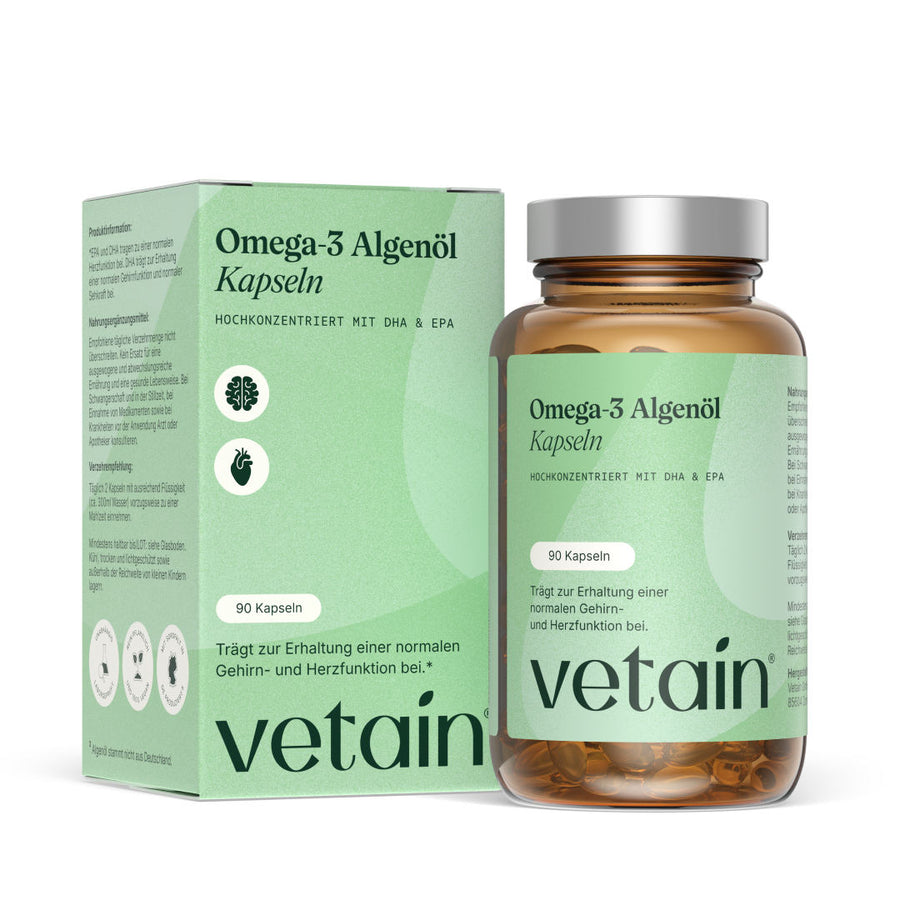
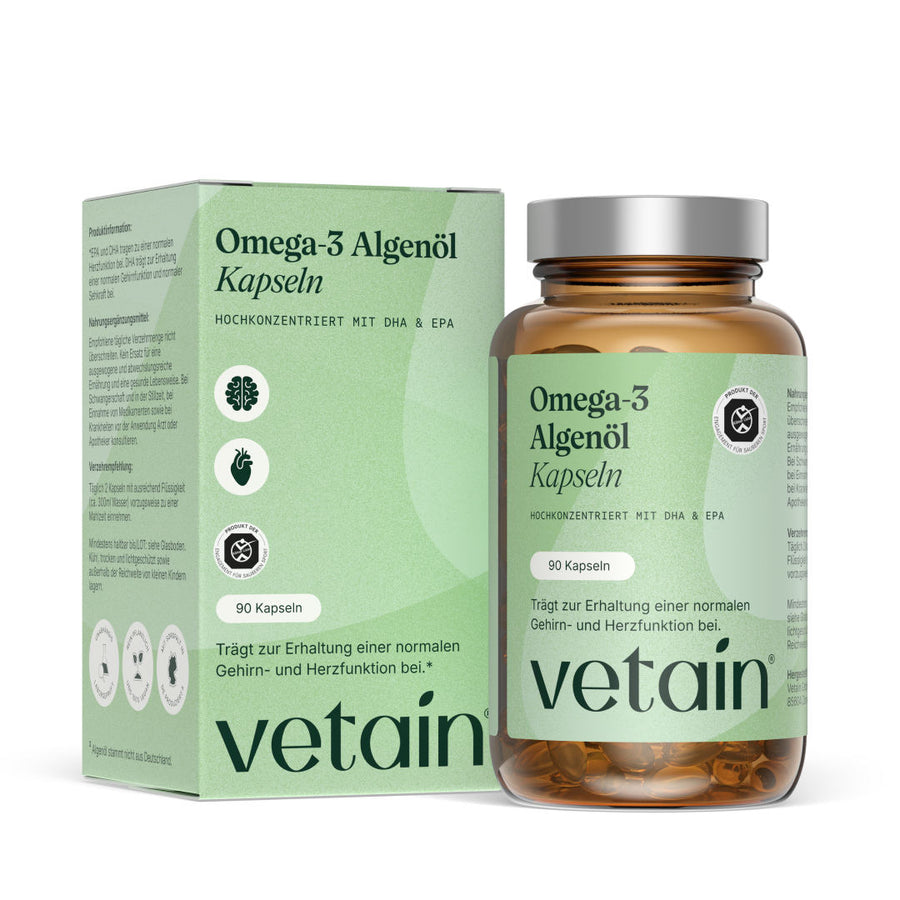
Our recommendation for Omega 3 supplementation: Vetains algae oil capsules – also suitable for vegetarians and vegans.
%-split_content-%
By the way: We have a detailed Articles on Omega 3 sources, where you can learn even more about typical Omega-3 foods.
Conclusion
What are the benefits of Omega 3? The answer is multifaceted: From normal brain function and eyesight to the cardiovascular system, these fatty acids play a vital role in your body. Adequate Omega-3 intake can be particularly important for women – whether in their everyday lives, during their menstrual cycle, in menopause, or during pregnancy and breastfeeding.
Let's be honest: Omega 3 is not a miracle cure.But it's an important part of your diet – and perhaps also an opportunity to try out some new supplements! ;)
Do you have any questions? Then feel free to write me a message. Mail - I look forward to hearing from you! :)
The information shared in this article does not replace individual medical or nutritional advice; if you have any doubts, always consult your doctor.
literature & Sources
-
EFSA Panel on Dietetic Products, Nutrition and Allergies (2010). Scientific Opinion on the substantiation of health claims related to EPA, DHA, DPA and maintenance of normal blood pressure. EFSA Journal.
-
Harris, W.S. et al. (2017). The Omega-3 Index and relative risk for coronary heart disease mortality: Estimation from 10 cohort studies. Atherosclerosis, 262.
-
Calder, P.C. (2015). Marine omega-3 fatty acids and inflammatory processes: Effects, mechanisms and clinical relevance. Biochimica et Biophysica Acta, 1851(4).
-
Le Floc'h, C. et al. (2015). Effect of a nutritional supplement on hair loss in women. Journal of Cosmetic Dermatology, 14(1).
-
Grosso, G. et al. (2022). Omega-3 fatty acids and depression: Scientific evidence and biological mechanisms. Oxidative Medicine and Cellular Longevity.
-
DO-HEALTH Trial (2020). Effects of Vitamin D3, Omega-3s, and Exercise on Healthy Aging. The Lancet Healthy Longevity.
-
German Nutrition Society (DGE). Reference values for nutrient intake: Fat.
In forums you can find many testimonials on the topic: What is Omega 3 good for? So if you're interested in what others say about the benefits of Omega 3, such forums are a real treasure trove.