


















 10 Min
 Zuletzt aktualisiert am 17.04.2026

You pay attention to a healthy diet and think that you're definitely getting enough zinc that way? That can be a misconception! The problem is: hardly anyone really knows, how much zinc during the day You actually need it. And even fewer people know that one component of your diet can significantly increase your zinc requirements. This article will tell you which component it is and how to determine your individual zinc needs.
Very important: This is about healthy people who are not taking medication – if you are ill or taking medication, you should always discuss such topics with a healthcare professional!
Your knowledge to go: How much zinc during the day?
-
Healthy Women need 7–10 mg Zinc per day, healthy Men 11–16 mg – depending on the phytate content of the diet.
-
During intensive training In specialist sources, intake quantities of up to 25 mg Zinc per day is discussed, among other things because of possible losses through sweat.
-
Pregnant women and Breastfeeding have a increased daily needs.
-
40 mg Zinc per day is considered upper safe supply limit (Tolerable Upper Intake Level) – above this level, the risk of overdose increases.
-
One plant-based diet can increase zinc requirements increase by up to 50%, because phytates inhibit zinc absorption.
- More and more people are resorting to Zinc supplements, to increase their zinc absorption.
How much zinc What do you really need during the day?
The German Nutrition Society (DGE) has developed reference values that vary depending on age, gender and – this is particularly interesting – phytate intake.
But what exactly are these phytates?
Phytates are components found in whole grains, legumes, and nuts that can inhibit zinc absorption in the intestines. You can read more about this and find tips on how to reduce phytates in your diet without giving up nuts in our article. to Zinc sources.
Here is an overview of the daily zinc requirement:
| group of people | Low phytate intake | Medium phytate intake | High phytate intake |
|---|---|---|---|
| Men | 11 mg/day | 14 mg/day | 16 mg/day |
| Women | 7 mg/day | 8 mg/day | 10 mg/day |
What does that mean in concrete terms? If you eat a lot of whole grains, legumes, and nuts—meaning you have a high phytate intake—you need more zinc to meet your daily zinc requirement. You can find out how to determine your phytate intake in the next section.
What is my phytate intake?
Not quite sure which group you belong to? Don't worry, we've got you covered!
Here's how you can easily find out: Track your diet For a few days, you need to track everything you eat and drink. This means you simply write down everything you eat and drink. You can then use this information to calculate, with the help of AI or a nutritionist, how much phytate you consume on average per day.
-
If you… 330 mg If you ingest (0.5 mmol) of phytates per day, you have a low Phytate intake. Therefore, you need less zinc than many others.
-
If you… 660 mg If you ingest (1 mmol) of phytates per day, you have a medium Phytate intake.
-
If you… 990 mg If you ingest (1.5 mmol) of phytates per day, you have a height Phytate intake. So you need the most zinc.
Now you can look up how much in our table zinc on the day you need!
Especially clever: If you're already tracking your diet for a few days anyway, you can now also see directly how much zinc You should determine your daily calorie intake and whether it meets your needs. If not, dietary adjustments or supplements may be an option for you.
Extra tip: It's best not to take this test during an all-inclusive holiday, but rather during a normal week in your everyday life.
How much zinc During the day as a woman? Pregnancy & breastfeeding
How much zinc The amount of phytate a woman needs per day depends not only on her phytate intake but also on her stage of life. Generally, the requirement is... 7–10 mg per day, depending on diet. However, according to the German Nutrition Society (DGE), the need increases significantly during special phases such as pregnancy or breastfeeding:
pregnancy:
Zinc during pregnancy deserves special attention: The requirement increases to approximately 7–11 mg of zinc per day in the first trimester. In the second and third trimesters, it rises to 9–12 mg daily. As always, this is also dependent on phytate intake.
breastfeeding:
The need remains elevated even during breastfeeding: the German Nutrition Society (DGE) recommends 11–14 mg per day, as zinc is passed on to the baby via breast milk.
Especially during these phases, many women resort to zinc supplements to simply increase their zinc intake. However, this should always be discussed with a doctor!
How much zinc During the day as a man?
You want to know how much zinc What is the optimal daytime for a man? The answer lies somewhere between 11 and 16 mg per day Surprise, surprise, it depends on phytate intake once again. According to the German Nutrition Society (DGE), men have higher reference values for zinc than women. Possible reasons discussed include differences in body composition. The DGE recommends that men with a high phytate intake (i.e., lots of whole grains and legumes) aim for up to 16 mg of zinc daily. If they also engage in sports or physically demanding work, their needs can increase further.
To all sporty or physically active women: Don't worry, we see you too, feel free to take a look at the next section!
How much zinc as athletes during the day?
How much zinc How much zinc athletes need per day is one of the most frequently asked questions in sports nutrition. Through intensive training and heavy sweating, you can lose significantly more zinc during exercise than in a more sedentary daily routine. Studies in sports medicine show that endurance and strength athletes require an increased zinc intake. up to 25 mg per day It might be interesting.
Very important: Your body makes relatively little difference whether you're lifting heavy weights at the gym or carrying heavy wooden boards or stones at work. This means that your zinc requirement can increase significantly even with a physically demanding job.
However, the Federal Institute for Risk Assessment points out that the absolute Maximum amount of 40 mg should not be exceeded per day – even with intensive training AND a strenuous job AND a high phytate intake.
How much zinc A day for vegans?
Things get a bit trickier with a vegan diet. You "miss"not only many Zinc-containing foods like cheese or meat – at the same time, you probably have a high intake of whole grains, legumes, and nuts. high phytate intake, which inhibits zinc absorption. These food groups often appear more frequently in the diets of vegans and vegetarians than in those of meat-eaters. However, exceptions prove the rule – of course, there are also vegans who have a sweet tooth and have banished legumes from their diet. So always consider your own individual needs and dietary preferences.
However, some professional societies generally recommend increasing zinc requirements for vegan diets by up to 50% higher (compared to low phytate intake). This means: A vegan woman should aim for around 10 mg per day, a vegan man for about 16 mg.
How much zinc During the day when you have a cold?
How much zinc The effectiveness of taking a cold during the day is currently the subject of intensive research. Because this topic is so fascinating and multifaceted, we will dedicate a separate, in-depth article to it next week. Stay tuned!
Table: How much zinc during the day?
Here is a complete table for your convenience:
| group of people | Low phytate intake | Medium phytate intake | High phytate intake |
|---|---|---|---|
| Men | 11 mg/day | 14 mg/day | 16 mg/day |
| Women | 7 mg/day | 8 mg/day | 10 mg/day |
| Pregnant women – 1st trimester | 7 mg/day | 9 mg/day | 11 mg/day |
| Pregnant women – 2nd trimester | 9 mg/day | 11 mg/day | 13 mg/day |
| Pregnant women – 3rd trimester | 9 mg/day | 11 mg/day | 13 mg/day |
| Breastfeeding | 11 mg/day | 13 mg/day | 14 mg/day |
| Athletes: | up to 25 mg/day | ||
By the way: If you're wondering what zinc is actually good for, you should definitely check out our article on... Zinc effect Read it!
Too much zinc: When does it become dangerous?
Is it possible to overdose on zinc? Yes, definitely. The upper safe intake level (Tolerable Upper Intake Level) is... 40 mg zinc from all sources combined – that is, from nutrition & Supplements. Anything above 40 mg can lead to an overdose.
Zinc overdose symptoms often manifest themselves in the form of:
-
Nausea and vomiting
-
Stomach cramps and diarrhea
-
Headache
-
Metallic taste in the mouth
If you notice such symptoms and suspect you have ingested too much zinc, it's best to get a medical check-up.
Don't worry: A single, slightly increased intake of zinc usually doesn't cause any problems in healthy individuals; however, if in doubt, you should always seek medical advice. The concern here is more about consuming too much zinc over a longer period or significantly exceeding your intake on a single day.
For example: 75 mg of zinc per day vs. 25 mg of zinc per day
While 25 mg of zinc per day may still be within the safe range in cases of increased need (sports), 75 mg is clearly too much in the long term.
The good news: Zinc overdose through normal food is very rare. The danger lies more with excessively high doses of supplements or the combination of different zinc-containing preparations. So, are zinc supplements dangerous?
Do zinc supplements lead to an overdose?
If you take a good zinc supplement according to the dosage recommendations, healthy adults typically experience [symptoms/conditions - context needed]. no undesirable effects That's to be expected. High-quality supplements are formulated in such a way that by taking them you... no overdose you get.
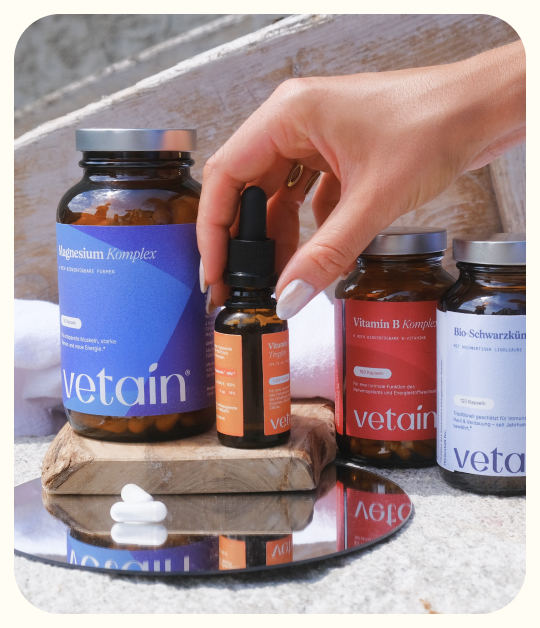
The best example: Vetains Zinc Tablets
One tablet contains 25 mg of zinc. This means you're still 15 mg away from the safe maximum dose. So you can safely continue eating your oatmeal. & Co. eat.
%-product_content-%
So, if you follow the dosage recommendations and don't just randomly combine different supplements, supplementation is a practical addition for many people – and not dangerous. If you still have concerns, you can definitely discuss them with a healthcare professional.
Zinc deficiency: These are the symptoms you should know
Zinc deficiency can manifest itself in many ways. Common symptoms include... Zinc deficiency symptoms belong:
-
Reduced appetite
-
Hair loss and brittle nails
-
Skin problems and delayed wound healing
-
Weakened immune system and frequent colds
-
Disorders of the sense of taste and smell
Zinc deficiency must be diagnosed by a doctor, as these nonspecific symptoms can have many causes. Therefore, if you feel you are not getting enough zinc or notice these typical zinc deficiency symptoms, please consult your doctor and perhaps have your blood levels checked.
Typical risk groups A deficiency is characterized by:
-
Vegans and vegetarians with high phytate intake
-
Pregnant women and breastfeeding mothers
-
Seniors
-
Athletes with high sweat loss
Zinc supplementation: When does it make sense?
Zinc as a dietary supplement can be beneficial in certain situations and is already considered a staple by many. Standard routine.
Possible reasons for supplementation include:
-
Diagnosed zinc deficiency
-
(Vegan) diet with high phytate intake
-
Intensive training
-
Pregnancy and breastfeeding
-
Increased need
Here's how to find out if zinc supplements might be beneficial for you:
-
Calculate your zinc requirements based on your phytate intake and your life stage (see instructions above).
-
Track your diet for a few days to see how much zinc during the day you absorb in everyday life.
-
Then compare how the two values (requirements and intake) differ. If there is a significant difference, you can either adjust your diet or supplement with zinc.
If you are looking for a high-quality, vegan zinc supplement, we at Vetain have developed a solution that is highly bioavailable and clearly dosed – without unnecessary additives.
%-split_content-%
Conclusion
How much zinc How much zinc you need per day isn't a one-size-fits-all answer – it depends on your gender, diet, and stage of life. The key findings: women need 7–10 mg, men 11–16 mg per day, with a high phytate intake increasing the requirement. The upper tolerable upper intake level is 40 mg – anything above that poses risks. With a well-planned diet and, if necessary, targeted supplementation, you can optimally meet your zinc needs.
Do you have any questions? Then feel free to write me a message. Mail - I look forward to hearing from you! :)
literature & Sources
- German Nutrition Society (DGE): Reference values for zinc.
- European Food Safety Authority (EFSA): Dietary Reference Values for Zinc.
- National Institutes of Health (NIH): Zinc Fact Sheet for Health Professionals.
- Federal Institute for Risk Assessment (BfR): Maximum levels for vitamins and minerals in food supplements.