













 15 Minuten
 2 Stunden 10 minutes
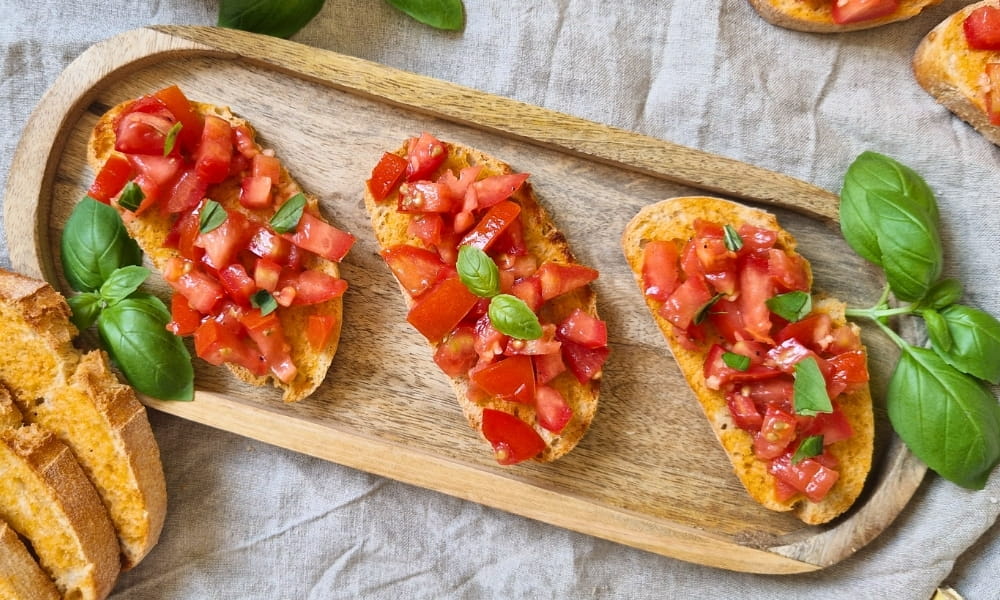

Crispy bread, sun-ripened tomatoes, good olive oil, and a little fresh garlic - that's all you need to bring a taste of Bella Italia to your plate. Making bruschetta yourself is so easy that you'll almost wonder why you haven't been making it every summer for years. Whether as an appetizer, a snack with an aperitivo, or a light dinner with friends on the patio - this bruschetta recipe needs only a handful of ingredients and still tastes simply fantastic (or perhaps precisely because of that).
Nährwerte pro Portion
Zubereitung
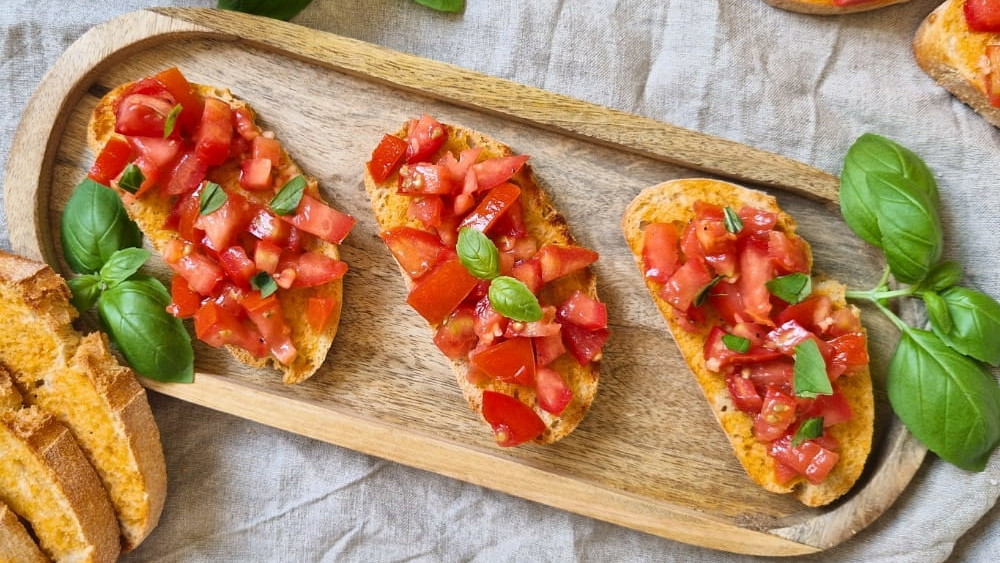
Wash the tomatoes and cut them into cubes. Mix them with finely chopped garlic, olive oil, salt, and pepper, and let the mixture sit in the refrigerator for at least 2 hours.
Preheat the oven to 180 degrees convection.
Cut the ciabatta into 1-2 cm thick slices and brush them with the liquid that has formed in the tomato-garlic-oil mixture. Caution: Only brush on a thin layer, otherwise the bread will become soggy. If only a little liquid has formed, you can instead quickly mix up some garlic oil (stir olive oil with pressed garlic) and spread it over the ciabatta slices.
Bake the bread on an oven rack on the middle-to-upper shelf for 10-15 minutes, until the edges turn golden brown.
Then add about 1 tbsp of the tomato mixture to the still-warm bread and optionally top with basil leaves. Buon appetito!
Recipe Note
How do you make bruschetta in the easiest way? Making bruschetta yourself is just as easy as you have seen - that was the complete recipe. A simple bruschetta recipe: just 5 steps, no fancy ingredients, and no hours of chopping.
What Is Bruschetta, Anyway?
If you have ever wondered what exactly bruschetta is, the answer is wonderfully simple: Bruschetta is an Italian antipasto dish in which toasted bread is served with olive oil, garlic, and a topping such as tomatoes and basil. The best-known version is bruschetta with tomatoes, basil, and a little salt.
Bruschetta originally comes from central and southern Italy and used to be a simple peasant dish - essentially poor people's food, in which stale bread was toasted over glowing coals and drizzled with fresh olive oil. The name bruschetta derives from the verb brusciare, meaning something like "to roast" or "to cook over coals." Makes sense, right?
It was only when the tomato found its way into Italian cuisine that the tomato topping we know and love today was added.
In Calabria, bruschetta is also called fedda ruscia and is eaten with olive oil, salt, pepper, and oregano, while in Abruzzo it is often enjoyed with ham. As you can see, anything from minimalist to lavish is possible.
And now for the elephant in the room: How do you pronounce bruschetta? In Italian, it is pronounced "brusketta" - the "sch" is pronounced like "sk." In Germany, you often hear "Bru-schett-a," but if you want to impress your favorite Italian restaurant: brusketta is the correct pronunciation. Sounds really elegant, doesn't it? No wonder making bruschetta yourself is as popular as ever - the name alone has charm.
The Best Ingredients for Bruschetta
If you want to make bruschetta yourself, you don't need much - but with so few ingredients, every single one counts twice as much. Here are my shopping tips:
Tomatoes: Ripe tomatoes are essential for bruschetta. Beefsteak, Roma, or San Marzano tomatoes are best - they are meaty, have few seeds, and are not too watery. Vine tomatoes also work well. Make sure they are truly ripe and aromatic - in summer, they taste best from the market or your own garden.
Olive oil: High-quality olive oil is essential for bruschetta.
Garlic: Fresh garlic is essential for the flavor - ideally press or finely chop each clove just before adding it to the tomato marinade.
Basil: Fresh basil leaves are a lovely optional topping and should be added to the bread just before serving - preferably torn by hand rather than cut, so the essential oils are preserved.
Seasonings: Salt and freshly ground black pepper are the basic seasonings for bruschetta. A splash of balsamic vinegar can optionally add a little more acidity.
Which bread is best?
The bread for bruschetta should be rustic. My clear favorite: ciabatta. It has a crisp crust, a coarse crumb with large holes, and is sturdy enough not to become soggy immediately - making it just right for preparing your own bruschetta.
Alternatively, you can use a baguette - however, it has a finer crumb and is thinner, so it becomes soggy more quickly. A hearty country loaf also works if you prefer something more rustic.
Not a garlic fan? Bruschetta with onions or without garlic
Not everyone likes raw garlic - and that's perfectly okay. Bruschetta without garlic still tastes fantastic with good olive oil and salt. You can also simply replace the garlic flavor with a little more fresh herbs.
Bruschetta with onions is a popular variation, especially with red onions - they are milder and slightly sweet. My tip: Dice them finely and soak them briefly in cold water; this removes their sharpness and makes them a perfect match for the tomato mixture.
This means making your own bruschetta remains a popular option even when not everyone at the table has the same preferences.
Make your own bruschetta: discover more variations and toppings
Making bruschetta yourself also means getting creative! The bruschetta variations are virtually endless, and depending on the season, you can try out all kinds of different toppings:
Summer: Classic with tomatoes and basil - the ultimate classic that never gets boring.
Autumn: Grilled mushrooms, pumpkin, or caramelized onions on the bread.
Year-round: Grilled eggplant, zucchini, or bell peppers as a Mediterranean alternative.
Anyone who loves cheese can add mozzarella or Parmesan - although strictly speaking, that already veers toward crostini, but no one is that strict about it on the plate. For the plant-based version, vegan cheese alternatives made from almonds or cashews are excellent.
You can already tell: Bruschetta fits wonderfully into a plant-based diet. The best bruschetta recipes use just a few high-quality ingredients and need neither meat nor fish to taste truly delicious. Is this the best bruschetta recipe you have ever tried? Decide for yourself - I am certainly convinced.
Preparing and storing bruschetta
You can prepare bruschetta in advance - as long as you follow a few rules. You can easily prepare the tomato mixture at least 2 hours in advance (or even longer) so that the flavors can meld in the bowl.
However, bruschetta itself should be prepared fresh and not stored for long - the crispy bread is best when it comes fresh from the oven. If you are cooking for a larger group of friends, prepare the tomato mixture in advance and toast the bread only when the guests arrive. It takes just a few minutes and requires hardly any effort. The tomatoes, on the other hand, should only be added to the bread shortly before serving so that the slices stay crispy. This makes homemade bruschetta easy to plan for parties.
If there is anything left over: be sure to store the bread and tomato mixture separately. The tomato mixture will keep covered in the refrigerator for several days.
What goes well with bruschetta?
Bruschetta is the perfect appetizer for an Italian evening. You can serve it as part of an antipasti platter with olives, grilled vegetables, and a salad. For the main course, pair it with pasta in a fresh tomato sauce - why not also try our protein pasta recipe -, a risotto, or, quite simply, a good minestrone. If you are thinking of pizza, you are not wrong either! Why not try our vegan high-protein pan pizza, which is ready in just 15 minutes.
To round things off, something sweet would be lovely, for example our protein tiramisu - turning the little project "making bruschetta yourself" into a small Italian menu in no time.
By the way, bruschetta isn't just for summer. But on warm evenings, at a barbecue in the garden, or at a summer party with friends, it's simply unbeatable - like a little vacation served directly on your plate.