
















 8 Min
8 Min
 Zuletzt aktualisiert am 19.02.2026

Vitamin D is currently on everyone’s lips. Or is it? Well, if we take that literally, I’m not entirely sure. Because the number of foods containing vitamin D is limited. What that means and how we can still absorb the sunshine vitamin, you’ll find out in this article. And of course, we’ll also answer the frequently asked question: Where is vitamin D found?
Your extra in this article: A list of vegan vitamin D sources!
Your Knowledge To Go: Where Is Vitamin D Found?
Vitamin D is found in various foods such as fish, mushrooms, eggs or margarine.
Vegan vitamin D sources are rare: mushrooms and fortified foods such as margarine or bread can provide vitamin D.
However, we only obtain about 10–20% of our vitamin D needs through diet – the rest can be produced by our body itself under the right conditions.
More and more people rely on vitamin D supplements to contribute to their vitamin D intake.
How Do We Absorb Vitamin D?
Vitamin D is different from other vitamins – and that’s meant quite literally. While we simply absorb most vitamins through food, there is another, much more important pathway for vitamin D and even a third alternative option. Let me show you the three ways you can absorb vitamin D:
Intake through diet: The classic way
There are some foods that contain relevant amounts of vitamin D – don’t worry, you’ll soon find out where vitamin D is found. However, most people only cover about 10–20% of their vitamin D needs through these foods. Why? Because such foods are usually not eaten regularly or in sufficient quantities to absorb significant amounts of vitamin D. This is especially true for vegans and vegetarians. As strange as it may sound, this is completely normal. Because the second way of covering your vitamin D needs is actually more important than diet.The body’s own production of vitamin D
We humans can use sunlight to produce vitamin D ourselves. However, this sounds easier than it is: For this to happen and for us to produce enough vitamin D, the conditions have to be just right.
Read more here: Vitamin D production in winterSupplements
Another option to contribute to your vitamin D intake is vitamin D supplements. These are available in different forms and dosages. Especially in winter, dietary supplements are popular.
%-product_content-%
Of course, you might now be wondering: Where exactly is vitamin D found? Let me show you!
List: Which Foods Contain Vitamin D?
Now we’re getting into it. Where is vitamin D found? Let’s take a look at some important vitamin D sources together.
Vitamin D content of selected foods:
| Food | Vitamin D (µg per 100 g) |
|---|---|
| Fish | |
| Herring | up to 25 (depending on origin & preparation) |
| Salmon | 16 |
| Mackerel | 4 |
| Mushrooms (raw) | |
| Porcini mushrooms | 3.1 |
| Chanterelles | 2.1 |
| Button mushrooms | 1.9 |
| Meat | |
| Beef liver | 1.7 |
| Veal liver | 0.33 |
| Dairy products | |
| Gouda, 45% fat in dry matter | 1.3 |
| Butter | 1.2 |
| Cow’s milk, 3.5% fat | 0.1 |
| Other animal products | |
| Egg yolk | 5.6 |
| Whole chicken egg | 2.9 |
| Plant-based foods fortified with vitamin D | |
| Margarine | up to 7.5 |
| Bread | up to 5 |
Table: Which foods contain vitamin D?
As you can see in the table, it’s not only about where vitamin D is found, but also how much. Important to note: The vitamin D content varies depending on origin, storage and preparation. The values shown here are only rough estimates. The Leibniz Institute provides a comprehensive nutrient database where you can check exact values depending on preparation method.
For example: 100 g of smoked herring can contain up to 30 µg of vitamin D, while raw herring contains around 16 µg.
Did you know: There is a difference between the vitamin D in mushrooms and in animal-based foods – you’ll find out what it is below.
Top 5 Vitamin D Foods in a Vegan Diet
Vegans may have been a little disappointed by the table – there aren’t that many vegan foods rich in vitamin D. The reason: vitamin D in foods is mainly found in animal products, as animals produce vitamin D themselves. And those are naturally excluded in a vegan diet.
So where is vitamin D found if you rely on plant-based foods?
Mushrooms
Mushrooms are a real exception because they are among the only plant-based foods that naturally contain vitamin D.
Small tip: Your vitamin D supply might even be a good excuse to buy some expensive truffles. Dried truffles contain about 10 µg per 100 g. And if someone questions you, just say: “Well, where else is vitamin D found? I have to meet my needs somehow.” More practical for everyday life are button mushrooms with 1.9 µg per 100 g.Margarine
Plant-based margarine is often fortified with vitamin D and can contain up to 7.5 µg per 100 g.Cooking oils
Some (few) cooking oils are also fortified with vitamins. Per 100 g of oil, you can absorb up to 7.5 µg of the sunshine vitamin.Bread
Some bread (or other baked goods) is fortified with vitamin D and can provide up to 5 µg per 100 g.Supplements made from lichens (vitamin D3) or mushrooms (vitamin D2)
Supplements such as vitamin D tablets, capsules or drops can provide up to 20 µg of vitamin D per daily dose. You’ll learn the difference between D2 and D3 in the next section.
What Is the Difference Between Vitamin D2 and D3?
Let’s briefly move away from the question “Where is vitamin D found?” and look at another topic: the terms vitamin D2 and D3. From math class we know: when letters and numbers are combined, things get complicated. But don’t worry – it’s simple here.
Vitamin D is the umbrella term for different forms of vitamin D: vitamin D2 and vitamin D3.
These two forms differ in their origin and effectiveness.
Vitamin D2 is basically plant-based vitamin D and is found, for example, in mushrooms. Our body can utilize it, but not as efficiently as vitamin D3.
Vitamin D3 is essentially animal-based vitamin D. Typical vitamin D3 foods include eggs, fish or meat. We also produce vitamin D3 ourselves when exposed to sunlight. It can be used efficiently by our body and is therefore often preferred.
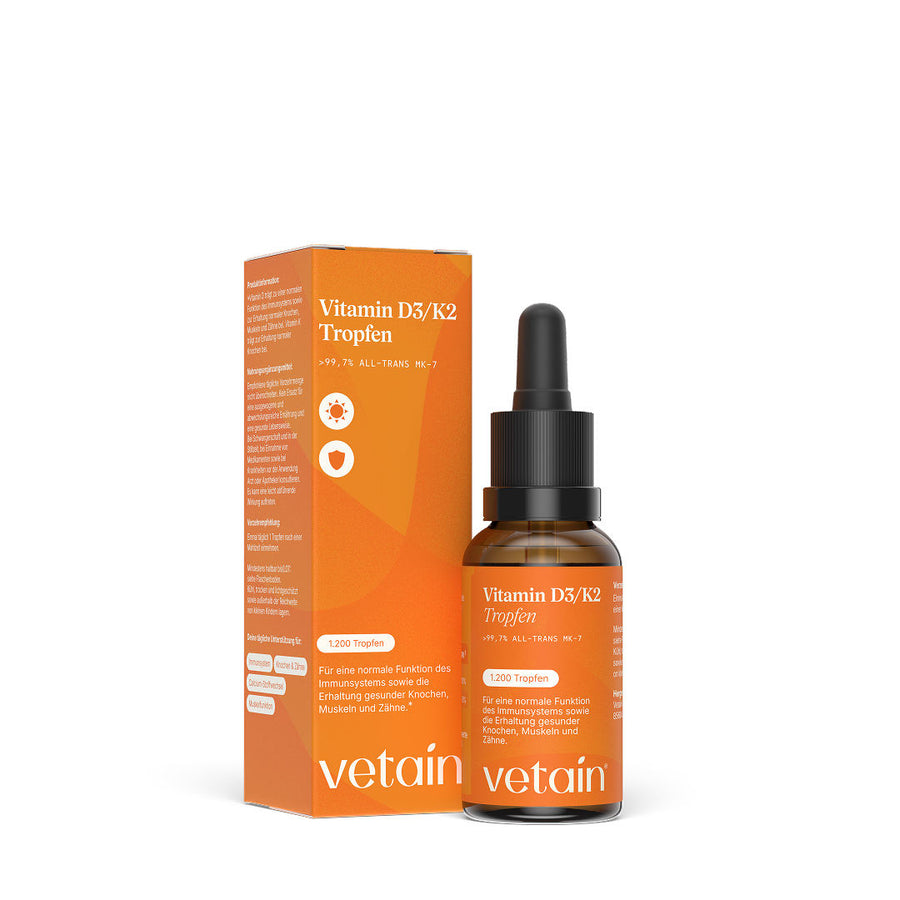
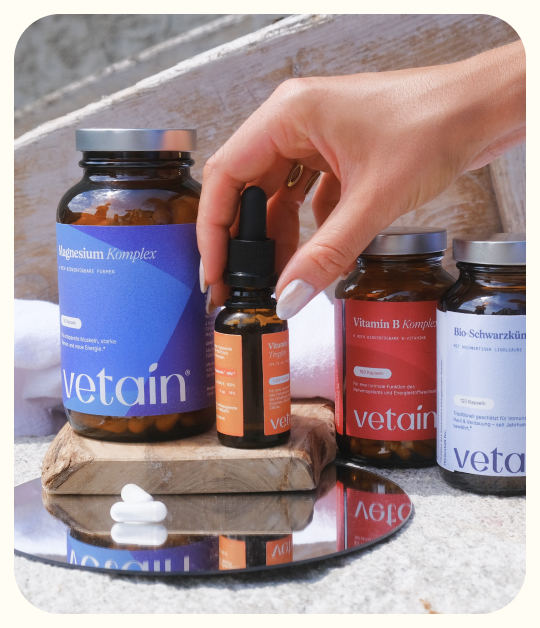
Even if it doesn’t sound like it: There is a way to produce vegan vitamin D3 – namely with the help of lichens. Lichens are a symbiosis of algae and fungi and can be used to obtain vitamin D3. Many vegans therefore look for supplements with vitamin D3 from lichens to contribute to their vitamin D supply. One example of such supplements are Vetain’s Vitamin D Drops.
Why You Might Not Be Getting Enough Vitamin D
At the beginning, we saw that there are three different ways to meet your vitamin D needs. So how is it possible that many people still don’t get enough vitamin D?
The answer is a bit more complex and depends on several factors:
Intake through food:
The list of vitamin D foods (see above: “Where is vitamin D found?”) may seem long, but on closer inspection, most foods belong to the same food groups: fish, meat, dairy products and mushrooms.
Besides the fact that vegetarians and vegans do not (or cannot) eat most of these, it’s also true that most people do not regularly eat enough fish & co. As a result, vitamin D intake through diet can vary. In addition, many people are unsure where vitamin D is found. And remember: intake through diet only accounts for about 10–20%. Even if you eat enough fish and meat, 80–90% are still uncovered.
Body’s own production:
To produce enough vitamin D yourself, you need to spend 5–25 minutes in the midday sun every day during summer – without sunscreen. During this time, the body can also build up reserves for winter. The problem: very few of us have the time in everyday life to sit in the sun every day at noon. Many therefore cannot build up sufficient reserves. In addition, winters in Germany are relatively long – and parts of autumn and spring are also too dark to produce enough vitamin D. A gap arises.
Supplements:
Although vitamin D supplements are becoming increasingly popular, many people still do not take dietary supplements for various reasons: they reject them, lack awareness or simply forget to take their tablets. Oops. There can also be uncertainties regarding vitamin D intake that may reduce the effectiveness of supplements. You can learn how to supplement correctly in our Vitamin D Intake Guide.
… and the Solution
We need to start dealing with vitamin D consciously. This includes understanding what vitamin D is good for and how you can ensure sufficient intake.
Whether through regular sun exposure, an extra portion of fish or supplements. Often, the issue isn’t that the topic is too complicated – it’s simply a lack of awareness.
For many people, supplements may be the most practical everyday option. And that’s completely fine – that’s what dietary supplements are for. They can complement a balanced diet.
So one answer to the question “Where is vitamin D found?” is definitely: supplements!
If you’re still looking for a vitamin D supplement, you’ve come to the right place. We offer high-dose vitamin D drops:
%-split_content-%
Take our test to find out whether vitamin D drops or tablets are better for you.
Conclusion: Where Is a Lot of Vitamin D Found?
Vitamin D is found in various foods – especially in animal products such as fish and meat. Mushrooms also contain relevant amounts of vitamin D. Particularly practical: some foods may be fortified with vitamin D. This is helpful for those who eat little to no animal products.
Supplements are also an easy source of vitamin D and are available in different forms and dosages.
So, were you paying attention? Here’s a quiz: Where is vitamin D found? Try to name at least three foods! Did you manage?
Do you have questions? Then feel free to send me an email – I look forward to hearing from you! :)
The information shared in this article does not replace individual medical or nutritional advice.
Literature & Sources
BfR (2024). Update (2023): Maximum level proposals for vitamin D in foods including dietary supplements.
German Nutrition Society & Austrian Nutrition Society (2025). Reference values for nutrient intake.
Leibniz Institute for Food Systems Biology at the Technical University of Munich (2023). The little Souci/Fachmann/Kraut. Food composition table for practice.