




















 11 Min
 Zuletzt aktualisiert am 24.02.2026

Are you already taking vitamin D? And if so, how? There are still many myths surrounding the topic "Vitamin D – how should you take it?" and many people are unsure what really matters when taking it. That’s exactly why Vetain is here. In this guide, we explain how to take your vitamin D supplement and why the usual rule for supplements (simply take it with a glass of water) doesn’t work here.
You’ll also learn which other supplements you can combine with vitamin D.
Your Knowledge To Go: Vitamin D | How to Take It?
You can take vitamin D at any time of the day, although taking it in the morning is particularly common.
It’s important to take vitamin D with a meal that contains fat – this can be a main meal or a snack.
The duration of intake depends on your needs and your product. Low-dose supplements can often be taken long term.
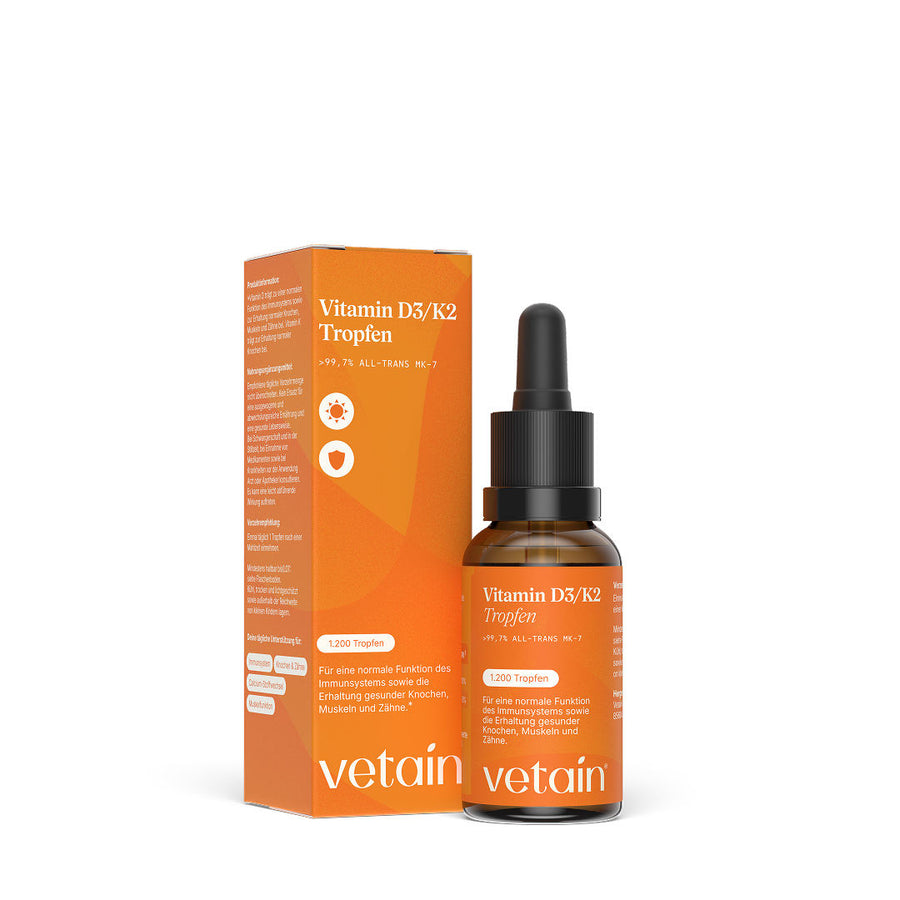
Vitamin D drops are comfortable and easy to take for many people.
Taking Vitamin D: Morning or Evening?
Let’s start relaxed. It doesn’t really matter whether you take vitamin D in the morning, in the evening, or even at noon. The time of day has no major impact – you can simply try out what works best for you.
Many people prefer taking it in the morning with breakfast or at lunchtime because it helps them build a fixed supplement routine. It’s also easier to catch up later in the day if you forget it in the morning.
If you currently take vitamin D in the evening and notice it negatively affects your routine, you can easily switch to the morning or midday.
What truly matters, however, is that you take your supplement with a meal. More on that in the next section.
Vetain’s Tip: Vitamin D | How to Take It? The Right Time
You can take vitamin D supplements at any time of the day – the important thing is to take them with a meal.
The Best Tips: Vitamin D | How to Take It?
With food, on an empty stomach, or just with water? “How should you take vitamin D?” is one of the most searched supplement questions. Here’s the clarification!
Since vitamin D is a fat-soluble vitamin, supplements should always be taken with a meal that contains fat. Don’t worry – you don’t need to eat greasy burgers or fries. A normal, balanced meal is enough. It contains sufficient fat to help your body absorb and utilize vitamin D properly.
Examples:
You can take vitamin D with a bowl of pasta with veggie bolognese.
You can take vitamin D with nuts.
You can combine vitamin D with porridge.
You can take vitamin D with summer rolls.
You can take vitamin D with yogurt – ideally combined with fresh fruit, nut butters or other toppings.
As you can see – it’s very easy to take vitamin D with meals.
An exception are products that already contain fat (e.g. as a carrier oil). In this case, the included fat may already support absorption. However, it still doesn’t hurt to take vitamin D with a meal. Depending on the fat content of the supplement, this can further improve absorption. If you prefer taking vitamin D on an empty stomach, such products are recommended.
%-split_content-%
Vetain’s Tip: Vitamin D | How to Take It? Intake Tips
It’s best to take your vitamin D supplement with a meal containing fat. An exception are vitamin D drops (or other products like capsules) that already contain fat.
Duration of Intake
Once the question “Vitamin D: How to take it?” is clarified, many people then wonder how long they need to take it.
Unfortunately, this is very individual:
Low-dose vitamin D supplements (20 µg or 800 IU per day) can theoretically be taken long term. However, if you spend a lot of time outdoors in the midday sun during summer and feel you’re getting enough vitamin D naturally (you can do a self-check here: What Is Vitamin D Good For – Plus Self-Test), you may limit supplementation to autumn, spring and winter.
High-dose products that exceed the usual dosage should not be taken long term without medical supervision due to the risk of overdose. These are better used as short-term courses.
If you have a diagnosed vitamin D deficiency and have been prescribed a product by your doctor, you should discuss the duration with them. Often, supplementation depends on your current vitamin D levels.
Taking vitamin D in winter is particularly popular – during the colder months, the question of how to take vitamin D comes up more frequently. You can read why here: Vitamin D in Winter.
In general, it’s always advisable to have your vitamin D levels tested and base supplementation on that.
Vetain’s Tip: Vitamin D | How to Take It? Duration
How long you should take vitamin D depends on your needs and your product. Low-dose supplements can often be taken year-round. Higher-dose supplements for treating a deficiency follow different guidelines – in that case, consult a healthcare professional.
How Often Should You Take Vitamin D?
How often you should take your vitamin D supplement depends on the specific product. There are different forms:
Supplements taken daily, such as Vetain’s Vitamin D Drops
Supplements taken weekly
Supplements taken monthly
Not sure what applies to your supplement? Just check the packaging. You’ll find instructions there.
These three types mainly differ in dosage. If a supplement is taken weekly or monthly, it must contain more vitamin D than a daily supplement in order to reach the recommended intake. Does that mean weekly or monthly products are better because they deliver a large amount at once?
Not necessarily. In general, daily and monthly supplements often provide the same average daily amount. However, weekly and monthly intervals can come with certain challenges – more on that below.
Vetain’s Tip: Vitamin D | How to Take It? Frequency
How often you take your supplement depends on the type of product. Most people use supplements that are taken once daily. You’ll find the information on your product packaging.
What Is Better: Daily, Weekly or Monthly?
Overdose risk: Studies show that taking extremely high single doses at once can lead to very high vitamin D blood levels, potentially posing health risks.
Intake errors: With daily intake, forgetting one dose or accidentally taking two in one day is usually less critical (although it should still be avoided). However, missing a weekly or monthly dose can significantly impact your vitamin D supply. Accidentally doubling a high-dose weekly or monthly intake may increase overdose risk.
Planning: Daily supplements become routine. Weekly or irregular intervals can be harder to track.
Effectiveness: Some studies suggest daily intake may be more effective than larger, less frequent doses – though this has not been conclusively confirmed by EFSA.
Of course, it sounds appealing to take a supplement only once a month instead of daily. However, supplements are meant to support health – not simply to be convenient.
If your doctor has recommended a different intake schedule, that’s perfectly fine. These are general guidelines – individual recommendations may differ.
Vitamin D Dosage & Overdose
When considering “Vitamin D | How to Take It?”, people often ask how much vitamin D per day is recommended and how much is too much.
The usual recommended dose* for healthy adults is 20 µg per day (800 IU), according to organizations such as the DGE.
An intake of up to 100 µg per day is considered safe. This is known as the tolerable Upper Intake Level (UL) – the amount that a healthy adult can consume daily over a lifetime without expected adverse health effects.
The number of capsules, tablets or drops needed depends on the product. With Vetain’s Vitamin D Drops, just 1 drop covers the daily dose.
%-split_content-%
Disclaimer: Long-term intake significantly above the recommended or safe dose can lead to vitamin D overdose. This may have serious health consequences – always follow dosage instructions carefully.
Vetain’s Tip: Vitamin D | How to Take It? Proper Dosage
Recommended amount: 20 µg per day (= 800 IU)
Safe amount: up to 100 µg per day
Combinations with Vitamin D
Many people take vitamin D alongside other supplements such as zinc or calcium. Can these be combined? Let’s take a look at the most common combinations:
Can you take vitamin D and magnesium together?
Yes.
Can you take vitamin C and vitamin D together?
Yes.
Can you take zinc and vitamin D together?
Yes.
Can you take iron and vitamin D together?
Yes.
Can you take vitamin D and calcium together?
Yes.
Can you take vitamin B and vitamin D together?
Yes.
You’ll find a detailed overview in the article: Which supplements should not be taken together?
Vetain’s Tip: Vitamin D | How to Take It? Combining with Other Vitamins & Minerals
You can combine vitamin D with many other supplements. The combination with vitamin K2 is particularly popular.
Conclusion: How Should You Take Vitamin D?
Hopefully, this guide has answered all your questions about how to take vitamin D. And hopefully you’ve realized how simple and straightforward it can be. In my opinion, vitamin D drops are especially convenient – and surprise, that’s exactly what we have in our shop! ;)
%-split_content-%
And if you haven’t taken your vitamin D today yet, now’s the time! If you’d like to keep reading, check out our next article to learn which foods contain vitamin D or test whether vitamin D drops or tablets suit you better.
Do you have questions? Feel free to send me an email – I look forward to hearing from you! :)
The information shared in this article does not replace individual medical or nutritional advice.
Literature & Sources
BfR (2025). High single doses of vitamin D taken at intervals of days or weeks via supplements pose health risks: Updated statement No. 031/2025 of the BfR from September 3, 2025.
BfR (2020). Vitamin D: High-dose supplementation unnecessary: Statement No. 035/2020 of the BfR from July 31, 2020.
DGE (n.d.). Vitamin D. https://www.dge.de/wissenschaft/referenzwerte/vitamin-d/
Frimmer, V. et al. (2025). Who should take vitamin D? In: Deutsches Ärzteblatt, 122(6).
*Applies in the absence of endogenous synthesis.