

















 7 Min
 Zuletzt aktualisiert am 19.10.2026

High-protein recipes are more popular than ever - more and more people are cooking and baking with protein powder to give their dishes an extra boost of protein. The problem: Not all protein powders are suitable for heating, and the German Federal Institute for Risk Assessment even actively advises against some protein powders!
What's the truth - Can you heat protein powder, and what are the limitations? I'll also tell you which protein powders are genuinely suitable for baking.
Your quick guide: Can you heat protein powder?
-
Protein powders with sucralose should not be heated above 120 °C, because unwanted, potentially toxic substances may form.
-
Protein powders without sucralose can be heated, but many become lumpy when heated or develop an unpleasant taste.
-
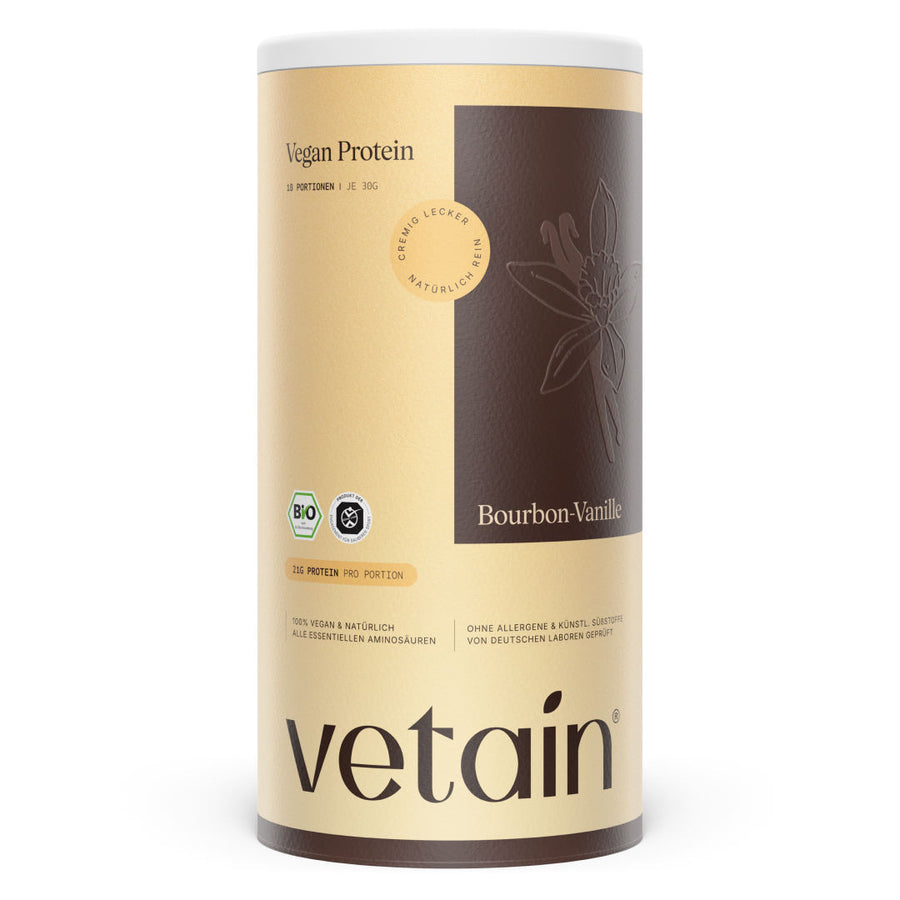
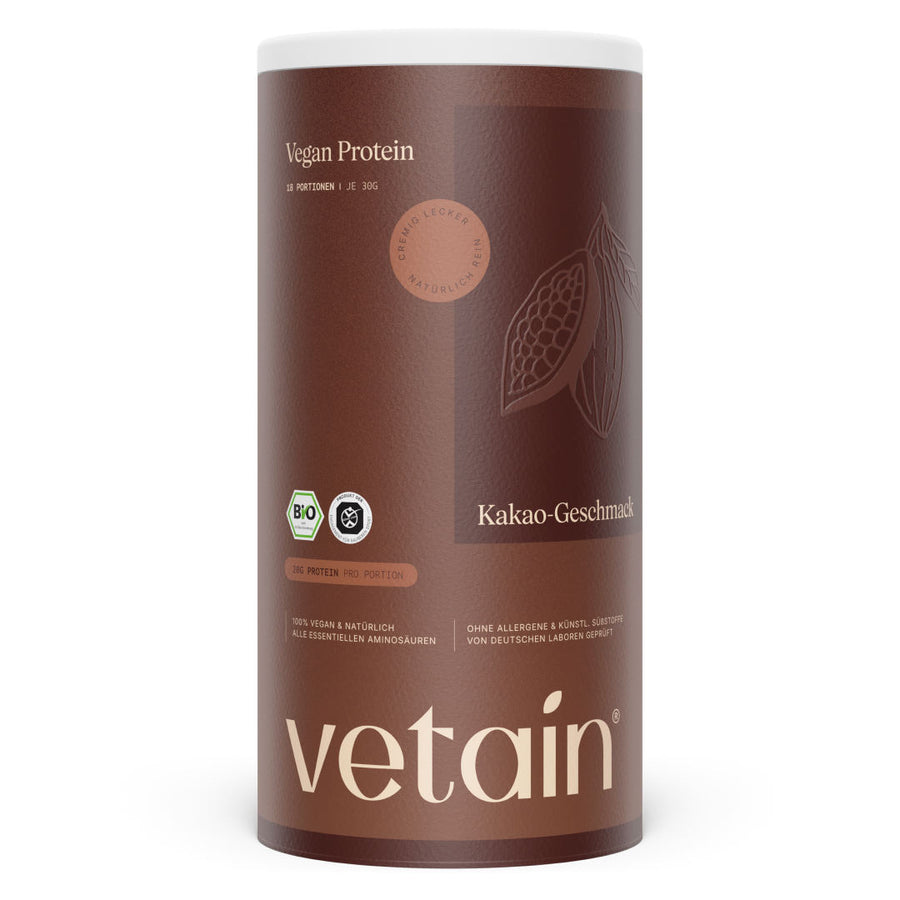
When buying, look for protein powders that are genuinely suitable for cooking and baking, such as Vetain protein powder.
-
With Vetain protein powder, the answer to the question "Can you heat protein powder?" is a resounding yes!
%-product_content-%
Can you heat protein powder?
Many people bake supposedly healthy recipes with protein powder, and more and more recipes online call for protein powder. But many protein powders aren't suitable for cooking and baking and shouldn't be heated to such high temperatures.
But why is the answer to the question of whether you can heat protein powder often no?
There are several reasons for this:
-
Change in texture: Protein changes its texture when heated. We know this from everyday life - after all, that's what makes scrambled eggs, soft-boiled eggs, and fried eggs possible.
The problem: Protein powders can curdle when baked, negatively affecting the texture. They can become lumpy or firm, which is quite unpleasant in many recipes. -
Formation of potentially harmful substances: Sucralose is sensitive to heat at high temperatures. When protein powders containing sucralose are heated above 120 °C, unwanted and potentially harmful substances may form. Since many protein powders contain sucralose as a sweetener, this rules out a large proportion of powders for baking.
That doesn't necessarily stop many manufacturers from promoting their powders for baking recipes! -
Change in taste: Protein powders can change flavor when heated. Suddenly, your protein muffins have a really strange aftertaste. Often, we don't even realize it's the protein powder causing it; we just think the recipe hasn't worked. Does that sound familiar?
-
Heating can also destroy heat-sensitive ingredients such as vitamins - but we won't go into that in more detail now, since protein powders are generally focused on protein rather than added vitamins.
To sum up: Can you heat protein powder? Many protein powders aren't suitable for heating, either because they aren't designed for it and their texture & taste change unpleasantly, or because they contain sucralose, which may produce potentially harmful substances during cooking.
Is heating protein powder harmful?
This question often comes up when people ask, "Can you heat protein powder?" And the answer is: It all depends on the ingredients in your protein powder. Sucralose, which is often used as a sweetener in protein powders, can break down at temperatures above 120 °C into unwanted and potentially harmful compounds.
One important note: Although you can find sensational headlines everywhere, we want to make it clear that we still don't know exactly what really happens when protein powders containing sucralose are heated: Which substances are produced, in what quantities, and how dangerous are they really? These questions are currently being investigated in many studies. Important institutions such as the EFSA are also looking into this and reassessing sucralose.
So we still can't say whether heating sucralose is really as dangerous as people often say. Until we know for sure, however, the general recommendation of the BfR is not to heat protein powders containing sucralose above this critical temperature of 120 °C. We follow this recommendation and pass it on to you.
So, stirring chocolate protein powder into warm milk is no problem, but baking a chocolate cake with sucralose-containing protein powder is.
Pssst: If you don't want to give up your high-protein cake, you'll find a way to make it work below.
What is sucralose, and why is it found in many protein powders?
Sucralose is a sweetener used in many protein powders because it is very sweet and contains no calories. This fits well with the high-protein, low-calorie approach of many powders. Whether you like that or not is up to you and is a topic for another discussion. But what we, as a protein powder manufacturer, find incomprehensible is that many brands that use sucralose continue to promote their powders for use in cooking and baking recipes without a warning. We believe that important topics like this should always be explained, so people can make an informed decision and decide for themselves: "Can protein powder be heated?"
Are proteins destroyed when cooked?
Yes and no - but we understand where the concern comes from. We'll explain briefly, regardless of whether protein powder can be heated or not. When heated, proteins denature. This simply means they lose their 3D structure and their consistency changes. For example, an egg becomes firm when cooked. But they don't break down or become worthless to us. The amino acids - the building blocks of proteins that our body needs, for example, to build muscle - remain intact. In fact, heating proteins can even help our bodies digest them, since heat already breaks down the proteins, making them easier for us to process. Our bodies have to break down proteins into their individual components during digestion anyway.
From this perspective, the question "Can you heat protein powder, or will the protein be damaged?" can be answered with a clear "That’s no problem at all."
Very important: Proteins that have a specific function, such as enzymes, can indeed lose their function when heated. But this is not the case for proteins in our diet. So proteins in food can be heated.
The solution: Protein powder for cooking & baking
Does this mean protein muffins, protein rolls & the like are a thing of the past? No! Fortunately not. There are several protein powders that contain no sucralose and are therefore suitable for heating! So baking and cooking with protein powder is possible - but only with the right powder.
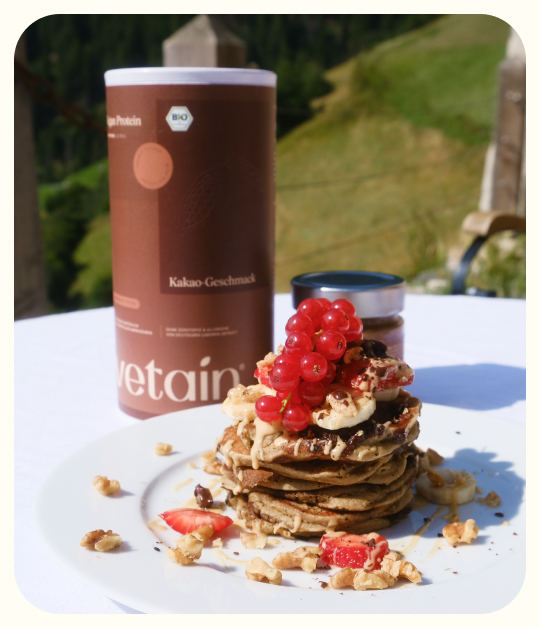
One option: Vetain’s vegan protein powder for cooking and baking.
Vetain protein powder is completely free of sucralose and is not only suitable for heating, but is especially recommended for cooking & baking!
For example, our spinach gnocchi, which are boiled in water and then pan-fried, the naan bread made in a pan, and the vegan tarte flambée rolls baked in the oven show what this looks like in the kitchen.
%-split_content-%
Let me introduce you to the powder:
-
Vegan protein complex: The vegan protein complex consists of several plant-based proteins that go almost straight from the field into your shake.
-
No sucralose, naturally sweetened: The powders are sweetened with monk fruit. They’re completely free of sucralose, so they can be heated without any risks!
-
Real flavor: The protein powders contain natural flavors, fruit powders, cocoa powder & more, depending on the variety, of course. And that authentic flavor is retained when cooking & baking, too.
-
Perfect consistency - especially for baking: Our protein powder for baking won’t become lumpy, firm, or unpleasant when you heat it. Instead, your dishes will have the same consistency you’re used to - just as they should.
We’re not the only ones recommending Vetain protein powder for baking as the manufacturer; our customers also love baking with Vetain protein powder. And whenever our customer service team gets the familiar question "Can you heat protein powder?", they proudly answer yes!
Which protein powder is best for baking? Definitely Vetain’s Vegan Protein.
Take a look at our test to find out which protein powder is best for you!
Conclusion
Can you heat protein powder? We know: The right ones, yes! But protein powders with sucralose shouldn’t be heated to high temperatures. And while many other protein powders are suitable for heating, they can clump or change in taste. That’s why we recommend Vetain protein powder for cooking & baking - it has the perfect consistency, authentic flavor, and 0% sucralose.
Fancy some delicious high-protein dishes? Check out our "Baking with Protein Powder Recipes". And if you’d like to find out how much protein powder you can bake with per day, you can read more in our article "How Much Protein Powder Per Day?".
Do you have any questions? Feel free to send me an email - I look forward to hearing from you! :)
The information shared in this article is no substitute for individual medical or nutritional advice.
Literature & Sources
-
BfR (2019). Sucralose sweetener: Heating food can produce compounds that are harmful to health. Statement.
-
EFSA (2024). State of Play: The reevaluation of sweeteners. Presentation.
There are many interesting studies on the topic of "Can you heat protein powder?" - feel free to read up on it yourself. And as soon as there are updates from the EFSA, we’ll get back to you here.