




















 8 Min
8 Min
 Zuletzt aktualisiert am 23.09.2026

Sunshine vitamin, cholecalciferol, vitamin D3 – vitamin D has many names, and more and more people want to supplement it. What few people know: What is vitamin D actually good for? What does it do in our bodies? And is it really worth the hype? Let's take a look together!
Your bonus: A self-test to see if vitamin D might be of interest to you!
Your knowledge to go: What is vitamin D good for?
-
Vitamin D is found in many important processes in the body involved – from the immune system to bones, muscles and teeth, all the way to calcium utilization and cell division.
-
Vitamin D can be produced in small amounts through Groceries it is absorbed, but it is mainly processed by the body self-educated or about Dietary supplement supplemented.
-
You can find out whether supplementation might be of interest to you in our self-test find out.
-
For children and older adults Vitamin D plays a special role from the age of 60.
-
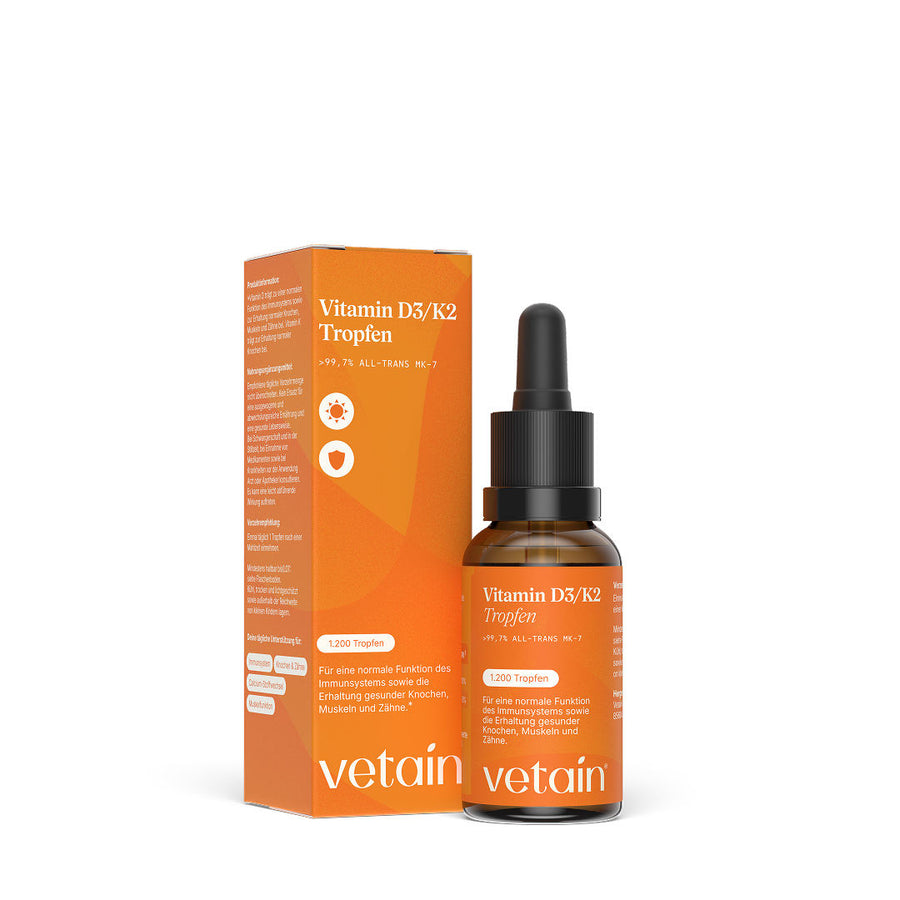
At Vetain can you inexpensive vitamin D drops buy.
%-product_content-%
Overview: Vitamin D | Its effects in the body
So, let's get straight to the interesting part: What is vitamin D good for? The sunshine vitamin is important for many different areas of our body and is involved in many processes.
We will look at the most important functions of the vitamin together and briefly explain its significance for our body.
So, what is vitamin D good for?
immune system
Vitamin D contributes to normal Function of the immune system And this immune system is of utmost importance to all of us in everyday life, because it fights pathogens such as bacteria and viruses. Adequate vitamin D intake contributes to the proper functioning of this system. Therefore, many people take vitamin D supplements, especially during the colder months.
This might also explain why vitamin D3 is important in winter.
What else is vitamin D good for?
Bones, muscles & Teeth
Bone & Muscles are essentially the foundation of our body. Vitamin D contributes to their maintenance. normal bone and one normal muscle function This is especially important for older people over 60 – I'll explain that in more detail later. Well-functioning muscles and bones are often taken for granted in everyday life, and people don't realize that vitamin D plays a role in this.
In addition, vitamin D also contributes to Maintaining normal teeth Crazy, right? Normally, when it comes to teeth, you only ever hear about fluoride and calcium. & Co.
Calcium utilization
Speaking of calcium: Vitamin D also plays a role in calcium metabolism. It contributes to normal calcium metabolism. Calcium absorption and utilization and thus contributes to a normal calcium level in the blood.
This shows how complex the processes in our body are. So, if you ask yourself, "What is vitamin D3 good for?", you don't just need to consider the... direct effects of the vitamin, but also the Indirect influences Consider this. Because: Calcium itself contributes to normal muscle function, normal energy metabolism, and normal blood clotting.
Cell health
Vitamin D contributes to the normal function of the Cell division at.
What exactly is cell division? Cell division is an important process in our bodies in which cells divide (surprise!), meaning they multiply. This process renews tissues.
Many people are familiar with the term antioxidants in connection with cells. You can learn more about them in this article. Foods with antioxidants.
Special groups
As we have already seen, the effects of vitamin D3 are important for all of us. However, there are two groups for whom vitamin D plays a particularly important role: children and older adults.
Children: What is vitamin D good for... in children?
Vitamin D contributes to normal bone growth and development in children. No wonder our parents always sent us out into the sun! ;)
Older adults: What are the benefits of vitamin D… for people aged 60 and over?
Vitamin D contributes to a reduction in the risk of falls in men and women aged 60 and over (with a daily intake of at least 20 µg of vitamin D). Falls are a particular risk factor for bone fractures in old age.
How do you get vitamin D?
Okay, enough information about what vitamin D is good for. Now we want to actually absorb the vitamin. How do we do that? Unlike other vitamins, vitamin D is absorbed through the digestive system. not primarily ingested through food. Instead, our body can produce the vitamin self-education, When we spend time in the sun, the body produces about 80-90% of our vitamin D needs itself, provided all conditions are right. You can read about how this works and what conditions apply in our article "Vitamin D in winter".
Vitamin D can also be ingested in small amounts through food. However, this only covers 10-20% of the daily requirement – often even less.
Typical vitamin D foods are:
-
Oily fish (mackerel, herring, salmon)
-
Some mushrooms
-
liver
-
egg yolk
-
Fortified foods (such as some types of milk or margarine)
We'll show you other foods containing vitamin D here..
As a dietary supplement manufacturer, we know that since many people (especially vegetarians and vegans) don't eat enough of these foods to get sufficient vitamin D, and since production through sunlight doesn't always work perfectly, more and more health-conscious people are taking vitamin D supplements. Supplements One. These are available, for example, in the form of vitamin D tablets or vitamin D drops. You can find out how to take them correctly in our comprehensive guide to vitamin D intake.
Self-test: Is vitamin D of interest to you?
We now know what vitamin D is good for and that many people supplement with it. But is this vitamin actually relevant to you?
-
Do you live in a country where the sun doesn't shine every day? In Germany, for example, the sun is a rather rare visitor in winter.
-
Do you spend less than 15-20 minutes in the midday sun (without sunscreen) on most days?
-
Are you mostly indoors during the day (office, university, ...)?)?
-
Do you live a vegetarian or vegan lifestyle?
-
Do you rarely eat typical vitamin D foods?
-
Is it currently autumn or winter?
-
Do you have a medically diagnosed vitamin D deficiency?
-
Do you have dark skin?
-
Are you over 60 years old?
-
Are you currently NOT taking any supplements? (Yes = You are not taking any supplements yet, No = You are already taking a supplement)
Count your "yes" answers and click on your result to get your evaluation:
0–3× Yes
Currently, only a few of the points mentioned apply to you.
Perhaps vitamin D isn't a big topic for you right now – but it can't hurt to familiarize yourself with the basic functions of the vitamin in the body.
4–7× Yes
Some of these points are relevant to your everyday life.
This can be a good reason to take a closer look at vitamin D.
8–10× Yes
Many of the factors mentioned apply to you.
Vitamin D seems to be an interesting topic for you. If you'd like, you can now delve deeper into the subject and learn more about vitamin D in everyday life.
This test is not a substitute for a blood test performed by a doctor. However, it can give you an initial assessment of the role vitamin D plays in your life. If you have any questions, please consult your doctor.
If you've now become a fan of vitamin D, you can buy your vitamin D drops directly here or Find out whether vitamin D tablets or drops are better suited to you.:
%-split_content-%
Conclusion: What are the benefits of vitamin D?
So, now you know what vitamin D is good for? If you need more information, feel free to check out our product page – there's even more there. Facts & Explanations regarding the effects of vitamin D.
By the way: We receive many messages every day asking questions like "Is vitamin D good for the skin?", "Is vitamin D good for the hair?", or even "Is vitamin D good for mental health?". Please note that in this blog, we are only allowed to make statements about effects that have been approved by the EFSA as "health claims". Feel free to check out various forums or read some studies yourself – there are some really interesting findings in these areas. And if you decide to supplement with vitamin D after reading these questions, we'd be happy if you came back to us (either to this article "What is vitamin D good for?" or our [link to relevant page/website]). Supplement range) you come back.
Do you have any questions? Then feel free to write me a message. Mail - I look forward to hearing from you! :)
The information shared in this article does not replace individual medical or nutritional advice.
literature & Sources
-
BfR (Federal Institute for Risk Assessment) (2023). Vitamin D supplements – useful or unnecessary?
-
BfR (Federal Institute for Risk Assessment) (2014). Selected questions and answers on vitamin D.
-
DGE (o.J. ). Vitamin D. https://www.dge.de/wissenschaft/referenzwerte/vitamin-d/
-
Ehlers, A.; Frimmer, V.; Linseisen, J. & Scholl, J. (2025). Who should take vitamin D? In: German Medical Journal, 122(6)
-
Mensink G.B.M. & Rabenberg, M. (2016). Vitamin D status in Germany. In: Journal of Health Monitoring, 1(2).