






















 8 Min
8 Min
 Zuletzt aktualisiert am 23.09.2026

More and more people are turning to dietary supplements to supplement their nutrient intake. And many take not just one supplement, but several. Sooner or later, almost everyone reaches the point where they ask themselves: Which dietary supplements should not be taken together?
We have read numerous important studies and will explain some important basics to you***.
Your bonus in the article: “Which vitamins should not be taken together” table.
→ Discover at a glance which combinations are (not) suitable.
%-product_content-%
Your knowledge to go: Which dietary supplements should not be taken together?
-
Problematic combination of minerals: Iron, zinc, calcium and magnesium can often interfere with each other's absorption – it is better not to take them at the same time, but with a 2-4 hour interval.
-
Possible combinations: Many vitamins, such as vitamin D, K2, B vitamins, vitamin C and omega-3, can usually be combined well in normal doses.
-
Interesting duos: Particularly useful are u.a. Vitamin C + iron and calcium + vitamin D.
-
If in doubt, ask.: Always read the package insert and seek medical or nutritional advice in case of illness, medication or high doses.
Myth Check – Which supplements should not be taken together?
First, we'll look at the most frequently asked questions about different combinations. Then, you'll find a table with an overview of the most common dietary supplements, which will clearly show you which supplements should not be taken together.
Combinations with zinc
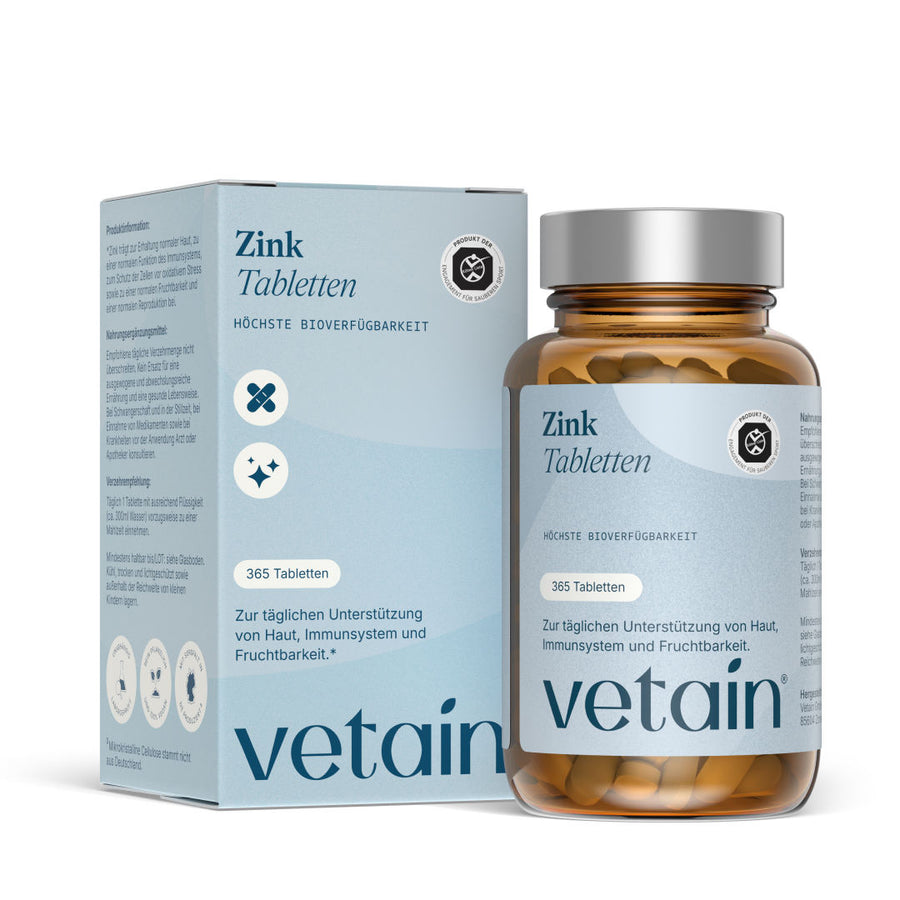
zinc Dietary supplements seem to be the somewhat problematic category. We'll take a look at the most important combinations and give you an objective assessment of what's acceptable and what should be avoided.
Which dietary supplements should not be taken together with zinc?
In short: Do not take zinc with calcium, iron, and high doses of magnesium.
Can zinc and magnesium be taken together?
Vetain's tip: Yes and no!
Studies show that extremely high doses of zinc (higher doses than those found in normal supplements) can impair magnesium absorption. If you prefer to take them separately, you can leave a few hours between zinc and magnesium. However, as mentioned, this is usually unnecessary, and you can take magnesium and zinc together without any problems.
Can zinc and iron be taken together?
Vetain's tip: No, better not.
Zinc and iron compete for the same absorption pathway in the intestine and can therefore inhibit each other's absorption.
Can zinc and vitamin C be taken together?
Vetain's tip: Yes!
According to some studies, vitamin C could even increase the absorption of zinc.
Can zinc and selenium be taken together?
Vetain's tip for lower dosages: Yes!
If you are taking both supplements in high doses, it may be better to take them with a time gap between doses.
Can zinc and vitamin D be taken together?
Vetain's tip: Yes!
Can zinc and calcium be taken together?
Vetain's tip: No, the two nutrients can inhibit each other's absorption in the intestine.
Combinations with vitamin D
Just as with zinc, there are also many controversies surrounding the combination of Vitamin D Many myths surround other supplements. We'll clear things up!
Which dietary supplements should not be taken together with vitamin D?
Can vitamin D and zinc be taken together?
Vetain's tip: Yes!
Can vitamin D and C be taken together?
Vetain's tip: Yes!
Many people actually really like the combination and actively plan to take them at the same time. A little tip: Vitamin D is a fat-soluble vitamin and should therefore be taken with a meal, while vitamin C is a water-soluble vitamin and should simply be taken with plenty of fluids. You can take vitamins C and D together, for example at breakfast or lunch – but you don't have to.
Can vitamin D and iron be taken together?
Vetain's tip: Yes! You can usually take iron and vitamin D together.
Can vitamin D and magnesium be taken together?
Vetain's tip: Yes!
This also means, of course, that you can take vitamin D3 and magnesium together.
Is it safe to take vitamin D and vitamin B12 together?
Vetain's tip: Yes!
Generally, you can take vitamins D and B together – whether it's vitamin B12 or B9. This means you can also take vitamin D and folic acid together.
Combinations with iron
Which dietary supplements should you not take together with iron?
In short: Do not take iron together with zinc, magnesium, or calcium.
Can iron and zinc be taken together?
Vetain's tip: No!
Zinc and iron should not be taken together. It's best to leave a gap of several hours (about 2-4 hours). Since iron is often taken on an empty stomach before breakfast anyway, and many people supplement with zinc before bed, this is usually not a problem.
Can iron and magnesium be taken together?
Vetain's tip: No!
These two minerals should also be taken several hours apart, as they compete for the same transport pathways. However, some forms of magnesium can be combined with iron – please check your specific needs for more information.
Can iron and vitamin C be taken together?
Vetain's tip: Yes!
The two supplements can be taken together, as vitamin C can increase iron absorption in the intestines. This is particularly important with plant-based iron.
Can iron and calcium be taken together?
Vetain's tip: That's a clear no!
Can iron and Omega 3 be taken together?
Vetain's tip: Theoretically, yes.
However, iron is often taken before a meal, while Omega 3 should usually be taken with a fatty meal.
Can iron and B12 be taken together?
Vetain's tip: Yes!
Combinations with magnesium
What should you not combine with magnesium take?
In short: Do not combine magnesium with iron and extremely high doses of zinc.
Can magnesium and vitamin D be taken together?
Vetain's tip: Yes!
Can magnesium and vitamin C be taken together?
Vetain's tip: Yes, many people consciously choose this combination.
Can magnesium and zinc be taken together?
Vetain's tip: Yes and no!
Studies show that extremely high doses of zinc (higher doses than those found in typical supplements) can impair magnesium absorption. If you still prefer to take them separately, you can leave a few hours between zinc and magnesium. However, as mentioned, this is usually unnecessary, and you can take magnesium and zinc together without any worries.
Can magnesium and iron be taken together?
Vetain's tip: No, better not.
These two minerals should also be taken several hours apart, as they compete for the same transport pathways. However, some forms of magnesium can be combined with iron – please check your specific needs for more information.
Can magnesium and selenium be taken together?
Vetain's tip: Yes!
Can magnesium and omega-3 be taken together?
Vetain's tip: Yes, that's possible.
Combinations with calcium
Which dietary supplements should you not take together with Calcium?
In short: Do not take calcium together with zinc and iron.
Can calcium and zinc be taken together?
Vetain's tip: No!
The two minerals use similar transport pathways to be absorbed in the intestines. If they are taken together, a kind of competition between them can occur.
Can calcium and vitamin D be taken together?
Vetain's tip: Yes!
Professional societies even say that taking them together can be beneficial. The idea that vitamin D and calcium shouldn't be taken together is therefore just a myth.
Can calcium and iron be taken together?
Vetain's tip: No.
Calcium can inhibit the absorption of iron in the intestine.
Attentive readers may have already noticed: The problem areas are usually the minerals, primarily iron, calcium, zinc, and magnesium. The answer to the question "Which supplements should I not take together?" is therefore usually at least half a mineral. This can be a helpful guide in your daily life. The combination of calcium, magnesium, iron, and zinc is therefore problematic!
Combinations with vitamin B
Which dietary supplements should you not take together with Vitamin B?
Can vitamin B and zinc be taken together?
Vetain's tip: Yes!
Many people prefer to take vitamin B in the morning and zinc in the evening because it better suits their daily rhythm. However, you can easily combine the two. This applies to both a vitamin B complex and individual vitamins – for example, you can also take zinc and vitamin B12 together.
Can vitamin B12 and folic acid be taken together?
Vetain's tip: Yes!
The two vitamins are often combined in vitamin B complexes.
Can vitamin B12 and magnesium be taken together?
Vetain's tip: Yes, they are often deliberately combined.
Generally, you can take vitamin B and magnesium together – regardless of the type of vitamin B. So you can also take a vitamin B complex and magnesium together.
Can vitamins B and D be taken together?
Vetain's tip: Yes.
This also applies to individual subtypes – so you can also take vitamin B12 and vitamin D together.
Can vitamin B12 and iron be taken together?
Vetain's tip: Yes.
The combination with vitamin C is particularly popular.
Station wagons with Omega 3
Which dietary supplements should you not take together with Omega 3?
Can you take Omega 3 and Magnesium together?
Vetain's tip: Yes! That's quite easy.
Can you take Omega 3 and zinc together?
Vetain's tip: Yes.
Can you take Omega 3 and iron together?
Vetain's tip: Theoretically, yes.
However, iron is often taken before a meal, while Omega 3 is usually taken with a fatty meal.
Can you take Omega 3 and Vitamin D together?
Vetain's tip: Yes.
Since both are fat-soluble, it is suitable to take them with a fatty meal.
Combinations with Vitamin C
Which dietary supplements should you not take together with Vitamin C?
Can vitamin C and magnesium be taken together?
Vetain's tip: Yes! Many people like to combine these two supplements. So, if you want, you can take magnesium and vitamin C together.
Can vitamin C and zinc be taken together?
Vetain's tip: Yes!
According to some studies, vitamin C could even increase the absorption of plant-based zinc.
Can vitamins C and D be taken together?
Vetain's tip: Yes.
Can vitamin C and B12 be taken together?
Vetain's tip: Yes and no.
It's best to leave a few hours between taking the two supplements.
station wagons with OPC
Which dietary supplements should you not take together with OPC?
Can OPC and magnesium be taken together?
Vetain's tip: No!
That's not a problem, though, since OPC is often taken on an empty stomach before breakfast or before meals, while many people prefer to take magnesium with or after a meal. So, leave some time between taking the two supplements.
Can OPC and Omega 3 be taken together?
Vetain's tip: Yes, that combination is very popular.
Combinations with selenium
Which dietary supplements should not be taken together with selenium?
In short: Selenium should not be taken together with vitamin C and iron.
Can selenium and vitamin D be taken together?
Vetain's tip: Yes.
Can selenium and vitamin C be taken together?
Vetain's tip: No.
Some studies show that the two nutrients can hinder each other's absorption when present in high concentrations.
Can selenium and iron be taken together?
Vetain's tip: No.
Some studies show that the two nutrients can hinder each other's absorption.
Which dietary supplements should not be taken together? | Table
For a better overview, we have included a table here with the most common combinations.
Which dietary supplements should not be taken together?

Yes = Joint intake possible
No = Joint intake is not recommended
*Previously, it was thought that a combination was not good, but now it is known that it is perfectly fine to take both together.
**For large quantities, a time interval should be observed, otherwise it doesn't matter.
Of course, you can also use the table as a "how to combine vitamins correctly" table. ;)
Which vitamins can be taken together?
The question of which dietary supplements should not be taken together has now been answered. Just as some supplements should not be taken together, there are also some combinations that are suitable for joint use and are sometimes even directly combined by manufacturers.
How can you properly combine dietary supplements?
-
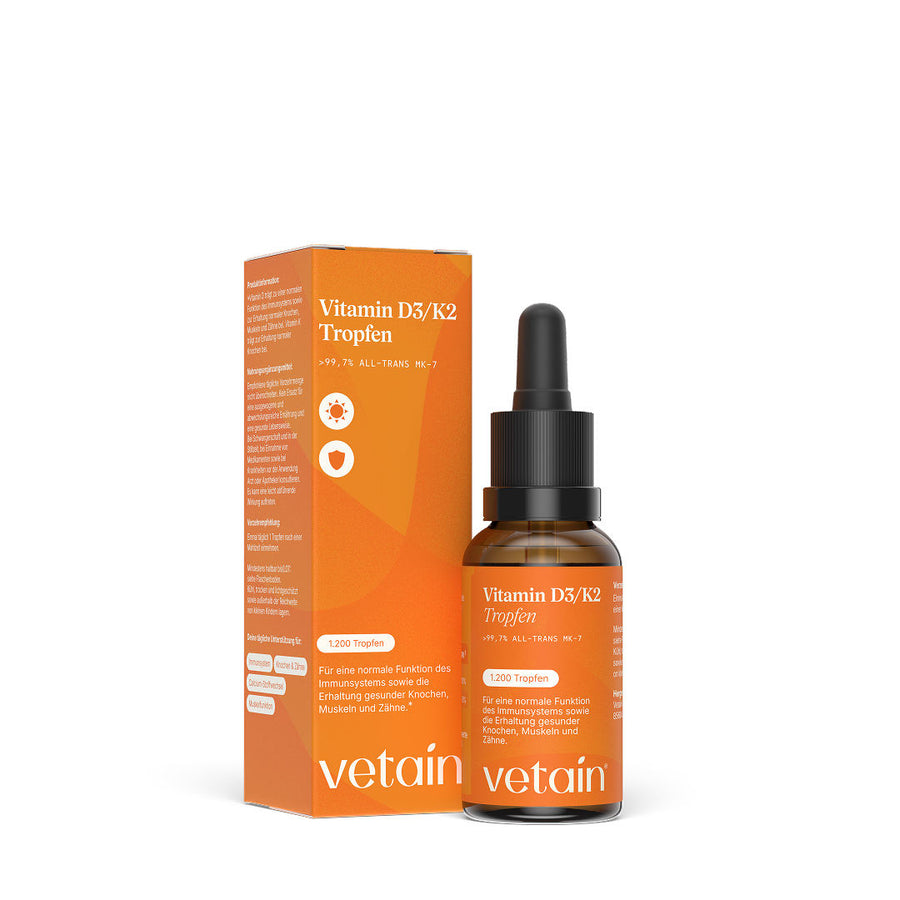
Vitamin D and K2
Do you have to take vitamin D with K2? First of all, you don't HAVE to do anything. The combination of the two vitamins is widespread, and they are often even available as a combination supplement. -
Vitamin C and iron
The two supplements can be taken together, as vitamin C can increase iron absorption in the intestines. This is particularly important with plant-based iron. -
Calcium and Vitamin D
Professional organizations like the German Nutrition Society (DGE) say that taking vitamin D and calcium together can be beneficial. The idea that vitamin D and calcium shouldn't be taken together is therefore just a myth. -
Zinc and Vitamin A
The two can practically be combined. -
Zinc and Vitamin C
According to some studies, vitamin C could even increase the absorption of plant-based zinc. -
Magnesium and Vitamin C
This combination is very popular!
%-product_content-%
Conclusion: Which dietary supplements should not be taken together?
You now know which dietary supplements you shouldn't take together. Of course, we can't address every single supplement or individual case here. Please consult your doctor and pay attention to the information on the package inserts.
Do you have any questions? Then feel free to write me a message. Mail - I look forward to hearing from you! :)
***Our lists do not include all dietary supplements. Please do further research if you are missing any information.
literature & Sources
-
BfR (2023). High-dose vitamin D supplements can impair health in the long term. There is also no proven benefit from combining such supplements with vitamin K. Opinion.
-
DGE (o.J. ). Frequently asked questions on selected topics. https://www.dge.de/gesunde-ernaehrung/faq/