


















 7 Min
7 Min
 Zuletzt aktualisiert am 20.11.2025

Cold season is here, and before we know it, one cold wave after another will be rolling in. And just when you’ve finally put the tissues away, you’ll already be reaching for throat lozenges again. During this time of year, the immune system becomes a particular focus. Sounds familiar? In this article, we’ll show you how you can get through the cold season with the help of certain vitamins for the immune system.
Our series "Getting through winter with Vetain" accompanies you over the coming months and shows how you can support yourself through winter with the right vitamins and minerals. In the last article, we explained why vitamin D in winter is particularly interesting. And a little hint: the sunshine vitamin will appear again in this article too.
Your knowledge to go: Which vitamins support the immune system?
In winter, many people consciously focus on their immune system and therefore specifically use dietary supplements.
Some vitamins and minerals that support the immune system are vitamin A, vitamin B12, vitamin C, vitamin D, iron and zinc.
Vitamin B6, selenium, folic acid, copper and omega-3 fatty acids are also an important part of a balanced diet.
%-product_content-%
Constantly catching colds | What can you do?
Constantly ill despite a healthy lifestyle? If you already eat a balanced diet, get enough regular exercise, sleep well, and maintain good hand hygiene and are still frequently under the weather, it’s always advisable to consult your doctor first.
In addition, an adequate supply of vitamins and minerals plays a role in many normal bodily functions. Vitamins and minerals can contribute to a normal function of the immune system. How well your individual needs are met can vary greatly and depends on many factors.
Especially during stressful phases, it can make sense to take a closer look at your personal diet and lifestyle to ensure you are generally well supplied.
Vitamins for the immune system
Let’s take a closer look together at which vitamins are typically associated with the immune system. The following vitamins and minerals contribute to a normal function of the immune system:
Vitamin A
Typical sources include liver, egg yolk, butter, cheese, fish, carrots, pumpkin, sweet potatoes and spinach.
A varied diet usually provides sufficient vitamin A.
Plant-based foods contain provitamin A, a precursor that the body can convert into active vitamin A.
Vitamin B12
It is found almost exclusively in animal-based foods such as meat, fish and dairy products.
With a vegetarian or vegan diet, fortified foods or vitamin B supplements (available here!) can be used to ensure adequate intake.
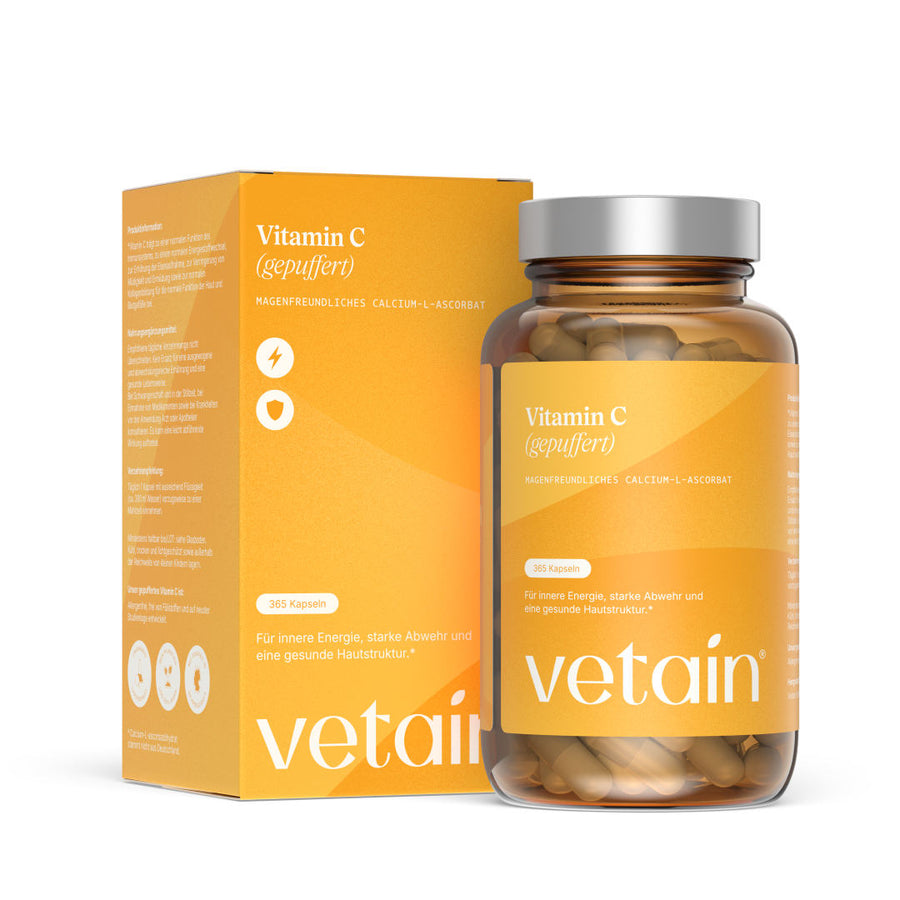
Vitamin C
Fruit and vegetables are good sources of vitamin C (e.g. bell peppers, citrus fruits, broccoli).
Vitamin C is probably the best-known vitamin for the immune system.
Supplements are widespread – whether in the form of effervescent tablets, capsules or tablets.
%-split_content-%
Vitamin D
Foods containing vitamin D include fatty fish, egg yolk and fortified foods. However, these are not the main source of vitamin D, because:
The body can produce vitamin D itself through exposure to sunlight. You can read what this means for winter in part 1 of our winter series.
Small spoiler: in winter, many people rely on supplements such as the vitamin D drops from Vetain.
Iron
Iron sources include meat, legumes, nuts and green leafy vegetables.
Plant-based iron is absorbed better when combined with vitamin C-rich foods.
Important: supplementation should only be done in cases of a medically confirmed deficiency!
Zinc
Good sources of zinc include meat, cheese, legumes and nuts.
Vegans and vegetarians in particular often supplement zinc in tablet form, especially in winter when it’s commonly associated with immune support.
Other important nutrients
In addition to these vitamins for the immune system, omega-3 fatty acids, secondary plant compounds, and other vitamins and minerals such as vitamin B6, selenium, folic acid and copper are also an important part of a balanced diet. A diet that includes animal products often provides sufficient amounts of these nutrients, so supplementation is not generally recommended.
However, this can be different with a vegetarian or vegan diet: some nutrients, such as omega-3 fatty acids, may not be sufficiently consumed.
If this sounds interesting to you, you can read more in our article on supplements in a vegetarian diet.
Vitamins in winter
Some people use winter as an opportunity to focus more on their immune system and do many things to – as people like to say – “strengthen” it. In addition to a balanced diet with fruit, vegetables and legumes & more, this often includes supplementation.
If you’d also like to supplement this winter, start with the first step and get the right vitamins for the immune system.
Not sure yet which supplements you want to use for immune support? You’ll find help here: "Which supplements should you take?"
You can of course also buy pre-mixed immune formulas (so-called immune tablets or immune vitamins). However, we’re more of a fan of taking an individual approach and looking at what’s actually needed instead of simply taking a general immune tablet that may contain things you don’t really need.
Buying vitamins for the immune system
You’ve decided to do more for your immune system this year? Fantastic!
If you’re now looking for good dietary supplements but keep finding yourself overwhelmed in front of endless shelves of different products, here’s a checklist to help you identify quality options:
Quality seals and certifications: Independent, official testing shows whether a product is truly high quality.
A clean and short ingredient list: Sure, many technical terms for vitamins and capsule materials are unfamiliar, and that’s okay. But if the ingredient list is endless and even ingredient checkers give negative results, it might not be the best choice.
High bioavailability: High bioavailability means the vitamin can be well utilized by your body.
Trustworthy origin: Take a look at where products are manufactured and where raw materials come from – is attention paid to good sourcing?
Official product tests and reviews: Always check reviews from other customers – they usually know exactly what different products are like.
Transparency and contact options: Good manufacturers are always available for you and don’t shy away from responsibility.
Clear intake recommendations and sensible dosages: Good vitamins for the immune system should always come with clear intake instructions and dosages that align with recommendations from professional bodies.
If you don’t want to do the Google research yourself, we can warmly recommend our vitamins. They were developed together with experts and are a source of great pride for us. Many of us on the team take our supplements ourselves because we’re genuinely convinced.
%-product_content-%
Conclusion
Vitamin C, zinc & co. – you now know exactly which vitamins are important for the immune system. Why not give yourself and your body an early Christmas gift (or a late one, depending on when you’re reading this) and treat yourself to a few immune-supporting supplements. That way, you’ll hopefully get through the winter well and be able to enjoy long walks in the cold.
Do you have questions? Then feel free to send me an email – I’m looking forward to hearing from you! :)
The information shared in this article does not replace individual medical or nutritional advice.
Literature & sources
Börner, B. & Moll, R. (2021). Das 5-Wochen-Programm für ein starkes Immunsystem.
Corts, M. (2025). Das Immunsystem multimodal stärken. In: DHZ – Deutsche Heilpraktiker Zeitschrift, 20(1).
Schmiedel V. (2021). Wie wir das Immunsystem gezielt stärken können. In: Uro-News, 25(9).
*Reminder: Of course, there are no vitamins or minerals that exist solely for the immune system. Vitamins are part of a complex system that is far too intricate to be fully covered in a short blog article. In this article, we refer to vitamins and minerals that carry the official EFSA health claim “contribute to the normal function of the immune system.” To keep things simpler and more reader-friendly, we refer to them here as “vitamins for the immune system.”
Please always keep in mind that we are not medical professionals and cannot provide individual advice – all statements in this article are purely informational and based on nutritional science.